

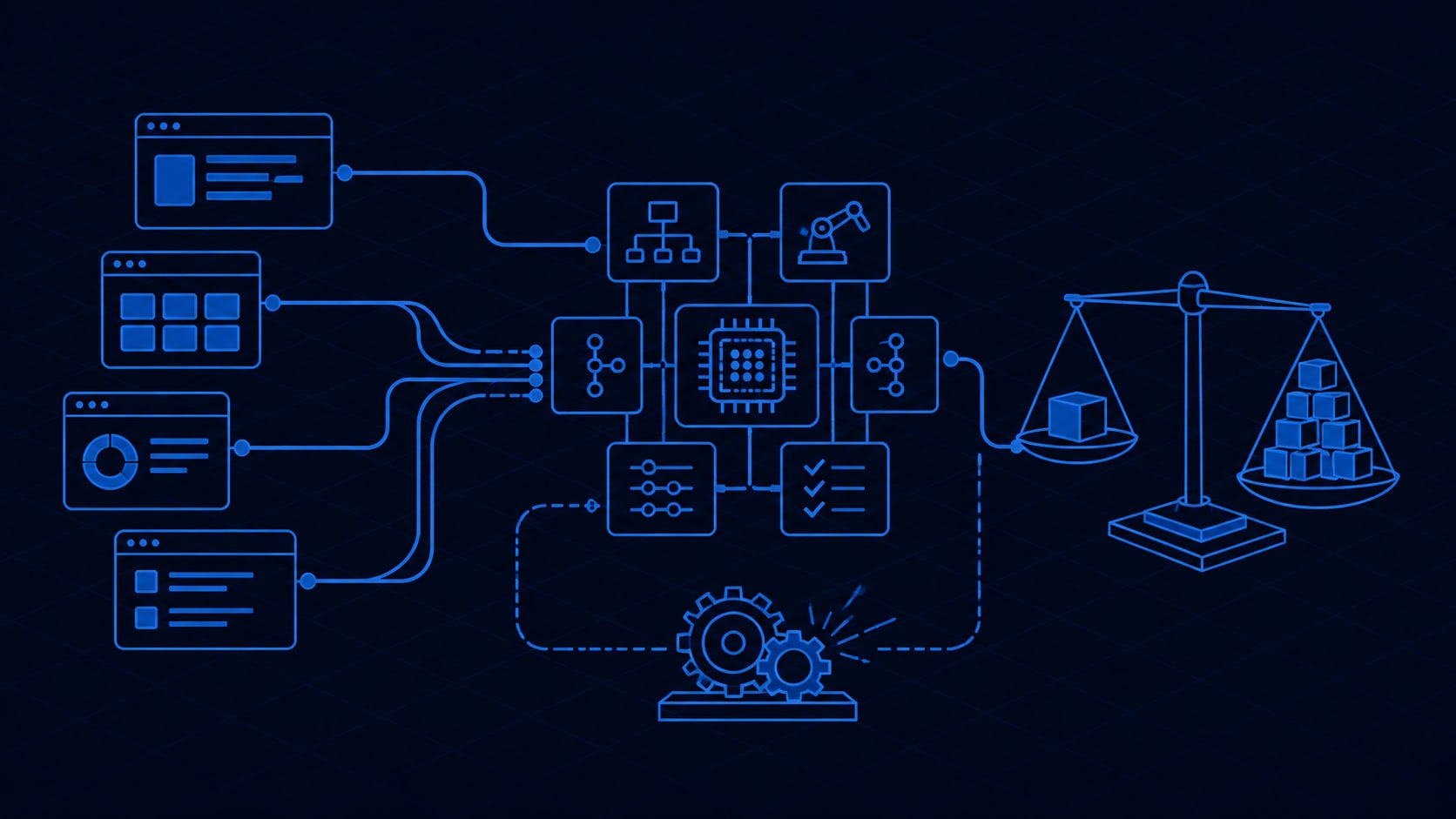
Two providers looked at the same problem in your business. One quoted $1,800. One quoted $22,000. Neither explained the gap, and now you are trying to work out whether the cheap one is a bargain or a trap, and whether the expensive one is charging for craft or for confidence.
Underneath that is a quieter worry: that you will pay for something that demos beautifully and then quietly stops working in week six, and you will not find out until a customer tells you. That is a reasonable fear.
So, rather than another page that says it depends and asks you to book a call, here are the actual published numbers, what genuinely moves them, and what a quote has to include before it is worth comparing to another one.
Key Takeaways
Upwork publishes a median of $35 to $60 per hour for AI engineers and puts a basic website chatbot at $500 to $1,000 and a custom business-process automation starting "at around $6,000."
Every number in circulation, including the ones below, is a vendor's own published range. Nobody has audited what businesses actually pay.
Platform subscriptions, per-task or per-credit fees and model usage continue every month after the build is finished, and they are the reason a cheap build can cost more over two years.
Automations break quietly. What a quote says about retries, alerts and who fixes it at 9pm is more revealing than the price.
The Numbers Providers Actually Publish
Start with the only figures that anyone can check, because they set the floor under every quote you will receive.
Upwork publishes a median hourly rate of $35 to $60 for AI engineers on its marketplace, with the wider spread running "anywhere from $25 to well over $100 per hour" depending on experience. The same page gives worked examples: a basic chatbot for a small business or ecommerce site "could be implemented for as little as $500 to $1,000," a custom machine-learning setup for marketing targeting "could cost from $8,000 to $20,000," and hiring an engineer for a custom business automation such as accounting or supply chain "will start at around $6,000."
Those numbers are worth holding onto, because they are the closest thing to a public benchmark in this market and they are much less dramatic than the quotes flying around. Most of what a small business actually wants automated, the intake form that routes itself, the follow-up that sends itself, the quote that chases itself, is closer to the bottom of that range than the top.
The agencies publish their own numbers too, and this is where it gets confusing. Here is what was on page one of Google for this question, side by side, on the day this was written.
| Source | Setup or one-time | Ongoing |
|---|---|---|
| Upwork, marketplace data | Chatbot $500 to $1,000; business automation from around $6,000 | Platform fees, quoted separately |
| Wicflow | 1,500 to 5,000 EUR per workflow | 200 to 500 EUR per month |
| Parix | $1,500 to $12,000 for most small-business jobs | Not stated in the summary |
| Digital Agency Network | Not stated | $99 to $500 a month basic; $1,000 to $5,000+ enterprise |
| Consultrium | $5,000 to $25,000 consultant-led | $50 to $500 a month for DIY tools |
| bakedwith | $5,000 to $20,000 simple; $50,000+ enterprise | Not stated in the summary |
Six sources, six different answers, and they do not even agree on what they are pricing. That spread is not evidence that the market is dishonest. It is evidence that "an AI automation" describes anything from connecting two apps you already pay for to building a system that makes decisions on your behalf. The word covers both, which is exactly how a $1,800 quote and a $22,000 quote can both be sincere.
One more thing, said plainly because nobody else says it: there is no audited average. No trade body surveys what businesses actually pay for this work. Every figure above, including the marketplace data, is self-published by someone with an interest in the answer. Use them as a sense of scale, not as a benchmark to hold a quote against.
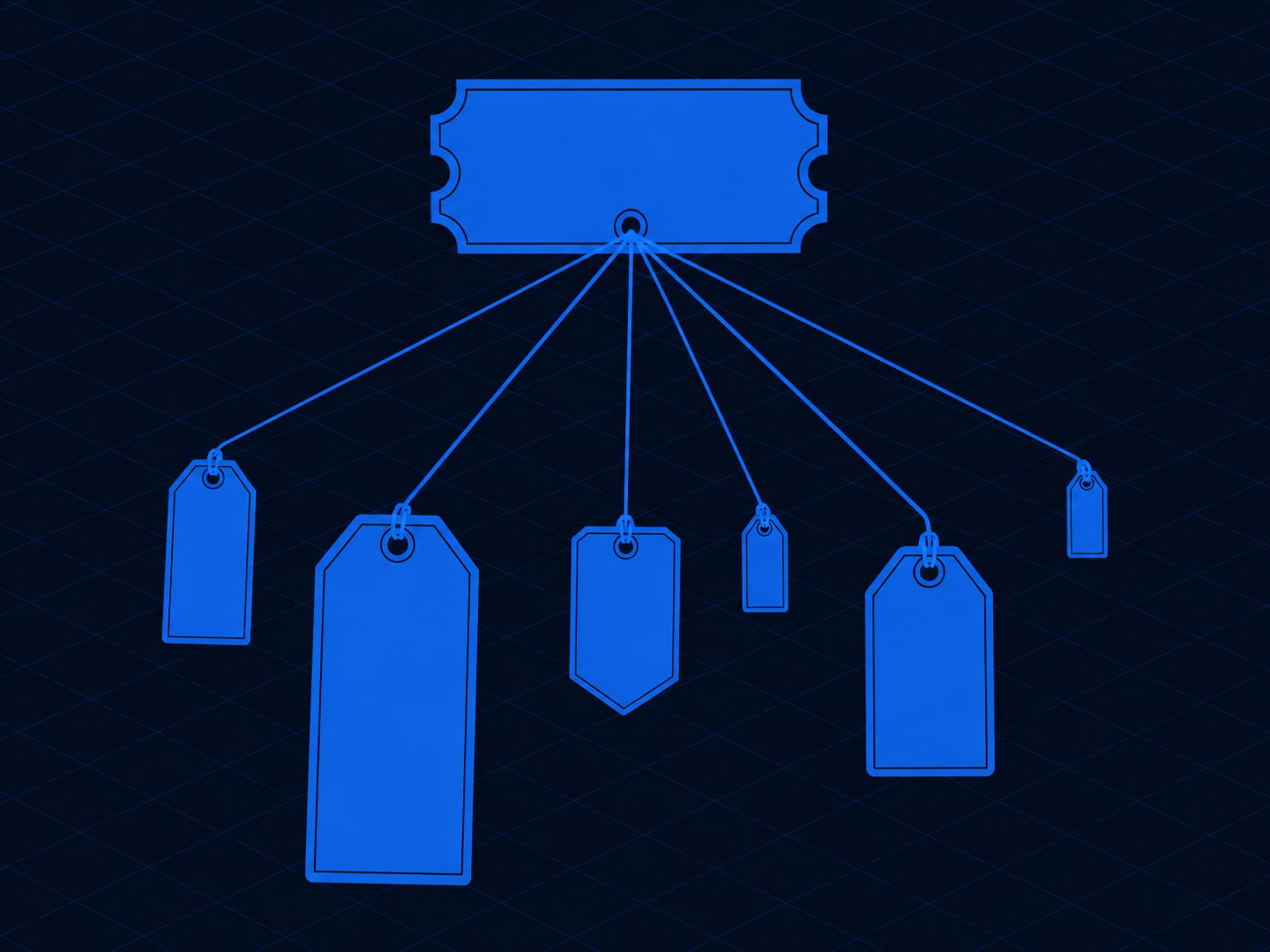
Why Two Quotes for the Same Job Differ by Ten Times
The single most useful thing you can understand about this market is how the people building these systems decide what to charge, because it explains almost the whole spread.
They are openly debating it among themselves. In the automation communities where these builders talk shop, the advice that keeps winning is to price on the value delivered rather than on the hours spent. One widely upvoted answer in a builder forum put it as: do not charge based on how long it takes you to build it, charge based on how much it saves them.
That is not a scam, and it is standard practice in professional services. But it has a consequence you should know about as the buyer: two providers can quote the same work at wildly different prices because they are pricing two different things. One is pricing their afternoon. The other is pricing your saved salary. Neither is lying. You just need to know which conversation you are in.
It is also why the first question a good provider asks is not "what do you want built" but "what is this costing you now." If nobody asks you that, you are being quoted for a deliverable rather than a result, and you should price it as a deliverable: hourly, small, fixed.
What You Are Actually Paying For
A quote that only gives you a number is not comparable to anything. Here is what genuinely sits inside the price, and the parts most owners do not realise they are buying.
The line items behind an automation quote
Working out what actually happens now, step by step, including the exceptions. This is usually where the real value is found and it is the step cheap quotes skip.
Connecting the systems, writing the logic, and handling the cases where the data is missing or wrong. The happy path is the fast part; the exceptions are the work.
Every automation that calls an AI model has a running cost per use, billed on tokens. Every automation platform bills per task, operation or credit. Both continue forever.
Retries, alerting, and a way to see what broke. Without this you own a system that fails silently, which is worse than no system.
What it does, where it runs, what the logins are, and how to change it. This is the difference between an asset and a dependency.
Your business changes, so the automation has to. Either you are buying a retainer or you are buying the ability to maintain it yourself.
Two of those deserve more than a line.
Model and platform usage never stops. Automation platforms bill by consumption, and their pricing pages are worth reading before you sign anything: Zapier charges by task, Make charges by operation and now by credits, and Make publishes a separate explanation of how features consume credits because it is not obvious. On top of that, anything calling a language model is billed on tokens, which are chunks of text rather than whole words. OpenAI explains what tokens are and publishes current rates. None of this is expensive per run. It is just permanent, and it scales with how much you use the thing, which is the opposite of how people budget for software.
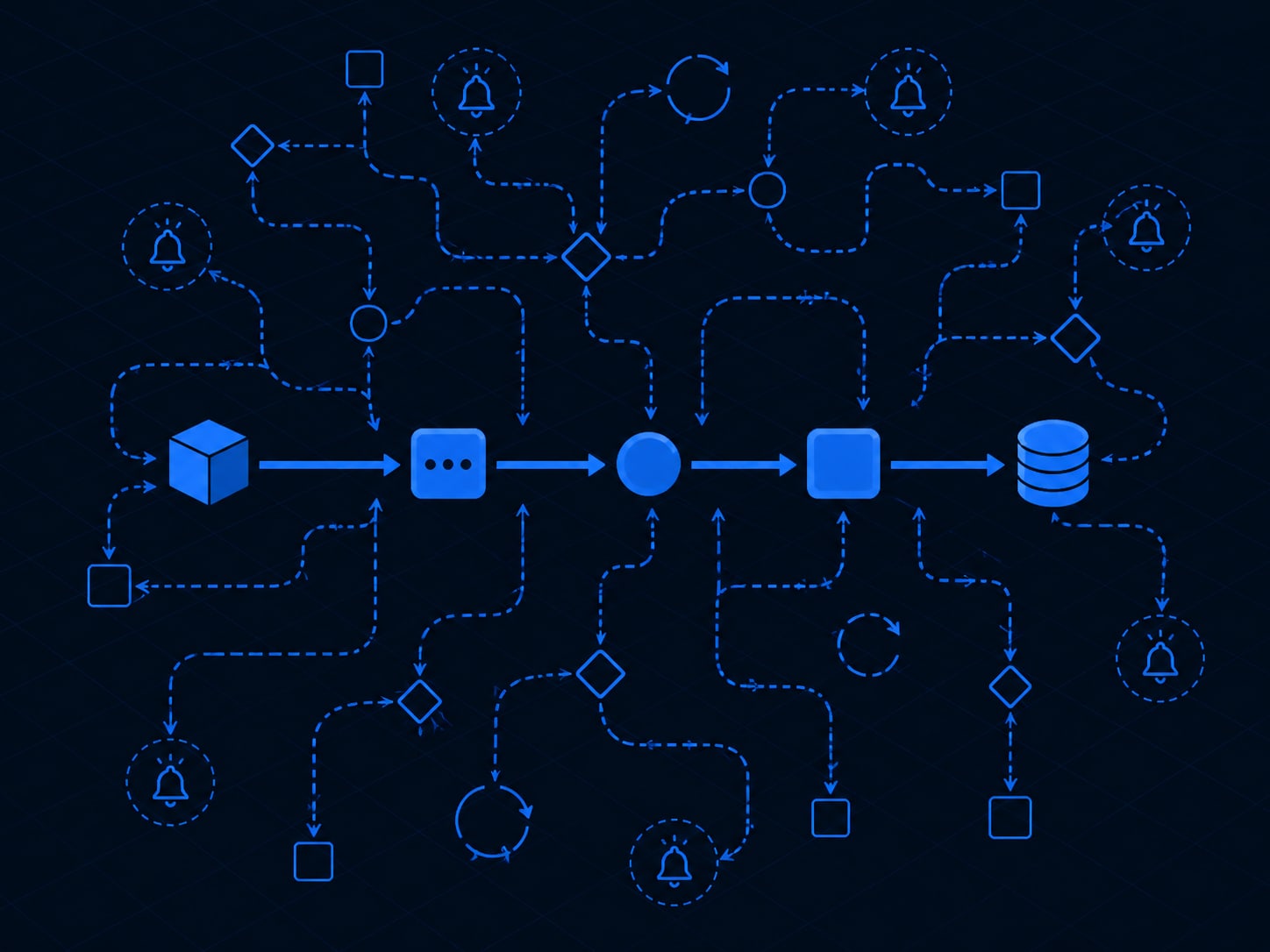
Failure handling is the tell. In August 2026 an automation builders' community was actively asking each other how to handle retries and failures in AI and automation workflows. That is the people building these things, in public, working out how to stop them breaking silently. Read the quote you have been given and see whether it says anything at all about what happens when a step fails. Most do not. That is the gap between the demo you were shown and the system you were hoping to buy.
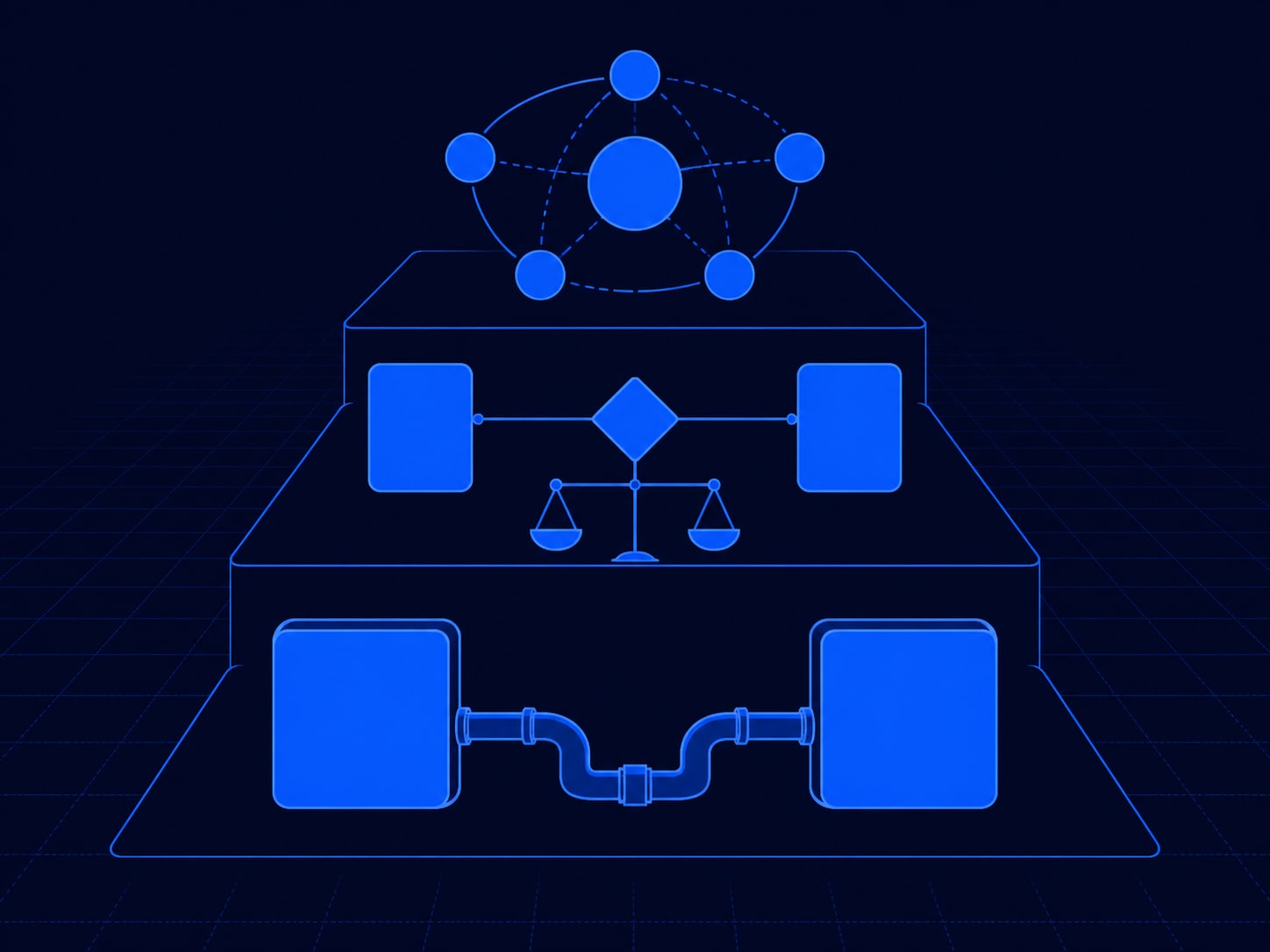
How to Tell Which Job You Have Before You Get Quoted
You can place yourself before you talk to anyone, and it will change how you read every quote afterwards. Most requests fall into one of three tiers.
Connecting Things You Already Pay For
A form that files itself into your CRM. A booking that adds itself to a calendar and sends a confirmation. A review request that goes out three days after a job is closed. There is no real intelligence here, just plumbing, and it is the cheapest and most reliable tier. If your quote for this is in five figures, ask what the extra is for.
Adding Judgement to a Step
Reading an incoming enquiry and routing it, drafting a first-pass reply for you to approve, summarising a call, extracting the details from an invoice. This is where a language model genuinely earns its place, and it is where most small-business value sits. It is also where ongoing cost starts, because every run calls a model.
Building Something That Acts on Its Own
An assistant that answers, qualifies and books without you seeing it first. A system that makes a decision and acts on it. This is the expensive tier, and it should be, because the cost of it being wrong is carried by you. This is the tier where governance stops being a buzzword: the NIST AI Risk Management Framework exists precisely because systems that act need to be measured, monitored and correctable, and a quote that has never considered it is quoting a liability.
What a Realistic Build Actually Looks Like
The timeline matters as much as the price, because "we can do that in a week" is usually a promise about the demo rather than about the working system.
How an automation build actually runs
- 1
Map what happens now
Sit with the process, including the exceptions everyone works around. Usually reveals that two of the five steps should be deleted rather than automated.
- 2
Build the smallest useful version
One workflow, end to end, doing one real job. Not a platform. Not a roadmap. One thing that works.
- 3
Run it beside the manual process
Both at once, for a couple of weeks, so you can see where it disagrees with a human before it is trusted alone.
- 4
Wire the failure handling
Retries, alerts when something breaks, and a log you can actually read. This is the step that gets cut from cheap quotes.
- 5
Hand it over properly
Documentation, logins in your name, and a walkthrough. If only the provider can change it, you have bought a dependency.
- 6
Then add the second one
Not before. The first automation teaches you what the second one should be, and that lesson is worth more than a bigger initial scope.
The Questions That Make a Quote Honest
Six questions. Ask them of every provider, and compare the answers rather than the totals.
- What is this costing me now, in hours or in lost work? If they cannot answer, they have not looked at your process and the quote is guesswork.
- What does it cost to run every month, on top of your fee? Platform, model usage, and any subscriptions. A provider who has not calculated this has not run one of these before.
- What happens when it breaks, and how will I know? The answer includes the word "alert" and a named person.
- Whose accounts is it built in? If the platform account, the API keys and the logins are in their name, you are renting.
- What is the smallest version of this that would be useful? A good provider will happily quote something smaller than you asked for. A bad one will always find the bigger scope.
- What would you tell me not to automate? An answer of "everything" means nobody has looked at your process.
That last one is the one that sorts the field. There is genuine, measurable value in AI automation for the repetitive parts of a week, and there are also plenty of processes where the answer is that the manual version is fine and the money is better spent elsewhere. Working out which is which is what AI consulting is actually for, and it should happen before anyone quotes a build, which is also why what a consultant actually owes you is a different question from what a build costs.
What This Means for a Small Business Right Now
The realistic picture, stripped of both the hype and the cynicism: adoption is climbing and the tools have got cheap, but the results are uneven and the businesses getting value are the ones automating something specific rather than buying "AI." Research from the JPMorganChase Institute on small business and AI and the SBE Council's small business technology survey are both worth reading before you spend, because they describe what smaller firms are actually doing rather than what vendors say they should.
It is also worth naming the suspicion you may already have. On the highest-engagement social post about a $15,000 agentic AI system that we found while researching this piece, the top comment, with more than a hundred likes, was simply: "HAAS - Hallucinations as a service." That is the market's own scepticism, from the audience most exposed to the marketing, and it is healthy. The defence against it is not a better sales pitch. It is buying something small, running it beside the manual process, and only expanding what demonstrably worked.
If you want the wider picture of what actually gets automated in a normal business, we have written about where AI automation genuinely saves time and what the service itself involves. For automations that need to reach the tools you already run, that is an integrations problem before it is an AI problem, and it is usually the real blocker.
Which tier are you actually buying?
Pick an answer to begin.
1. What happens today in the process you want automated?
2. If the automation got something wrong, who would notice?
3. How often does the process run?
4. Does the provider's quote say what happens when a step fails?
Mostly first answers means you are in tier one and should be paying tier-one prices. Mostly third answers means you are in tier three and a cheap quote should worry you more than an expensive one.
Frequently Asked Questions About AI Automation Costs
How much do AI automations cost for a small business?
For connecting systems you already use, expect the low thousands. Upwork's published marketplace data puts a basic chatbot at $500 to $1,000 and a custom business-process automation starting around $6,000. Agency quotes commonly run higher because they include discovery, failure handling and support.
Why is one quote ten times another for the same job?
Usually because they are pricing differently. One is charging for the hours to build it, the other for the value it saves you, and that is standard practice in the industry. Ask both what the monthly running cost is and what happens when a step fails, and the quotes usually become comparable.
What are the ongoing monthly costs?
Two things that never stop: the automation platform's per-task, per-operation or per-credit fees, and the model usage billed on tokens for anything that calls an AI. Both scale with how much you actually use it. Ask for an estimate at your real volume, not at a demo volume.
Can I start with free tools?
Yes, for tier-one plumbing, and it is a sensible way to learn what you actually need. Free tiers usually run out at the point the automation becomes genuinely useful, which is a fair trade for finding out whether it helps before you spend.
How do I avoid paying for a demo that never becomes a working system?
Insist on running it alongside the manual process for a couple of weeks before it is trusted, and check that the quote covers retries, alerting and a readable log. A system that fails loudly is worth more than one that demos well.
Will an automation replace a member of staff?
Rarely, and providers who lead with that are overselling. What it usually replaces is the worst hour of somebody's day. That is a smaller claim and a much more reliable one.
The Bottom Line
The number you are looking for probably sits lower than the loudest quotes suggest and higher than the cheapest, and the reason for the spread is that "an AI automation" covers everything from connecting two apps to building something that makes decisions for you. Place yourself in the right tier first, then read the quote for what it says about running costs and failure handling rather than for the total at the bottom. If it is silent on both, the total is not really a price.
Getting this right compounds. One well-chosen automation gives you back the same hour every week, permanently, and it teaches you what the next one should be. That beats a large build you cannot maintain, and it is a far better use of the same money.
If you are holding two quotes and cannot tell which is honest, we are happy to look. At Web Leveling we start by working out where AI genuinely saves you hours and where it is just for show, and we will tell you plainly when the answer is "not much," because that is more useful to you than a bigger project. When we do build, everything ends up in accounts registered to you, so the system is yours to keep, change or hand to somebody else. Tell us what is eating your week and we will reply within one business day with a read.
Terms
The terms that appear on every invoice
Tap a term to see what it means.
Token. A chunk of text, roughly a few characters, and the unit AI models bill on. Both what you send and what comes back are counted, which is why long prompts cost more.
Task or operation. How automation platforms count usage. One workflow run can consume several, so a plan that looks generous by task count can run out faster than expected.
Credit. A newer billing unit on some platforms where different features consume different amounts, so usage is harder to predict from a run count alone.
Retry. What the system does when a step fails. Without one, a single timeout means the job silently did not happen.
Orchestration. The layer that decides what runs, in what order, and what to do when something goes wrong. On a small build it is a platform; on a large one it is real engineering.