

You typed "AI automation services" into a search bar for a practical reason. The busywork is winning. Leads sit too long before anyone answers, the same details get copied between the form, the inbox, and the CRM, and the follow-up you meant to send slips again. You are not shopping for a slogan. You want the repeated work off your plate, and you are not entirely sure what you are even buying, because every company selling it describes it differently. Here is a straight read: what an AI automation service actually is, what it genuinely automates, where it is just noise, and how to choose a partner without getting stuck with a dashboard nobody uses.
Key Takeaways
AI automation services are a scoped engagement that maps a workflow, connects your systems, tests the exceptions, and hands it over. Software alone is just one part.
The value shows up on a frequent, boring task with clear inputs and a checkable result, not on automating a whole job at once.
These get sold as the same thing and are not. Know which one you are actually buying before you sign.
Low-risk steps run on their own; anything financial, legal, or customer-facing keeps a person in the loop. That is the design, not a weakness.
Time the task before launch, then track hours returned and response time. Without the before, you cannot prove the after.
The accounts, data, and workflow stay in your name, so you are never trapped with the people who built it.
What "AI Automation Services" Actually Means
An AI automation service is a scoped engagement, not a product on a shelf. A capable provider maps a real workflow in your business, connects the systems it touches, builds the automation, tests what happens when something goes wrong, and sets clear terms for who owns it and who maintains it. The software is one ingredient. The service is the work of turning a messy, manual routine into a reliable one you can measure.
That distinction matters because four different things get sold under the same banner, and buyers pay for one expecting another. A tool is software you rent and operate yourself. A "solution" is a loose outcome label that can mean almost anything. Consulting often stops at a report telling you what you could do. A service builds the thing and hands it over working. When someone pitches you "AI," the first useful question is which of those four they actually deliver.
| What you're buying | What you actually get | Who does the work |
|---|---|---|
| AI automation service | A built, tested, owned workflow, start to finish | The provider builds and hands it over |
| AI tool | Software you operate and maintain yourself | You do |
| "AI solution" | A label; depends entirely on what is inside | Unclear until you ask |
| AI consulting | Assessment and a plan, often without the build | You or someone else implements |
What They Actually Automate
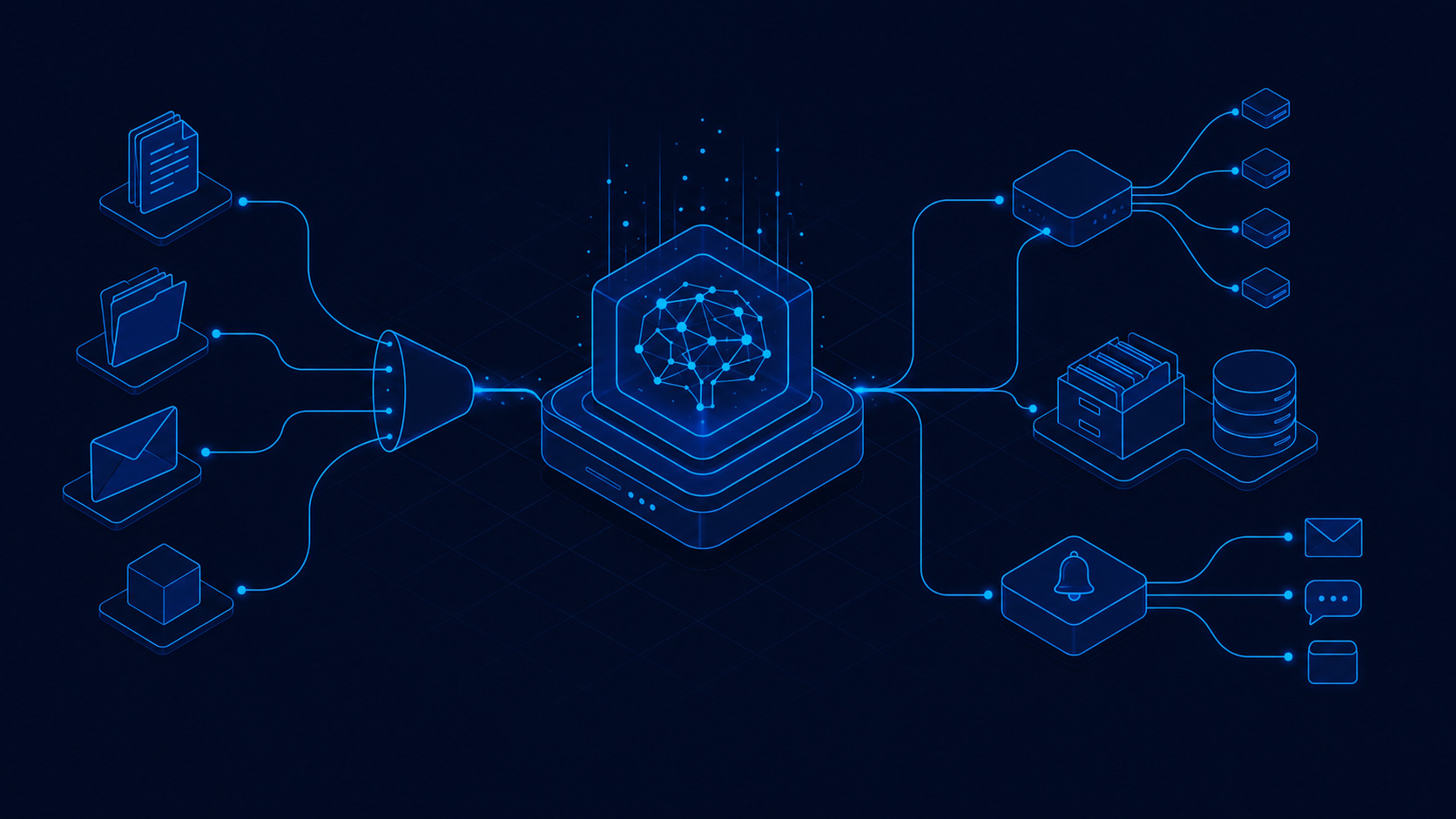
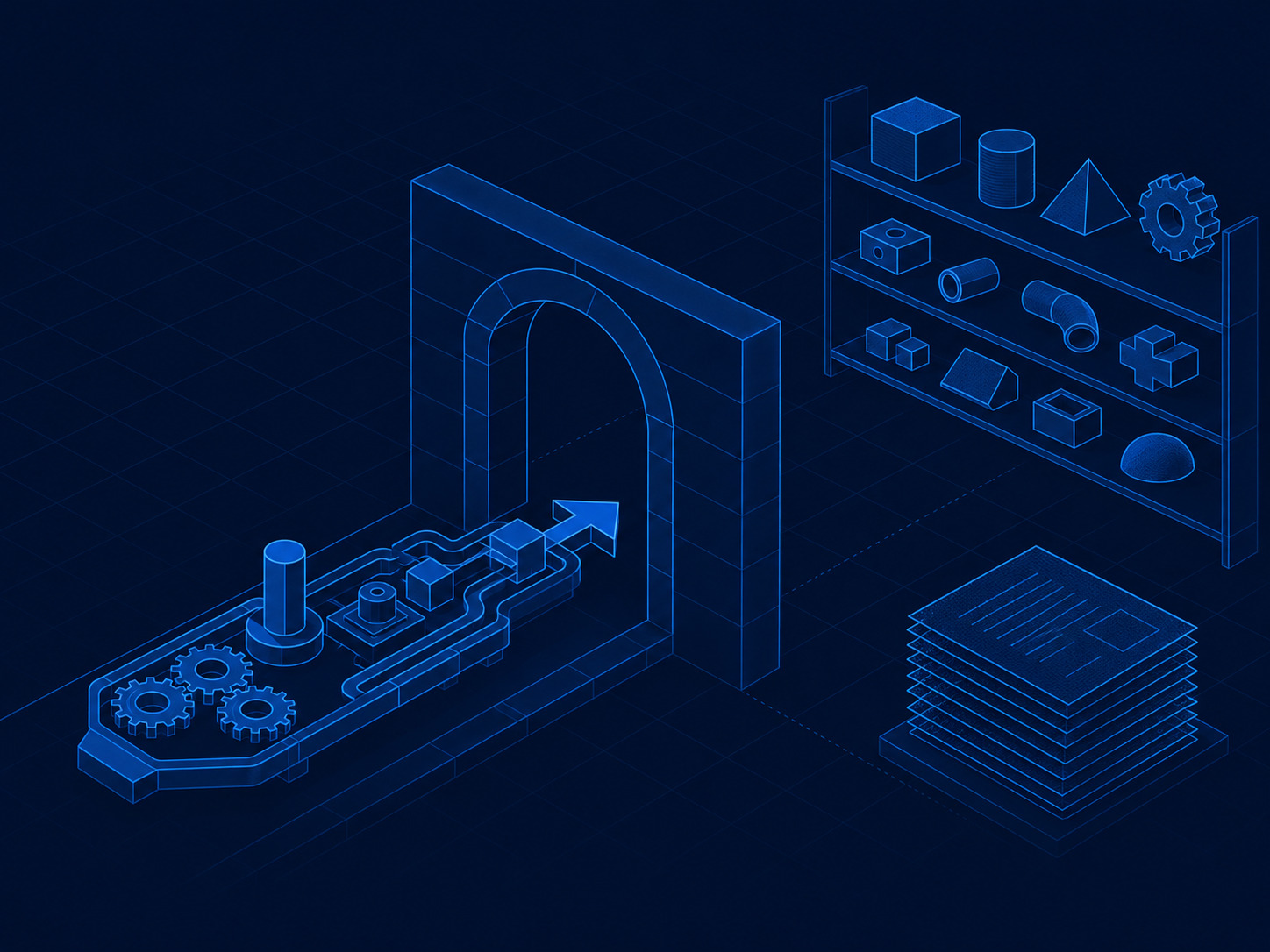
The honest version of this work is specific. A good provider does not sell you "an AI agent." They describe each automation as a plain workflow: a trigger starts it, it gathers approved information, a rule or an AI step decides what happens, it updates a record or sends a message, everything is logged, and a person handles the exceptions. Most small and mid-size businesses get the clearest wins from the same short list of frequent, repetitive tasks.
| Workflow | What it removes |
|---|---|
| Lead intake and routing | Copying form details in by hand and deciding who gets the lead |
| Follow-up and nurture | Remembering to send the next message before it slips |
| Scheduling and booking | Back-and-forth emails to find a time |
| Quotes and estimates | Rebuilding the same numbers from scratch each time |
| Support triage and FAQ | Sorting and first-answering repeat questions |
| CRM hygiene and data entry | Retyping and cleaning records across systems |
| Document processing | Pulling the same fields out of forms and invoices |
| Reporting | Assembling the same numbers into the same report weekly |
Underneath, the building blocks are ordinary and worth understanding so you know what you are paying for. A form or CRM triggers the workflow. A platform such as Zapier, Make, or n8n runs it. A database or CRM holds the records, a messaging or scheduling service does the sending, and an AI step gets added only where the job involves language, classification, or summarizing, the things a fixed rule cannot handle. A chatbot fits when a bounded question can be answered at the front of the site. A custom AI agent fits only where a repeatable multi-step task genuinely needs controlled tool access and review. The smallest system that does the job is always the right one.
Where It Is Just Noise
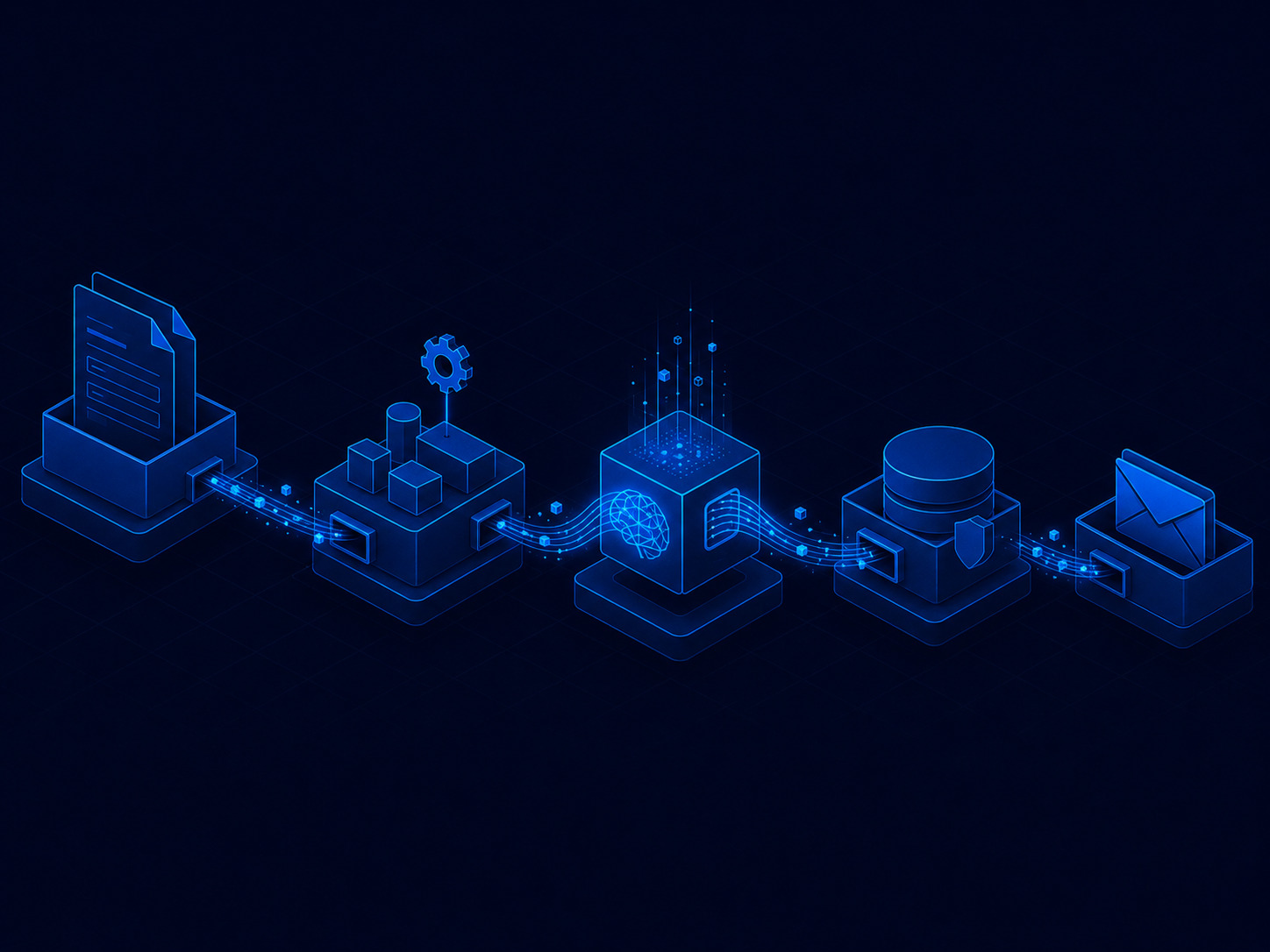
Just as important as what to automate is knowing what to leave alone, because this is where money gets wasted. Skip automation when the underlying process is broken, when the decision carries high legal or financial stakes, when the source data is unreliable, or when a human relationship is the actual product. Automating a broken handoff does not fix it. It just breaks faster and at a larger scale.
Two honest limits belong in every conversation. First, AI can be wrong, so any customer-facing step needs a person watching until it has earned trust, and the consequential calls stay human by design. Second, none of this maintains itself. Software, forms, policies, and model behavior all change, so a workflow needs occasional review to keep working. No automation runs unattended for long, because something upstream always changes. Industry research from groups like McKinsey and Microsoft shows adoption climbing and workers reporting time saved, but none of it promises your business a fixed number of hours. That is why the measurement below matters more than any headline figure.
How an Engagement Actually Works
A real engagement is a short, visible sequence, not a mystery that ends in a big reveal. You should always know which step you are in.
From Busywork to a Working, Owned Automation
- 1
Audit
Find where time actually leaks. Which repeated tasks happen most, take real minutes, and follow rules someone can explain.
- 2
Prioritize
Rank by frequency times time-cost times risk, then start with the highest-value workflow, not the flashiest demo.
- 3
Build and integrate
Wire the automation into the systems you already run, with a rule where a rule works and an AI step only where it earns its place.
- 4
Test the exceptions
Break it on purpose. Confirm what happens on a weird input, a failure, or an edge case before a customer ever sees it.
- 5
Hand over
Accounts, data, workflow, and documentation in your name, with a walkthrough so nothing is a black box.
- 6
Maintain
A review cadence that matches the risk, so the workflow keeps working as your tools and policies change.
Notice what anchors the whole thing: a baseline and a defined decision, not a vendor list or a busy dashboard. The deliverable is a working process you own, with the recommendation right up front instead of buried under activity.
How to Choose a Partner (and When to DIY)
You can absolutely start small yourself. Pick one narrow, measurable task, write down how it works today, time it, and try a manual version before you automate anything. That single step often reveals whether you have a tooling problem or a process problem, and it costs you nothing but an afternoon.
Where a partner earns their fee is turning that first win into a system: the right scope, clean integration with what you already run, sensible access controls, and someone accountable for the hard calls a tool cannot make. When you evaluate one, weigh the questions that actually predict results, not the demo:
- Scope: What exactly gets automated first, and why that one?
- Integration: Does it work with the systems you already run, or replace them?
- Security: Who can reach your data, and what gets logged?
- Ownership: Are the accounts, data, and workflow in your name?
- Maintenance: Who keeps it working when tools and policies change?
- Measurement: What baseline do you set, and what do you track after?
- Clarity: Can they explain the limits honestly, not just the upside?
The difference between a business that gets real hours back and one that buys tools and sees nothing change is not the software. It is discipline: a real problem chosen, an owner assigned, output verified, and changes made from evidence. Weak programs buy a tool, report activity, and never change the process. Strong ones fix the process and let the tool do the tireless part.
Quick Check: AI Automation Services
Pick an answer to begin.
1. What is the difference between an AI automation service and an AI tool?
2. Which task is the best first candidate for automation?
3. What is the honest reason to hire a partner instead of only buying tools?
Frequently Asked Questions About AI Automation Services
What are AI automation services?
They are a scoped engagement where a provider maps a workflow in your business, connects the systems it touches, builds and tests the automation, and hands it over with clear ownership and maintenance terms. The software is one part; the service is turning a manual routine into a reliable, measured one.
What can AI automation actually automate?
Frequent, rule-based work with clear inputs: lead intake and routing, follow-up, scheduling, quoting, support triage, CRM cleanup, document processing, and reporting. It struggles with broken processes, high-stakes decisions, unreliable data, and anything where a human relationship is the point.
What is the difference between AI automation services and AI solutions?
"Services" describes the engagement that builds and delivers a working automation. "Solutions" is a loose outcome label that can mean a tool, a template, or a full build, so it tells you little on its own. Ask what specifically gets delivered and who does the work.
What does an AI automation service cost?
It depends on the number of workflows, how many systems they touch, and how much cleanup the data needs first. A single narrow automation is a modest project; a connected set across your operation is a larger one. A good provider prices by scope and explains the drivers plainly, and the published market rates and what actually moves them are worth reading before you compare two quotes.
Will AI automation replace my staff?
A practical system removes repeated administrative steps and gives people more time for judgment, relationships, and exceptions. Whole teams do not get replaced, because the consequential decisions are exactly what stays human.
Can I do this myself, or do I need a partner?
You can start one small automation yourself and should, to learn where the time really goes. A partner is worth it when you want that first win turned into an integrated, owned, maintained system, with someone accountable for the parts a tool cannot decide, and it is worth knowing whether the person pitching you is an advisor, an implementer or a vendor before you agree to anything.
Final Thoughts
AI automation services are not magic and they are not a slogan. They are the plain work of taking a repeated task your business already understands, wiring it to run itself where it safely can, keeping a person where judgment matters, and leaving you owning the accounts, the data, and the workflow. Start with one task, measure the time it takes now, and build the smallest reliable version. Then reach for the next one.
Buy the service, not the hype. What you want back is not a clever assistant to manage. It is a quieter week: an intake that answers itself, a follow-up that never slips, and a pile of busywork that stops landing on your desk.
At Web Leveling, we build AI automation the practical way, one measured workflow at a time, wired into the tools you already run and owned outright by you, alongside the chatbots, AI consulting, and custom AI solutions that fit around it. If your team is buried in work software should already be doing, contact us and we will send back a clear, practical plan within one business day, starting with the repeated task that is costing you the most time.