

The phone rings while you are on a ladder, halfway through a customer's appointment, or locked up for the night, and the call rolls to voicemail. Some of those callers leave a message. Others may simply call the next name on the list. Now the ads keep promising an AI receptionist for small business owners like you: every call answered, every appointment booked, no one on payroll. Part of you feels relief at the idea. Another part worries that a robotic voice will put off a good customer, or quietly write the wrong job onto your calendar. Both reactions make sense, and the answer sits between them. What these tools handle, what they really cost, and where they slip can all be checked before you hand over your phone line.
Key Takeaways
An AI receptionist can greet callers, take a name, number and reason, answer from the facts you give it, route calls and sometimes book, but it cannot tell whether your rules or a caller's spelling are right.
Smith.ai charges per call, My AI Front Desk bundles minutes and Goodcall counts unique customers, so the same month of calls can cost very different amounts.
Check your state's call recording consent rules, and know that the FCC's February 2024 ruling puts AI voices under TCPA limits for outbound calls, without banning inbound AI answering.
A fifteen-minute review of one or two weeks of missed calls shows whether you need a full AI agent, a capture-only setup, a human service or just a text-back.
An AI receptionist answers, collects, routes and sometimes books
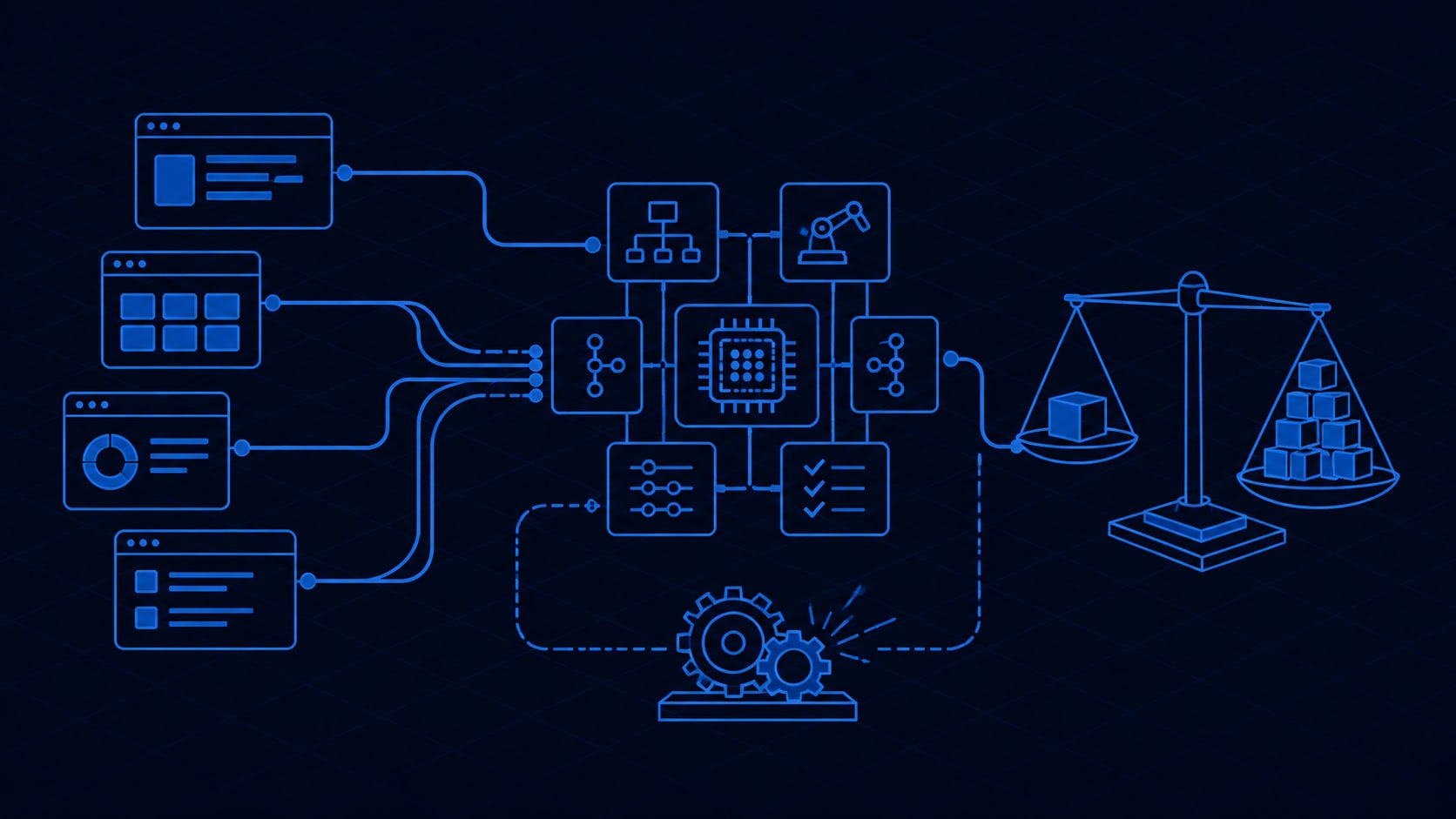
When a call comes in, an AI receptionist picks up, works out roughly why the person is calling, and collects the basics: a name, a callback number and what they need. It answers questions only from the material you give it, such as hours, service area and what you do and do not handle. It can qualify the caller against rules you set, send you a summary by text or email, transfer the call or escalate it, and, if it is connected to your calendar, write an appointment straight into it.
That last step is where the limits show. The tool does not know on its own whether your calendar rules are right, whether your routing sends an urgent call to someone who is actually available, or whether it heard "Stephens" or "Stevens." A calendar integration will faithfully create a bad booking if the rules behind it are wrong or the caller was misunderstood. "24/7" describes when the vendor's system is switched on. It is not a promise about how many calls it answers well or how many turn into jobs, and no vendor or standards body publishes a benchmark for that.
So, think of it as a very consistent intake clerk. It follows the script and the facts you supplied, every time, including when those facts are out of date. The quality of what it does depends on how narrowly you set its job and how well you keep its information current, which is the same problem a website chatbot has when it starts giving customers wrong answers.

AI receptionist for small business cost depends on what the vendor counts
The prices below are listed on each vendor's own pricing page when this was written. They are examples to show how billing works, not endorsements or rankings, and price pages change, so confirm the current terms before you sign up.
| Vendor | Listed price | What you are billed for |
|---|---|---|
| Smith.ai (AI receptionist) | Free tier of 25 calls; Pro from $150 a month for 75 calls ($2 a call), extra calls $2.50 each | Calls |
| My AI Front Desk | $99 a month for 200 voice minutes, or $79 a month billed annually | Minutes |
| Goodcall | $79, $129 or $249 a month per agent, each with an included allowance, then $0.50 per extra unique customer | Unique customers |
Those three plans look close on the headline number, and they are not the same product. Smith.ai's AI receptionist pricing counts calls, so a short "what are your hours?" call costs the same as a long booking call. My AI Front Desk's pricing is measured in minutes, so long conversations eat the allowance faster. Goodcall's pricing is per agent and counts unique customers, so one person calling three times is not billed like three new callers.
To see how the unit changes the bill, take one example. On the Smith.ai Pro plan as listed, a month with 100 calls would be the $150 base for 75 calls plus 25 extra calls at $2.50, or $212.50. The same 100 calls could fit easily under a minute plan if they are short, or blow past it if they are long. You can only compare fairly once you know your own call count and rough call length, which the phone log check below gives you.
The headline price is also not the whole cost. Look for overage rates, whether you can keep your existing number and forward it, what calendar or CRM connections cost, and whether setup is included. A search for an AI receptionist for small business free will turn up free tiers and trials, like the 25-call tier above. Those are useful for testing on real calls, and they are usually too small to cover a busy line for a full month.
Two legal questions come before recording calls or using an AI voice
Recording is a separate question from whether a call is answered by AI. If your setup records or transcribes calls, the rules for that differ by state. In California, Penal Code 632 prohibits recording a confidential communication without the consent of all parties. Pennsylvania's Wiretapping and Electronic Surveillance Control Act allows interception only where all parties have given prior consent. If you record, give a clear notice before recording starts, and get a legal review for the states your callers are in, especially when calls cross state lines. A banner or a one-line greeting does not settle every duty on its own.
The second question is about AI voices. The FCC's Declaratory Ruling, FCC 24-17, adopted February 2, 2024 and released February 8, confirms that the Telephone Consumer Protection Act's limits on an "artificial or prerecorded voice" cover current AI technologies that generate human voices. That matters most for outbound calls: appointment confirmations, follow-ups and callbacks placed by an AI voice. The ruling, also published in the FCC Record, did not make inbound AI answering illegal.
Whether you must tell inbound callers they are speaking with AI can depend on your industry, your state or a contract, so check before you launch. Nothing here is legal advice. It tells you which two questions to put to a lawyer or to the vendor before you switch the line over.

AI receptionists fail in predictable, fixable ways
The problems people report are qualitative. They show that these failures happen, not how often. A reviewer of Smith.ai on Capterra describes a tight automated spam filter that sometimes blocked callers who should have been put through. Other reported problems include callers hanging up as soon as they hear an AI voice, misheard names and phone numbers, bookings made for the wrong service or time, conversations that loop back without reaching a person, and urgent calls handled by a script meant for routine ones.
No dataset ranks these failures by frequency across small businesses, so the order below is by consequence and how easy each is to control, not by how often it happens. Each one has a known fix, and the size of that fix varies.
| What goes wrong | What the fix involves | Rough job size |
|---|---|---|
| Misheard names or numbers | Confirmation prompts, spelling back or a text confirmation, sampled transcript review | Small |
| Wrong or out-of-date answers | A narrower knowledge base, removing answers it should not give, approved wording | Small to medium |
| Bad routing or no way to reach a person | A written decision tree, staffed destinations, fallback voicemail or on-call cover, repeated test calls | Medium |
| Wrong bookings | Calendar permissions, service lengths, buffers, business rules, confirmation messages | Medium |
| Callers hanging up | A shorter opening, clear identification, an immediate option for a person, call review | Small to medium |
| Privacy or recording gaps | Legal and vendor review, notice wording, retention settings, state and sector checks | Can be large |
The voice itself matters less than the choice of vendor suggests. A pleasant voice cannot fix wrong hours, bad routing or a calendar that allows impossible bookings. Spend your attention on the calls where an error hurts a customer or commits you to something: bookings, urgent requests, prices and exceptions.
A human answering service or a text-back may fit better
An AI receptionist is usually the lower fixed-cost option for scripted intake, simple questions and calendar requests. It is not the only way to stop losing calls, and for some businesses it is not the first one to try.
A human answering service costs more per minute, but a person can adjust wording, notice when a caller is confused or upset, and use judgment within your script. As listed on their pricing pages, Ruby charges $250 for 50 receptionist minutes, $395 for 100 and $720 for 200. PATLive lists $49 a month plus $2.99 a minute on pay-as-you-go, or $99 for 50 minutes plus $2.29 a minute over that. Again, these are examples, not recommendations.
A missed-call text-back is the simplest option. When you miss a call, the caller gets a text saying you saw it and asking what they need. That is not call answering. It cannot help a caller who will not text, answer an urgent question or book live on the call. If those texts count as marketing or automated follow-up, consent and opt-out rules apply too, as the Twilio guide to US messaging compliance sets out.

A plain call-forwarding setup, where missed calls ring through to a partner or an on-call phone, can also be enough on its own. Pairing forwarding with a text-back costs very little and covers a lot of ground for a business with only a few missed calls a week.
Your own phone log tells you which option fits
Before you pay for anything, spend fifteen minutes with your phone records. This gives you a baseline you can measure any setup against, without relying on anyone's claim about how many calls a typical business misses.
The check has three parts, and each one feeds the decision that follows it. The first counts the calls, the second sorts them by what the caller wanted, and the third draws the line around calls a machine should never handle alone. Write the answers down so you can compare them after any change.
Count what you missed
Open your business phone log and pick the last seven or 14 days. Count the inbound calls marked missed, abandoned or sent to voicemail, and note the day and hour of each. Patterns show up fast: all evenings, all Saturday mornings, or every time you are out on a job. Note the rough length of the calls you did answer too, since minute-based plans depend on it.
Label what each caller wanted
Match each missed call to its voicemail, transcript, callback note or CRM record, and label it: new lead, existing customer, scheduling or rescheduling, directions or hours, billing, vendor, spam or urgent issue. Then mark which ones you could have recovered and whether anyone called back.
Mark the calls that must reach a person
List the calls that should always go to a human: emergencies and safety issues, payments, complaints, sensitive account changes, exceptions to your usual rules, medical or legal intake if that applies to you, and anyone who asks for a person. Those become the escalation rules for any setup you choose.
Start narrow, then widen what the AI is allowed to do
If the check turns up few recoverable missed calls, forwarding or a text-back may be all you need, and you keep the monthly fee. If your calls regularly involve urgency, exceptions or judgment, start with human coverage or a narrow AI setup that only captures the caller's details and request type, rather than a full agent that books and answers freely.
If an AI receptionist does fit, a sound setup follows the same pattern. NIST's Generative AI Profile, published in July 2024 as voluntary guidance alongside its AI Risk Management Framework, treats risk as likelihood plus consequence and calls for testing before launch and monitoring after. It does not certify vendors or set an accuracy bar. In practice it points to five steps:
- Define the job: Pick one first scope, such as after-hours message taking, lead capture or booking.
- Give it approved facts only: Keep its source material short and current, much like the rules for an AI knowledge base.
- Keep a human exit: Every caller should be able to reach a person or a clear fallback.
- Test the hard calls: Run test calls with real names, unusual spellings, background noise, reschedules and vague requests.
- Review before you trust bookings: Read transcripts or recordings during a pilot before letting it write to your calendar on its own.
Some businesses should not start with an AI agent at all. If most calls need empathy, expert judgment, emergency triage, payment checks or regulated intake, a person is the better first answer.
Is an AI receptionist the right fit for your phone line?
Pick an answer to begin.
1. Two AI plans both list about $100 a month. What should you compare first?
2. What did the FCC's February 2024 ruling on AI voices do?
3. Your phone log shows only three recoverable missed calls in two weeks. What is a sensible first step?
Frequently Asked Questions About ai receptionist for small business
What does an AI receptionist do?
It handles defined inbound tasks: greeting the caller, taking a name, number and reason, answering from the facts you supply, routing or transferring calls, sending you a summary and, if connected, booking appointments.
What is the AI receptionist for small business cost per month?
Listed examples run from free tiers to $79 to $249 a month or more, but vendors bill per call, per minute or per unique customer. Compare included usage and overage against your own call volume, not the headline price.
Is there a free AI receptionist for small business?
Some vendors offer free tiers or trials, such as a 25-call tier. They are useful for testing on real calls, but they are usually too small to cover a busy line for a month.
Is Reddit a good place to judge an AI receptionist for small business?
Forum threads are useful for spotting what can go wrong, such as hang-ups or wrong bookings, and turning those into test calls. They are individual stories, not measured failure rates, so test the tool on your own calls.
Is it legal to record calls with an AI receptionist?
It depends on the state and the call. California and Pennsylvania, for example, require consent from all parties. Give a clear notice before recording and get a legal review for the states your callers are in.
Can callers still reach a real person?
They should always be able to. Set escalation rules for emergencies, complaints, payments and anyone who asks for a person, and test that route before you go live.
What This Means for You
An AI receptionist can stop some of your calls from dying in voicemail by answering, collecting details, routing and sometimes booking. What it will not do is check its own rules, so the value depends on a narrow job, current facts and a clear way to reach a person. Compare vendors by what they count, not what they advertise, and settle recording consent and outbound AI voice rules before launch.
Fifteen minutes with your phone log turns a sales pitch into a decision you can defend. Whether the answer is a full agent, a capture-only setup, a human service or a text-back, you will know what you are paying to recover and can measure whether it worked.
If you want a second pair of eyes on that decision, Web Leveling can go through your call log with you and tell you whether an AI setup is worth it at all. When it is, our chatbot and AI assistant work covers the call flow, approved answers, human handoff and test calls before anything touches your calendar. We work with small and medium businesses across the country and overseas. Tell us how your missed calls add up, and we will help you pick the smallest setup that stops losing them.
Terms
Phone answering words in this post
Tap a term to see what it means.
AI receptionist. Software that answers business calls with an AI voice, collects caller details, routes calls and sometimes books appointments.
Billing unit. What a vendor counts to charge you, such as calls, minutes or unique customers.
Missed-call text-back. An automatic text sent to someone whose call you missed, asking what they need.
Human handoff. The route that moves a caller from the AI to a real person.
All-party consent. A rule that everyone on a call must agree before it is recorded.
TCPA. The Telephone Consumer Protection Act, the federal law that limits calls made with artificial or prerecorded voices.