

Web design in Hartford County, built for buyers who vet you before they call.
Somebody in Greater Hartford has your name. Before they contact you they will open your website, and what they are doing there is not browsing. They are checking whether you are safe to recommend to a boss, a board, a compliance officer, or a client of their own. This page is about building for that visitor: a fast custom site, the local search work behind it, and the AI that answers when you cannot. All of it owned by you.
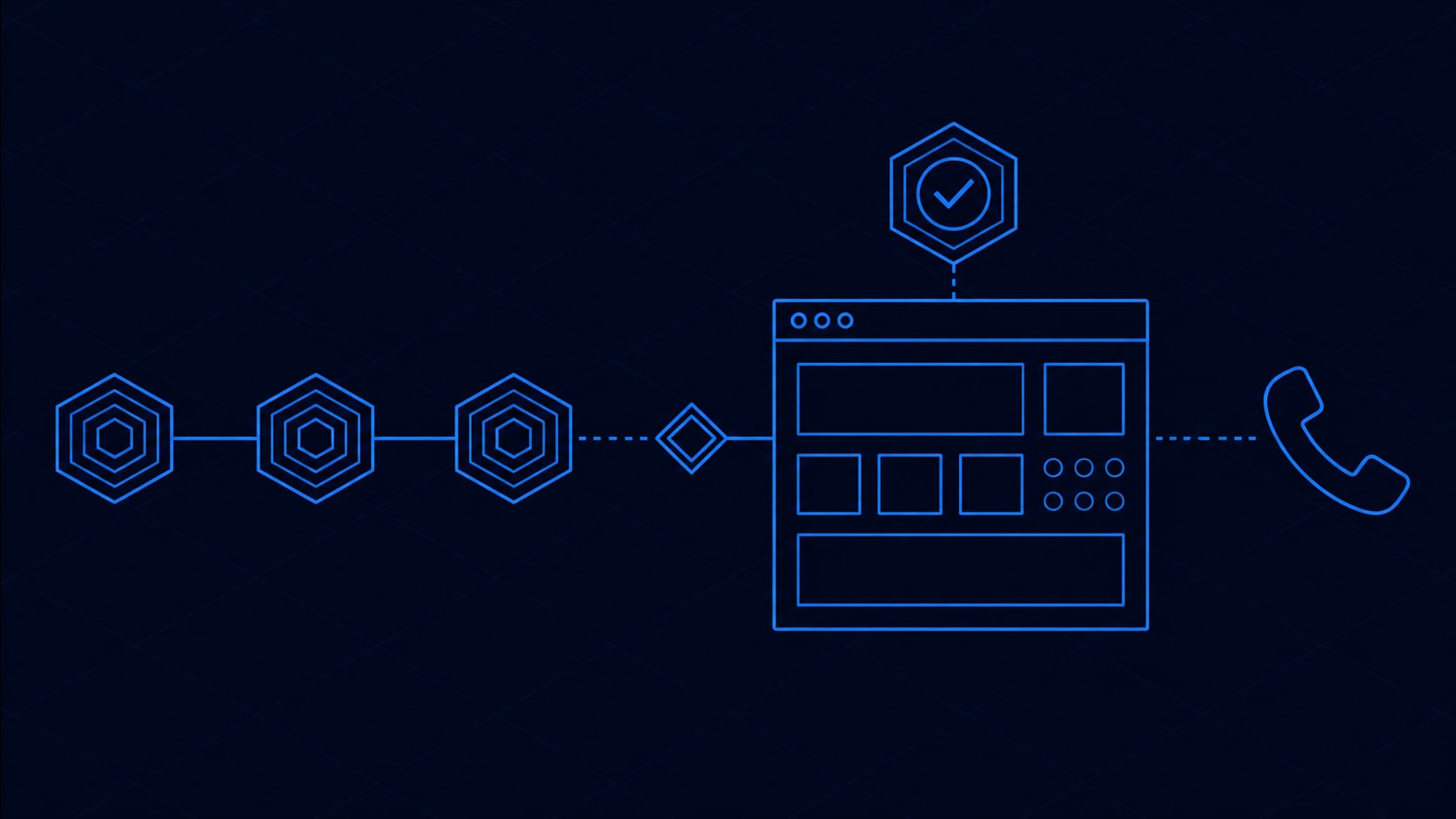
A recommendation passed along, then checked against a website before anyone picks up the phone.
They are not shopping. They are checking you out.
Greater Hartford does not run on impulse. It runs on insurance and financial services, aerospace and precision manufacturing, healthcare, and the professional firms and suppliers wrapped around a state capital. Even the businesses that never touch those industries sell into a market shaped by them, where somebody usually has to justify the choice to somebody else.
That changes what your website is for. In a walk-in town, a site has to catch attention. Here it usually has to survive a check. Your name gets passed along in a meeting or a text message, and the next thing that happens is a browser tab. The visitor is asking a short, practical list of questions: are these people real, have they done this before, will I look foolish for putting them forward.
Plenty of small-business websites fail that check without anyone knowing it happened. There is no bounce you can feel and no phone call that does not ring. The referral just goes nowhere. If your enquiries have thinned out while your reputation has not, this is a likely reason, and it is a website problem rather than a marketing one.
Hartford County is a ring, not a blob.
Twenty-nine towns share the name, and they do not share a market. Hartford itself had 121,054 residents at the 2020 Census, New Britain 74,135, West Hartford 64,083, Bristol 60,833 and Manchester 59,713. Hartland had 1,901. A plan that works in one of those places is close to useless in another.
Four groupings are worth knowing before you decide anything about your website, because they change who you compete with and how far your customers will travel:
- The capital and the inner ring. Hartford, East Hartford, West Hartford, Newington, Wethersfield and Bloomfield. Dense, institutional, and where the vetting behaviour above is strongest.
- The Farmington Valley. Farmington, Avon, Canton, Simsbury, Granby and their neighbours. Wealthier, more spread out, and more likely to be searched by town name than by region.
- The river and north corridor. Glastonbury, Rocky Hill, Windsor, South Windsor, East Windsor, Enfield, Suffield and Windsor Locks, running up Interstate 91 toward Massachusetts.
- The western cluster. Bristol, New Britain, Plainville and Southington, a working employment and travel grouping that faces west and south as much as it faces Hartford.
A business in Suffield and a business in downtown Hartford are not running the same play. If an agency shows you the same proposal for both, you are looking at a package rather than a plan.
Three of these towns already have their own page here, and each goes deeper on its own market than this page can:
- Web design in Hartford, the capital and the institutions around it
- Web design in Manchester, the practical east-of-the-river market
- Web design in Southington, the central Connecticut working town
Proof beats adjectives. Every time.
If your visitor is vetting you, the whole job of the site is to hand them evidence they can use. Not claims about being trusted and innovative, which every competitor also makes and which therefore prove nothing. Evidence.
In practice that is a short list, and most sites are missing most of it:
- Named work. Real projects, described plainly, with permission. One specific job beats a wall of logos.
- The scope, stated. What is included, what is not, and what happens after launch. Buyers here are used to reading a statement of work, and ambiguity costs you the referral.
- A visible process. What happens in week one, in week four, and after go-live. Somebody who has to explain you to a boss needs something to explain.
- Real people. Who you are, what you have done, and how to reach you. A site with nobody on it is a site nobody can vouch for.
- Accessibility and speed that hold up. In healthcare, education and institutional work, an inaccessible site is a procurement problem rather than a design opinion. We build to WCAG AA contrast and check it by measurement instead of by eye.
We will also tell you where you do not need this. A three-page site for a two-person trade business does not need a capability library. The point is to match the evidence to the person doing the checking.
“If a visitor cannot use your website to justify choosing you, your website is not doing the one job it has here.”
A site that survives a check, and the search work that gets it opened.
The website comes first here because it is the thing being checked. We build a custom site designed around your business, hand-coded on Next.js and shipped as static files, which is the plain reason it loads fast. No page-builder weight on every visit, and no theme somebody bought and recolored for a demo company that is not yours. Real HTML on every page, so search engines and AI answer engines see your full content the moment they arrive instead of an empty shell waiting on scripts. That starts with custom web design, the service everything here is built on.
Then the search work, shaped by which part of the county you sell into:
- Local SEO for the town and near-me searches, including the service-area setup that matters when you sell across several towns instead of from one counter.
- Google Business Profile management so the profile is complete, accurate and consistent with the site. A profile that contradicts your website ranks neither.
- Search engine optimization at the technical level: metadata per page, structured data, a sitemap that updates itself, and clean URLs that stay put.
- Content marketing for the capability and research pages a vetting buyer reads before calling, and custom e-commerce when you are selling rather than quoting.
Not a slogan. The follow-up that goes out without you.
Every agency is saying "AI" right now and most of it is noise. Here is the part that is not, and it fits a long sales cycle better than almost any other business type.
When your buying process takes weeks, most of what you lose is lost in the gaps. The enquiry that came in at nine at night and got a reply at eleven the next morning. The quote that never got chased because the week got busy. The question that would have taken you ninety seconds to answer if you had seen it.
We start with a read of where AI genuinely saves you time and where it is just for show. Then we wire the pieces that earn their keep: AI automation for the repetitive work in your week, and chatbots trained on your business that answer, qualify and book while you are in a meeting. If the answer for your business is "not much", we will say that too.

Procurement asks who owns it. Have the right answer.
Ask any agency one question before you sign: if we part ways next month, what do I keep? On a site you never owned, the answer is a cancellation email and nothing else, and the renting was never named as renting. The domain sat in their account. The analytics, the hosting and the content were all on their side of a login you never got.
This is the answer a procurement file is looking for. Everything we build ends up in accounts registered to you: the design, the content, the domain, the analytics, the data. We keep it safe and running so there is nothing technical for you to babysit, but the ownership is real and it is yours from day one. If you ever want to go, everything leaves with you, and any developer can pick it up the same day. No monthly ransom. The door is never locked.
Procurement will ask about terms, so here they are: a setup fee, a clear process, and commitments that match how long results actually take. What you will never sign is a trap.

Ready when you are. Your work, actually yours.
Tell us about your business and what this needs to cause. You'll have a plan back within one business day, including when the answer is that you do not need this.
Tell us your caseOwnership drawn plainly: the accounts, the domain and the keys, all in your name.
Answered before somebody has to ask.
What does a website actually cost?
It depends on what the site has to do, which is an unsatisfying answer, so here is the useful version. The number is driven by how many pages carry real content, whether you are quoting or selling, how much has to connect to systems you already run, and how much writing and photography is still to be done. A brochure site for a small trades business and a capability site for a manufacturer with a quote-request path are different orders of work. We break it down properly in what a custom website really costs, and we quote in writing before anything starts.
Ask us about a website in Hartford CountyDo you have an office in Hartford County?
No, and we will not pretend to. We are not on Asylum Street and we are not in a Farmington Valley office park. The work itself, design, build, search and support, runs perfectly well at a distance, and a good share of our clients are people we have never stood in a room with. Where you sell shapes how we position you in local search. It does not decide whether we can build for you.
Talk your Hartford County project through with usWhich towns do you cover here?
All 29 in the county, from Hartford, West Hartford and New Britain through the Farmington Valley and up the river corridor to Enfield and Suffield. Hartford, Manchester and Southington have their own pages on this site, and the rest are served from here.
Ask how we work with businesses in Hartford CountyCan you get me into the map pack?
That is the goal of the local work, and here is the honest limit. Google says local results are based mainly on relevance, distance and prominence. A complete Google Business Profile plus a fast, well-structured website is how you earn relevance and prominence. Distance is the one nobody can move, and Google states plainly that there is no way to request or pay for a better local ranking. So, we work the two you can influence, and we never promise a placement.
Tell us what you need in Hartford CountyIs Hartford County a government I should be registered with?
No. Connecticut counties stopped functioning as governmental entities in 1960, and the Census now uses planning regions instead. For your business it is a service-area label and a search term, nothing more. There is no county registration you are missing.
Get a straight answer about Hartford CountyWill I lose my Google rankings if you rebuild my site?
No. Before anything moves we inventory every URL on your current site and map each one to its new home with proper redirects, so the authority you have earned carries over. Rankings usually end up better after the move, because the new site is faster and cleaner.
Have us look at your Hartford County siteWill I own the website, the domain, and the accounts?
Yes, all of it. The code, content, domain, analytics and data live in accounts registered to you. Nothing is held hostage, and if you ever leave, everything leaves with you.
Start a conversation about Hartford CountyTell us which towns you actually sell into, and what happens now when somebody is handed your name. We will reply within one business day with a straight read on what your site is failing to prove and what it would take to fix it. That is our job, not yours.
About Hartford County
Hartford County had a population of 899,498 residents at the 2020 Decennial Census, across about 735 square miles of land and 385,307 housing units. Connecticut abolished county government in 1960, so it is a geographic and everyday place name rather than an administrative one: accurate as a service area, inaccurate as an authority. It is inland, with no shoreline, and it is organised by two rivers rather than a coast: the Connecticut River running through Hartford and East Hartford, and the Farmington River to the west.
It is not one market. Hartford itself had 121,054 residents in 2020, New Britain 74,135, West Hartford 64,083, Bristol 60,833 and Manchester 59,713, while Hartland had 1,901. That range, from a state capital to a town of under two thousand, is the whole reason a business here has to decide which towns it is genuinely competing in before it decides anything else. The economy leans on insurance and financial services, aerospace and precision manufacturing, healthcare, and the institutions that cluster around a state capital.
Towns and cities we serve here
Around Hartford County
Bordering areas
Getting around
Interstate 84 · Interstate 91 · Interstate 291 · Interstate 384 · Route 2 · Route 9 · U.S. Route 5 · U.S. Route 44 · Route 15 / Berlin Turnpike
Do not see your town on the list? We work across Hartford County and beyond. Tell us where you are and we will tell you whether we can help.