

Web design that ends with you owning everything.
This is our first service and the foundation under all the others. Here it is in full: what you get, how we build it, why custom beats the alternatives for you, and the handover that makes it yours.
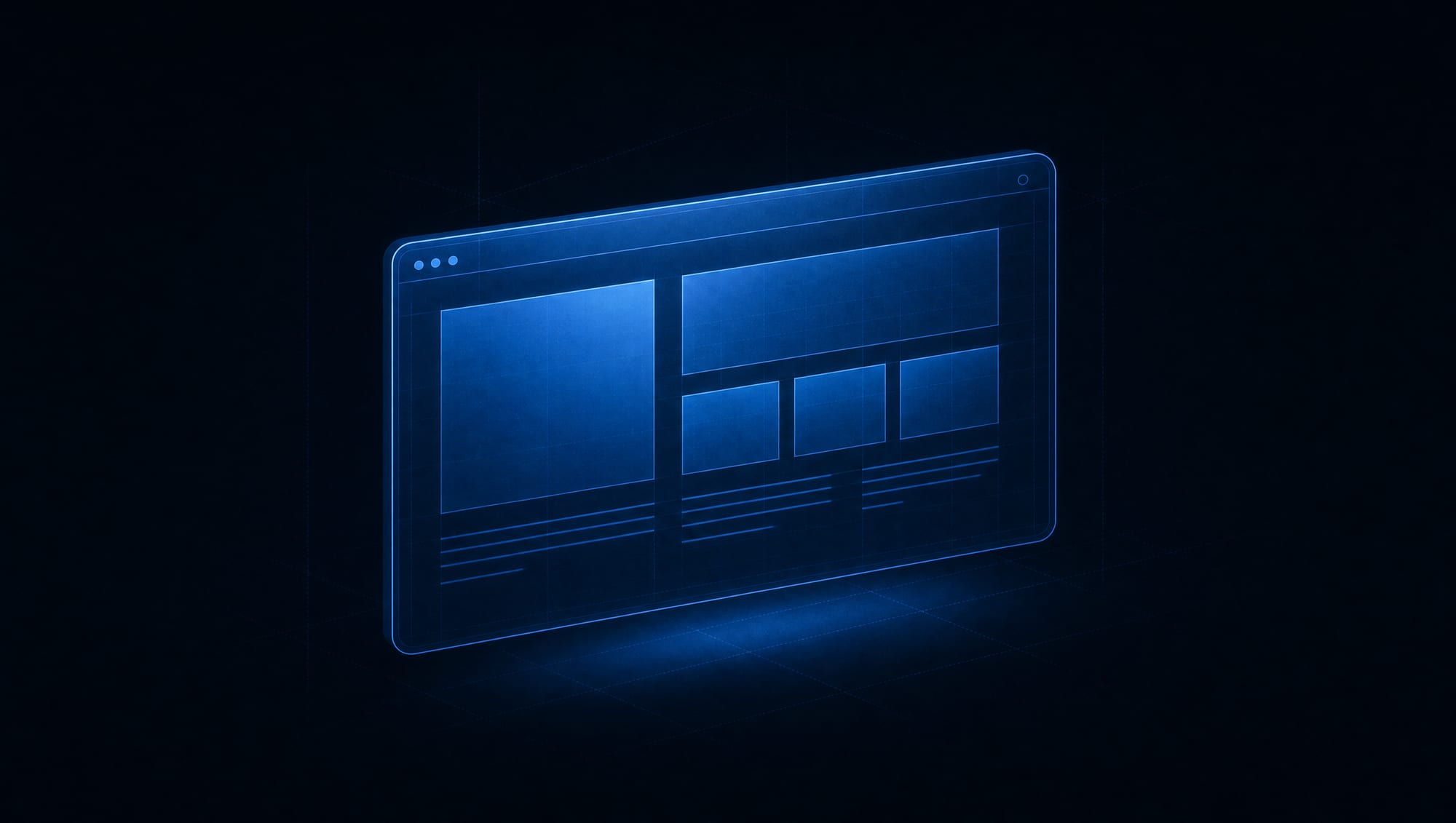
A finished build, glowing in the browser where it lives.
First, the object itself.
When we say "a website," here's what you should hear: a design created for your business, code written by hand, and a finished product that lives in accounts registered to you. Not a theme somebody bought and recolored. Not a page-builder subscription with your logo dropped in. A site that exists because someone sat down and built it for you, which is what the word "custom" was supposed to mean all along.
Every build carries the same spine:
- A design from your brand and your content, not from a template gallery. Your market, your customers, your voice.
- Every page hand-coded on Next.js and shipped as static files. This is why the site loads the way it does.
- Copy structured for real readers, human and machine, with one clear next step on every page.
- Working plumbing: contact forms that reach your inbox, phone numbers that dial on tap, analytics in your own account.
- Technical SEO from the first commit: metadata, structured data, sitemaps, clean URLs. Not bolted on later.
- Light and dark themes, contrast checked by number, and a layout that holds together at every screen size.
What is absent matters just as much. No page-builder bloat slowing every visit. No stock sections you have to write filler for. No mystery line items for plugins you never asked about. The site carries exactly what your business needs to win a visitor and nothing it doesn't. You can feel that restraint: pages open instantly, nothing rattles, and every screen points the visitor toward the one thing you want them to do next.
And the thing that rarely makes the brochure: documentation. At handover you get a walkthrough of where everything lives and how to change it. If we vanished tomorrow, any competent developer could pick up your site and keep going. That sentence is the test we build against.
You've probably built on WordPress. Most businesses have.
And for a long era it was the right call: WordPress put publishing in everyone's hands, and it still runs a huge share of the web. We support clients on it today. But you also know the rhythm that comes with any platform at scale: the plugin that needs updating, the update that shifts the layout, the stack of parts that all have to agree before your site behaves. It isn't that WordPress failed you. It's that the web is moving toward speed, structure, and AI-readable answers, and your business has outgrown the trade-offs.
Templates flip the same trap around: cheap on day one, expensive forever. You spend the life of the site pushing against layout decisions someone made for a demo business that doesn't exist. Your longest service gets squeezed into a box sized for three lines of filler text. The homepage looks like four other companies in your industry because, statistically, it is their homepage.
“A template is someone else's answer to someone else's business.”
Custom is the opposite of both. The design starts from your actual content and works outward, so nothing gets squeezed and nothing gets padded. The code contains only what your site needs, so there is no plugin treadmill because there are no plugins, and no database to hack because there is no database. A static site presents almost nothing to attack. The usual platform emergencies simply have no equivalent here.
The honest counterpoint: custom costs more up front than a $79 theme, and it should. What you're buying is the absence of the treadmill. No builder fees, no plugin subscriptions, hosting near zero, and no monthly invoice required to keep the lights on. Run the math over a few years and it usually flips in your favor, before you count a single extra lead.
To be fair about it: if you need a five-page brochure live by Friday and a few hundred dollars is the whole budget, a template is the right call, and we'd tell you so. Custom earns its keep when the website is how customers find you, judge you, and reach you. If that describes your business, the math above is your math.
We can say all this with a straight face because we've moved many businesses to custom builds, and migrations are core practice for us: content preserved, every URL redirected, rankings protected. Nobody has asked to go back.
You'll own these tools. Here's why we picked them.
You don't need to care about our toolbox. But since you're the one who ends up owning what it produces, you deserve to know why it looks the way it does.
Next.js is the technology under some of the largest sites on the web, and under every site we build. It lets us write every page by hand and then export the whole site as static files: plain, finished pages that a server hands over instantly. No assembly on request, no waiting on a database, no moving parts at 3 a.m.
Static hosting is the payoff. Finished files can sit on a global network that serves them from wherever your visitor happens to be, which is why hosting costs fall to nearly nothing and why the site stays up under traffic spikes that would flatten a shared hosting plan.
Stripe, for stores. If you sell online, we build the store custom on Stripe with a hand-written cart. Your checkout gets designed around your products instead of your products getting crammed into a platform's checkout. You keep the customer list, the payment account, and the data. No Shopify percentage, no platform rules, no lock-in. That is its own service: custom e-commerce development.
Your content lives in plain, readable files. Every change is recorded and reversible. Nothing is trapped in a proprietary editor, and all of it travels with you, wherever you go, forever.
A fast site isn't a luxury. It's the ranking.
Speed first, because everything hangs on it. Visitors leave slow sites, and Google measures loading the way a stopwatch does, through its Core Web Vitals scores. Those scores are usually treated as a repair job afterwards. We don't have to, because a hand-coded static site has nothing heavy in it to fix. We build to pass outright, not to squeak by after an optimization sprint.
Search is built in the same way. Every page ships as real HTML, so crawlers see your full content instantly instead of an empty shell waiting for JavaScript to fill it. One clear heading per page. Metadata written per page, not cloned from the homepage. Structured data that tells engines exactly what your business is, machine-readably. A sitemap that updates itself. Clean, stable URLs. None of this is an add-on package; it's what the site is made of. It is the whole point of search engine optimization done at the foundation.
There's also the audience nobody measures until it costs them: people on aging phones, slow connections, and small screens, reading in sunlight in a parking lot. We keep body text at a size you can actually read, contrast at accessible levels in both light and dark themes, and layouts that hold on a three-year-old Android as well as they do on your laptop. Part of that is decency. All of it is business, because the visitor who can't read your page doesn't call you.
Then there's the part that is still new enough to get missed. Your next customer may never see a results page at all. They'll ask ChatGPT, Perplexity, or Google AI who to hire, and the engine will answer with a name. Those engines cite sources that are fast, structured, and factual, and a hand-built static site is the natural shape of a citable source. The way your site is built has become an AI visibility decision, which is exactly what generative engine optimization is for. We build like we know that, because we do.



Five steps. No mystery.
You'll always know which step we're in, what's done, and what's next. Open each one.
A note on timelines before you do: the calendar is usually yours, not ours. Hand-coding moves fast once decisions are made; what stretches a build is waiting on photos, copy approvals, and password hunts. We tell you everything we need up front, so the work never idles on our side of the table.
Listen and map
We start with your business, not a mood board. What you sell, who buys it, what they type into a search box, and what the site has to cause: calls, orders, bookings. Out of that comes a sitemap and a content plan you approve before any design begins. If you're coming off WordPress, this is also where every existing URL gets inventoried so nothing is lost in the move.
Design the system
We design the system before the pages: type, color, spacing, and the patterns your pages are assembled from. Then the homepage concept, so you can judge the direction on something real. You mark it up, we revise, until it reads like you and no one else. There's no "big reveal" moment; you see the work as it happens.
Build by hand
Every page written in code, on Next.js, from the system we agreed on. Your content placed with intent, nothing dropped, nothing padded. Forms wired to your inbox, phone numbers made tappable, both light and dark themes finished, and the search plumbing laid as we go rather than retrofitted at the end.
Prove it works
Quality by numbers, not by eye. Contrast measured against accessibility standards in both themes. Real phone widths checked for anything that clips or drags sideways. Speed audited on the production build. The rendered HTML inspected so we know engines see the full content. What fails gets fixed and re-tested before you ever see it.
Launch and hand over
Domain pointed, analytics live in your account, sitemap submitted. Then the part we're known for: the handover. Credentials, accounts, content, and documentation, handed to you and walked through together. Launch day is the day you own a website, not the day you start renting one.
1
Ask any agency this one question.
"If we part ways next month, what do I keep?" It's the most clarifying question in this industry. Where the site was never yours, the answer is a cancellation email and a zip file of images. The site was theirs all along; you were subscribed to it.
Here's our answer. Everything leaves with you. The site, the design, the content, the data: yours. The domain sits in your own login. Hosting, analytics, and search accounts are created in your name from day one, so there's nothing to "transfer" because you always held them. And none of it needs you to be technical; any developer can pick it up the same day and keep it running.
“If you can't take your site and leave, you don't own it. You rent it.”
This isn't generosity. It's the product, and it's also what keeps us honest. We keep your business by being good at the work, not by holding your website hostage. The terms are written down, the ownership is real, and neither one depends on the other.
In practice, handover is a checklist we walk through together. You watch each transfer land in your accounts. You get the documentation: how to change copy, where images live, how a deploy works, and who to call, which can be us, or anyone you like. That last clause is the whole point. When you want ongoing help, website maintenance is there by choice, never by lock-in.

Ready when you are. Your work, actually yours.
Tell us about your business and what this needs to cause. You'll have a plan back within one business day, including when the answer is that you do not need this.
Tell us your caseThe handover: the keys set down, the door left open, everything yours.
Asked and answered, before the call.
How long does a build take?
A small-business site can go live in as little as a week when we have what we need up front: the background on your business, and any photos or video you want to use. If you do not have those, we create what the site needs following best practices. Our hand-coded Next.js process runs in days to weeks, not months, and the honest variable is content and decisions, not the build. Larger sites scale with their size, but months is a long time for a website.
Ask how long Web Design & Development takesWhat does it cost?
Custom work is quoted per project: a setup fee and a flat number you see before we begin. No hourly meter and no surprise line items. Growth engagements run on clear terms sized to how long results actually take, and every term is in writing before anything starts.
Get Web Design & Development priced for your businessWill I lose my Google rankings if we rebuild?
No. Before anything moves, we inventory every URL on your current site and map each one to its new home with proper redirects, so the authority you've earned carries over. Rankings usually end up better off after the move, because the new site is faster and cleaner than what the old one could manage.
Ask us about Web Design & DevelopmentCan I edit the site myself?
Yes. Your content lives in readable files, and we set up an editing path that fits how you actually work. Plenty of clients prefer to send us the change and have it live the same day under maintenance, but that's a convenience you choose, not a dependency you're stuck with.
Ask what you can run yourself on Web Design & DevelopmentWhat if I need a store?
Then you want our custom e-commerce build: the same hand-coded Next.js site with a hand-written cart on Stripe. You get a checkout designed around your products, you keep every customer record and the payment account, and no platform takes a percentage or sets the rules. Same ownership, with a cash register in it.
Talk Web Design & Development through with usIf your current site can't say the same about speed, search or ownership, the quickest way to find out which of the three is failing is to send us the address. We'll look and tell you.
Work where this was the job.
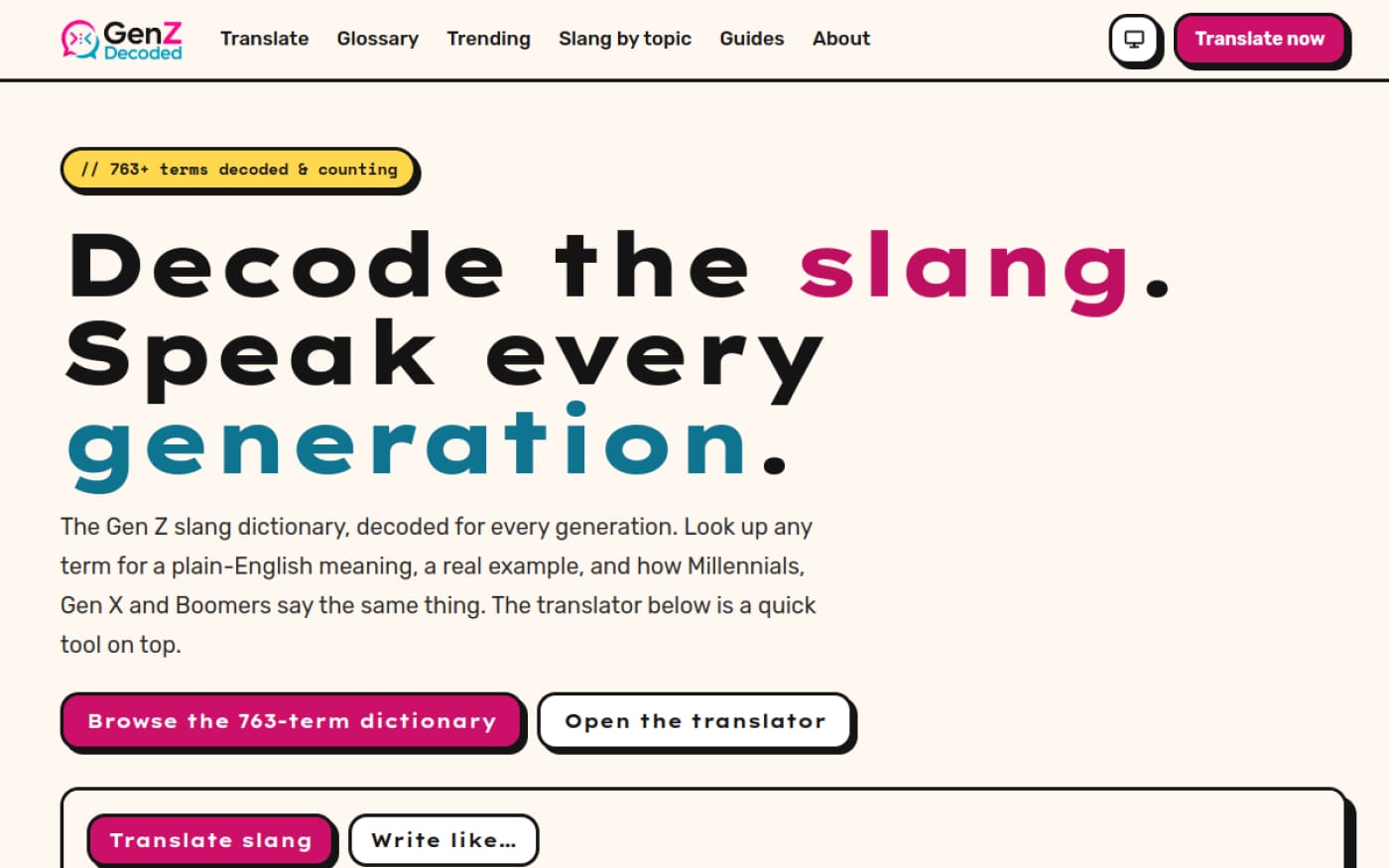
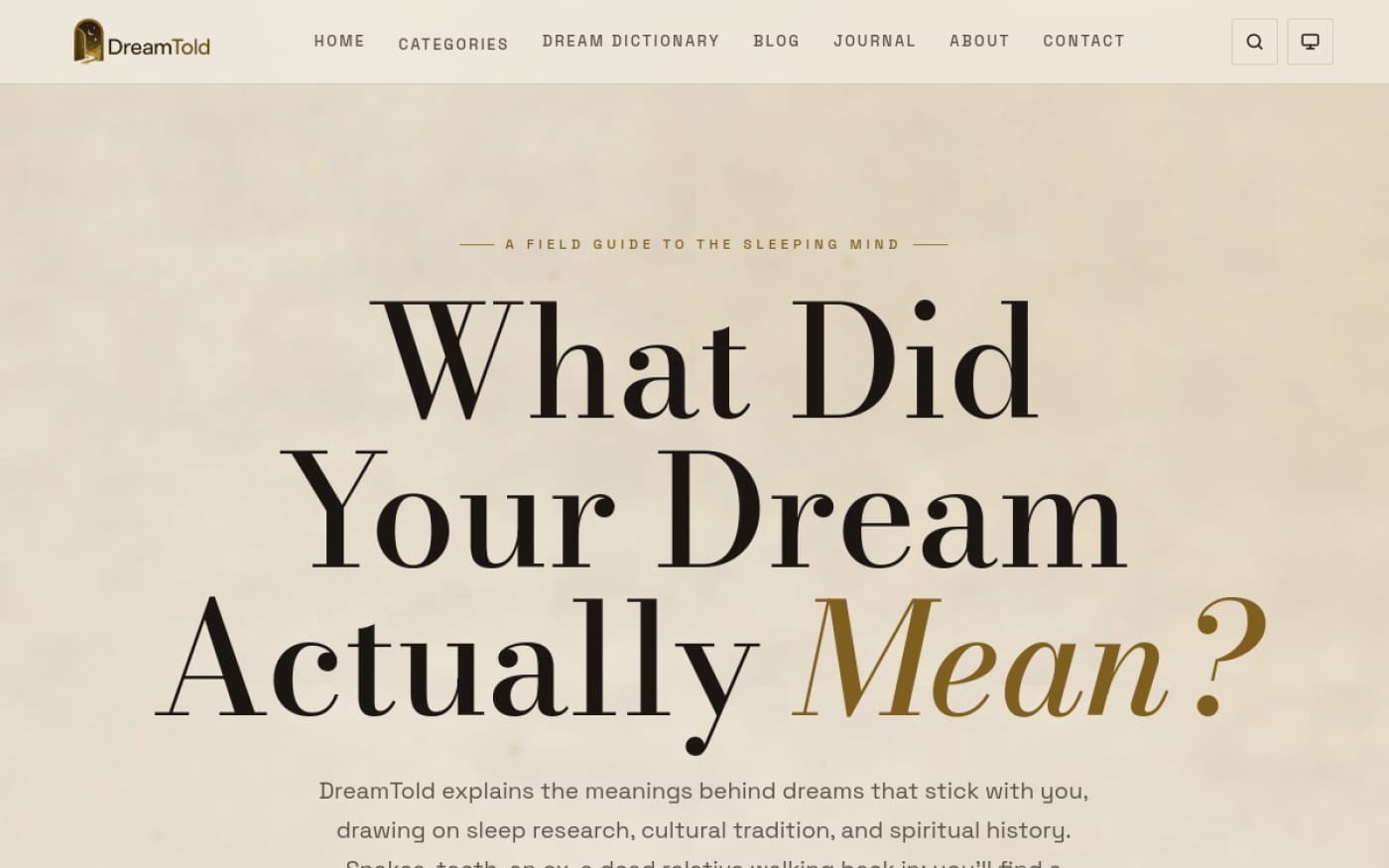
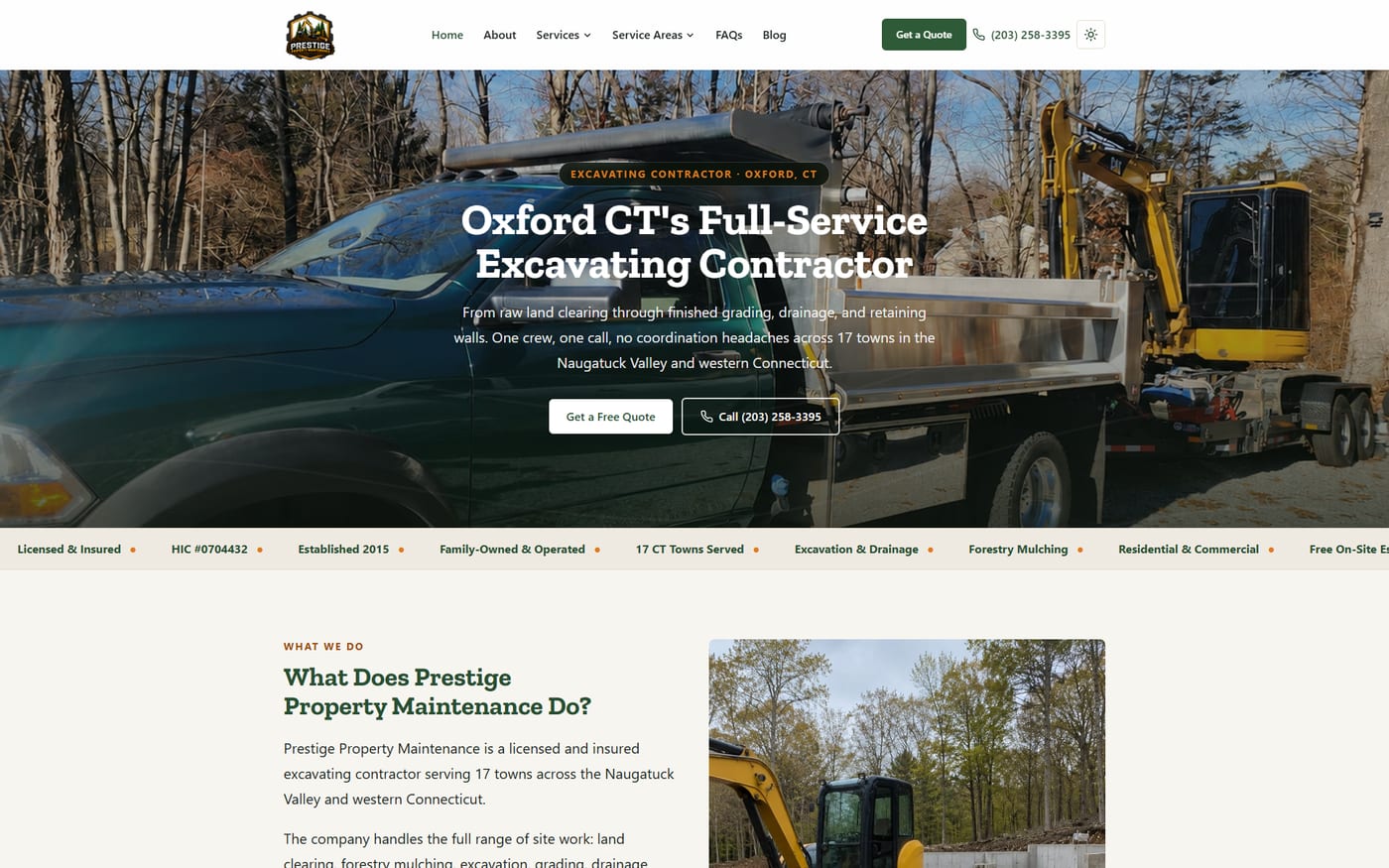



More Web Design & Development guides.
- How to write alt text for your website images, by image type
- Does your website need an FAQ page? What to put on it
- Stock Photos or Real Photos on Your Website? A Simple Rule
- About Us Page: What Visitors Look For and What to Write
- Instagram link in bio for a business: add up to 5 links
- Terms and Conditions for Website: Needed Once You Sell Online