

Web design in Connecticut: what it costs, and what you own when it launches.
You want a website that brings in business, and you want to know what it costs before you sit through a sales call. This page carries the real Connecticut price ranges and where they come from, the questions that separate a custom build from a dressed-up template, and a plain list of what is yours at the end of it.

Two identical stepped towers on separate plinths, one built four times the height of the other.
What to compare, before anybody quotes you a number.
Six things decide whether a quote is a good one. Price is the seventh.
Compare Connecticut web design companies on six things before you look at the price: the written scope, live client work you can open on your own phone, who actually does the building, what gets tested before launch, what is in your name the day it goes live, and what keeps billing afterwards. The price only means something once those six are settled. The public numbers show why. The same marketplace that puts the state average at $475 also prices a custom business site at $2,000 to $6,500. Those are the same three words describing two different jobs.
That gap is the hard part of hiring for this. Every quote uses the same vocabulary, so the cheap one and the serious one read almost identically until you know which questions pull them apart. The rest of this page is those questions, our answers to them, and the numbers we publish rather than make you ask for.
Web Leveling builds custom sites for businesses across Connecticut and well beyond it, and the work is written down before it starts. What follows is the state-wide version. If you want the version written for your own county or town, those pages are further down.
Two sources, one brief, and ten times the price.
Start with the numbers the marketplaces put in front of you before anyone quotes you anything. Bark's Connecticut page gives an average of $475, then, further down the same page, breaks the work apart: a landing page at $165 to $1,250, a small business site of five to ten pages at $400 to $2,000, a custom business site at $2,000 to $6,500, and an online store from $1,250 to past $12,500. One source, one page, and a spread of about seventy-five to one.
Now set that beside Clutch's Connecticut directory, which answers the same question in its own words: $3,000 to $15,000 for a small business site, $20,000 to $75,000 and up for a custom corporate site, and $75 to $175 an hour. Read the two together and a small business website costs either $400 or $15,000, depending entirely on which page you happened to open. Neither source is lying to you. They are describing different work and calling all of it a website.
So, an average is the least useful number in this conversation. What actually moves a quote is countable, and you can ask for every line of it: how many pages, who writes the words, whether anything has to talk to a booking system or a payment processor or the software you already run, whether the old site's web addresses have to be carried across so you keep the search rankings you have, how much testing happens before launch, and what support looks like after it. Make two quotes name those, and two numbers that looked comparable stop being comparable.
We quote per project. A setup fee and a flat number, both of which you see in writing before anything begins, with no hourly meter and no line items that appear later. The one price we publish outright is the $500 minimum for a Google Business Profile reinstatement, because that job is defined tightly enough to price without a conversation first.
There is a version of this where we are the wrong call. If you need a five-page brochure site live by Friday on a few hundred dollars, a template is the right answer, and we will tell you so rather than take the work. Custom earns its money when the website is how customers find you, judge you and reach you, and when it is going to be doing that job for years. For a lot of established businesses in this state, that is exactly what it is. For some, honestly, it is not.
We also publish our own numbers instead of holding them back for a call. There is a full breakdown of what a custom website costs, a companion piece on what a cheap website really costs once the rebuild is counted, and the unsentimental version of whether web design is still worth paying for in 2026.
Custom is not a protected word. Six questions find out which one you are buying.
Custom is not a protected word. It can mean code written for you, a custom design sitting on a standard content system, or a purchased theme with the colours changed. All three get quoted as custom, and all three are the right answer for somebody. The difference never shows up in the adjectives. It shows up in six questions, and any honest agency will answer them in a sentence each.
- What is custom, exactly? The design only, or the code underneath it as well? A custom look on a bought template is a real product at a lower price. It is not the same product, and the quote should say which one you are buying.
- What third-party software is in it? Every plugin, theme licence and hosted add-on is a renewal, a dependency, and something that can break at three in the morning. Ask for the list before you sign rather than at the first renewal notice.
- What can you change yourself? Some sites let you rewrite a paragraph in a minute. Some need a developer to change a phone number. Neither is wrong, but only one of them matches how your week actually runs.
- What testing happens, and who does it? Ask for a sample accessibility report and ask what it covers. W3C states plainly that automated tools alone cannot decide whether a site meets accessibility standards, so a serious answer names a person doing the manual review, not just a scanner score.
- Can you open their live work right now? On your phone, on your own connection, not on their monitor. Fill in a contact form. Tap through the menu. A portfolio screenshot cannot fail. A live site can, and that is the point of looking.
- What happens when the scope changes? Mid-project changes are normal and expected. Change orders that arrive as a surprise invoice are not. How one gets approved, and by whom, belongs in the contract you sign at the start.
WordPress earned its era, and we still support clients who are on it. New builds are custom and static, which is why they open fast on a three-year-old phone in a car park and why there is no plugin stack sitting there waiting to break. If you want the longer comparison without the sales pitch, we wrote out WordPress versus a custom website.
Speed is not a finish either. Google folds how fast your pages load into where they rank, and readers give up long before an algorithm does. That is the argument behind the three-second rule, and it is why the sites we build ship as finished files with nothing heavy to assemble on the way to the screen.
The same shape of work decides whether you get found at all. Custom web design is the foundation, search engine optimization is what makes the pages readable to the engine that ranks them, and generative engine optimization is the newer half: when a buyer asks an AI assistant who to hire in Connecticut, something has to make the answer you. Fast, structured, factual pages are what those systems cite, which is why the build and the visibility work are one job here rather than two invoices.
If you cannot take it and leave, you do not own it.
Ask any agency one question before you compare anything else. If we part company next year, what do I keep? For plenty of buyers the answer turns out to be a cancellation email and a folder of images, because the website was never theirs. They were renting it and nobody said the word.
Our answer is the whole product. Everything leaves with you. The domain sits in your own login. Hosting, analytics and your Google Business Profile are set up in your name on day one, so there is nothing to transfer later, because you held it the entire time. The design, the content and the data are yours. Any competent developer, ours or whoever you hire instead, can pick it up the same day and keep it running.
Whoever you end up hiring, get the handover written down before the first payment rather than after the last one. It should name the domain registrar login, the hosting account, analytics, the content system, the design files, the source code and any paid licences, and say who administers each one. The FTC's guidance for small businesses hiring a web host is a free checklist for exactly this, written by people with no stake in the sale. Then test the access before the final invoice clears. An account you have never logged into is not an account you own.
Be clear about the other half of that promise, because the two get confused. Owning everything means never being held hostage. It does not mean no commitment. Real work runs on real terms here: a setup fee, a written scope, and a commitment sized to how long results actually take. What you will never sign is a trap.
If you want to see how that plays out on finished work rather than in a paragraph, the case studies name the problem each business came in with and what changed.
Two honest limits on that. We feature client work only where the client has agreed to it, so some of the businesses we are proudest of appear in outline or not at all. And a case study is our account of our own work, which is worth roughly what you decide it is worth. So, ask for a reference call instead. Ask what was delivered, when it actually landed, and what support felt like six months after launch. That is the check no portfolio can pass on our behalf, and it is the one to put to every name on your list.

Distance decides your map results. Not your web company's.
No, and the reason is worth knowing because it also tells you how local search works. Google states that local results are decided mainly by relevance, distance and prominence. Distance there means the distance between the searcher and your business, not between you and whoever built your website. Nobody looking for a dentist in Meriden is shown a different set of dentists because of where a web company keeps a desk.
So, the question worth asking is not how close the agency is, or even whether you need an agency rather than one good person. It is whether working at a distance has actually been organised. A named person who answers, a meeting rhythm agreed at the start, decisions written down where you can read them back weeks later, and a response window you can hold somebody to. Ask what all four are. If the answer is vague, distance was never the problem.
To answer the question people actually mean by it: our Connecticut listing is anchored in Southbury. That is a residence and a service area, not an office, and we are not going to dress it up as more than that. Ron Tapanes is the first point of contact for our Connecticut clients, and a good share of the work runs start to finish without anyone driving anywhere. What you will not find is a rented address in a town we have never worked in, because a company that invents one to chase map results has told you something useful about itself before you have even hired it.
Where you sit does matter for one part of the work, and we treat it separately for that reason. Local SEO is the part that turns on proximity: the signals that tell Google which towns you serve, the Google Business Profile behind the map results, and the reviews that decide who gets called first. That work happens on your listing and your pages, in your town. It does not require ours.

One market on paper. Several on the ground.
Connecticut is small enough to talk about as one market and varied enough that it plainly is not one. Fairfield County and the Stamford corridor run on finance and corporate services, where the design bar and the reporting expectations both sit high. Hartford is insurance and the capital-region business built around it. New Haven carries health, education and life science. Central Connecticut still makes things. The shoreline has a visitor economy with a season attached to it, and the northwest and northeast corners are rural in ways that change what a website has to do for a living. Those are different buying situations, not lines on a map.
The counties are geography rather than government. The Census now counts the state in nine planning regions instead of its eight counties, a change requested by the state and adopted in 2022. County names stay useful anyway, because they are still the words your customers use for where they live.
Each county has its own page, written for the towns inside it and for the question of which of those names are worth targeting at all: Fairfield County, Hartford County, Litchfield County, Middlesex County, New Haven County, New London County, Tolland County and Windham County. Under those sit the town pages, which is where the proximity work actually lives.
Several cities have a page of their own, built for that city's businesses and searches rather than swapping a name into shared copy: New Haven, Hartford, Stamford, Greenwich, Norwalk, Fairfield, Darien, Milford, Manchester, Meriden, Southington, Ridgefield, Torrington, Thompson, North Haven, West Haven, West Hartford, East Hartford, Woodbury and Southbury. More roll out from here the same way. If your town is not on that list yet, it changes nothing about whether we can build for you. It only changes which page you should read next.

Ready when you are. Your work, actually yours.
Tell us about your business and what this needs to cause. You'll have a plan back within one business day, including when the answer is that you do not need this.
Tell us your caseA single state drawn as its regions, a marker standing in several of them and lines running between.
Four stages. You always know which one you are in.
Four stages, and you always know which one you are in, what is finished and what is next. The calendar is usually yours rather than ours. Hand-coding moves quickly once decisions are made; what stretches a build is waiting on photographs, copy and passwords. We tell you what we need up front so the work never idles on our side.
- Scope, in writing, before anything is designed Pages, who writes the content, which systems have to connect, how many rounds of revisions, what counts as a change order and who approves one, and the launch date. If you are moving off an existing site, every current web address is inventoried here and mapped to its new home, so the rankings you have already earned come with you.
- The design system before the pages Type, colour, spacing and the patterns your pages get built from, set to how your market judges a business. You see the homepage concept early, mark it up in plain language, and it gets revised until it reads like you and nobody else.
- Built by hand, then proved by number Every page written in code and shipped as finished files, with your content placed as intended and nothing dropped or padded to fit. Then the numbers: contrast measured against accessibility standards in both light and dark, real phone widths checked for anything that clips or drags sideways, speed audited on the finished build, and the rendered pages inspected so search engines see the full content. What fails gets fixed before you ever see it.
- Launch, then a handover you can hold Domain pointed, analytics live in your own account, Google Business Profile aligned, sitemap submitted. Then the accounts, the credentials and a written walkthrough, handed over and talked through together. Launch day is the day you own a website rather than the day you start renting one.
Asked and answered, before the call.
What should I budget for a Connecticut business website?
Marketplace estimates for the state run from a few hundred dollars for a single landing page to several thousand for a custom business site, and none of them are comparable until the scope is written down. We quote a flat per-project number after a scoping conversation, so the figure you approve is the figure you pay.
Get a Connecticut project pricedWhat exactly do I own, and are there exceptions?
The domain, the hosting, the analytics, the content, the design and the data, all in your name from the start. The exceptions are things licensed from somebody else, a stock photograph or a paid typeface, and those are named in the handover document with their renewal terms, so nothing about what transfers is a surprise later.
Ask us about a website in ConnecticutWhat if something breaks after launch?
If we built it wrong, fixing it is ours and not a new invoice. Ongoing care is a separate and optional arrangement covering updates, edits and monitoring, with no contract that holds the site hostage. If you would rather run it yourself you can, because every account is already yours.
Ask what happens if a Connecticut build goes wrongHow quickly will I hear back?
An enquiry gets a reply within one business day. Once a project is running you get a named person rather than a ticket queue, and the response window is written into your scope so it is a commitment instead of a hope. Ask any agency you are considering to put theirs in writing too.
Talk your Connecticut project through with usWill I lose my Google rankings if we rebuild?
Not if the move is done properly, and you can check in advance that it will be. Ask whoever is quoting you whether the redirect map is inside the scope or a change order later, and ask to see it before launch rather than after. It is the item most often missing from a rebuild quote, and it is the one whose absence actually costs you rankings.
Tell us what you need in ConnecticutDo you only work with Connecticut businesses?
No. We build for businesses across the country and overseas, and Connecticut is one of the places we work most. That matters to you mainly in one direction: the range of industries we have built for is wider than any single state would supply.
Get a straight answer about ConnecticutWe already have a site. Is a redesign or a rebuild the answer?
It depends on what is actually failing. If the design is dated but the site is fast and findable, a redesign is cheaper and sensible. If it is slow, hard to edit, or invisible to search, a redesign paints over the problem. We will tell you which one you are looking at before quoting either.
Ask about moving an existing Connecticut siteYou already know whether your website is bringing in business. If it is not, tell us what is bothering you about it and we will reply with the shortlist within one business day. No pitch deck, no discovery fee, and no obligation to use a word of it.
The other places we build for.
Work we have done in Connecticut.
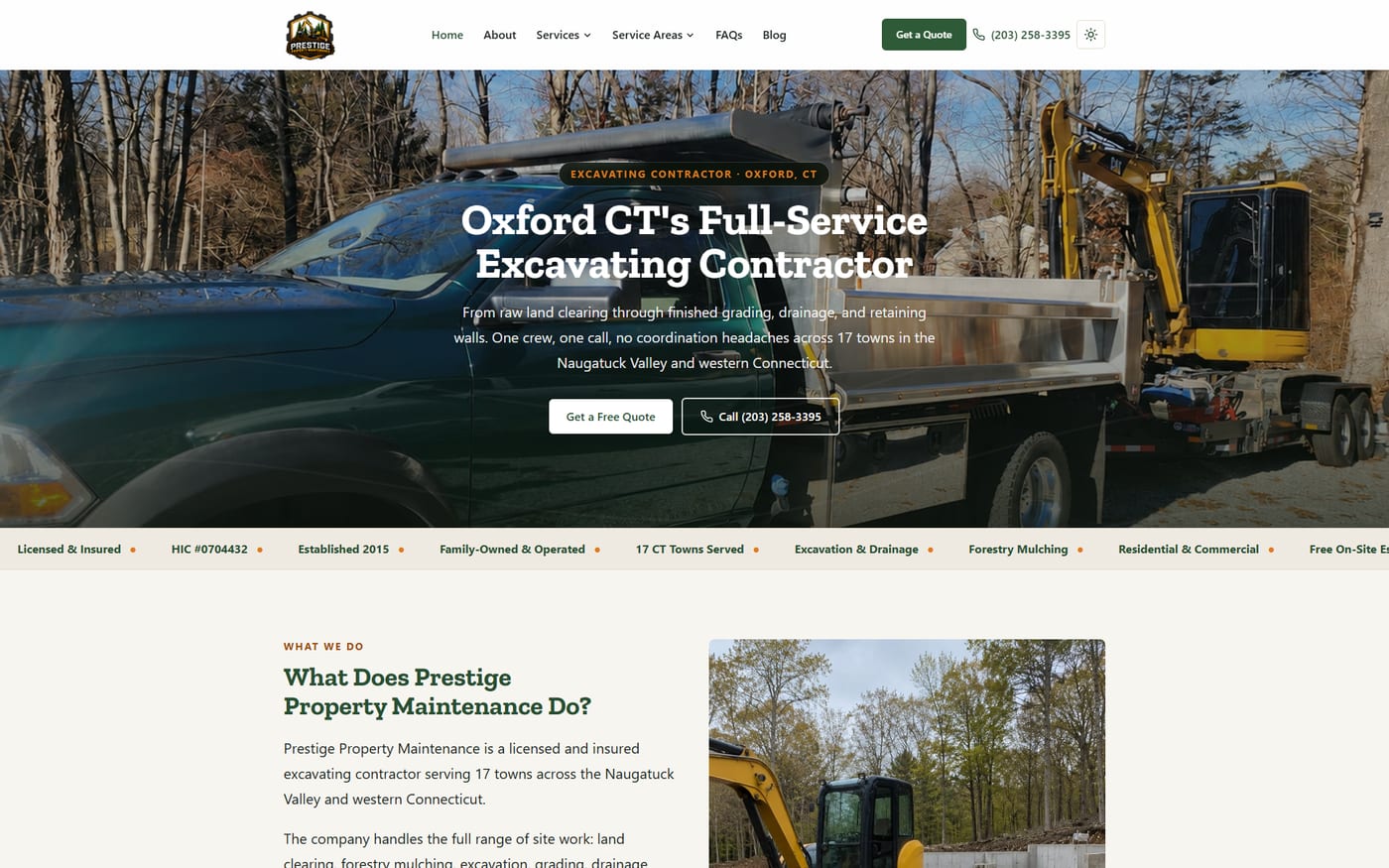
Prestige Property Management
TypeProperty Management / Excavation
LocationConnecticut
StatusLive
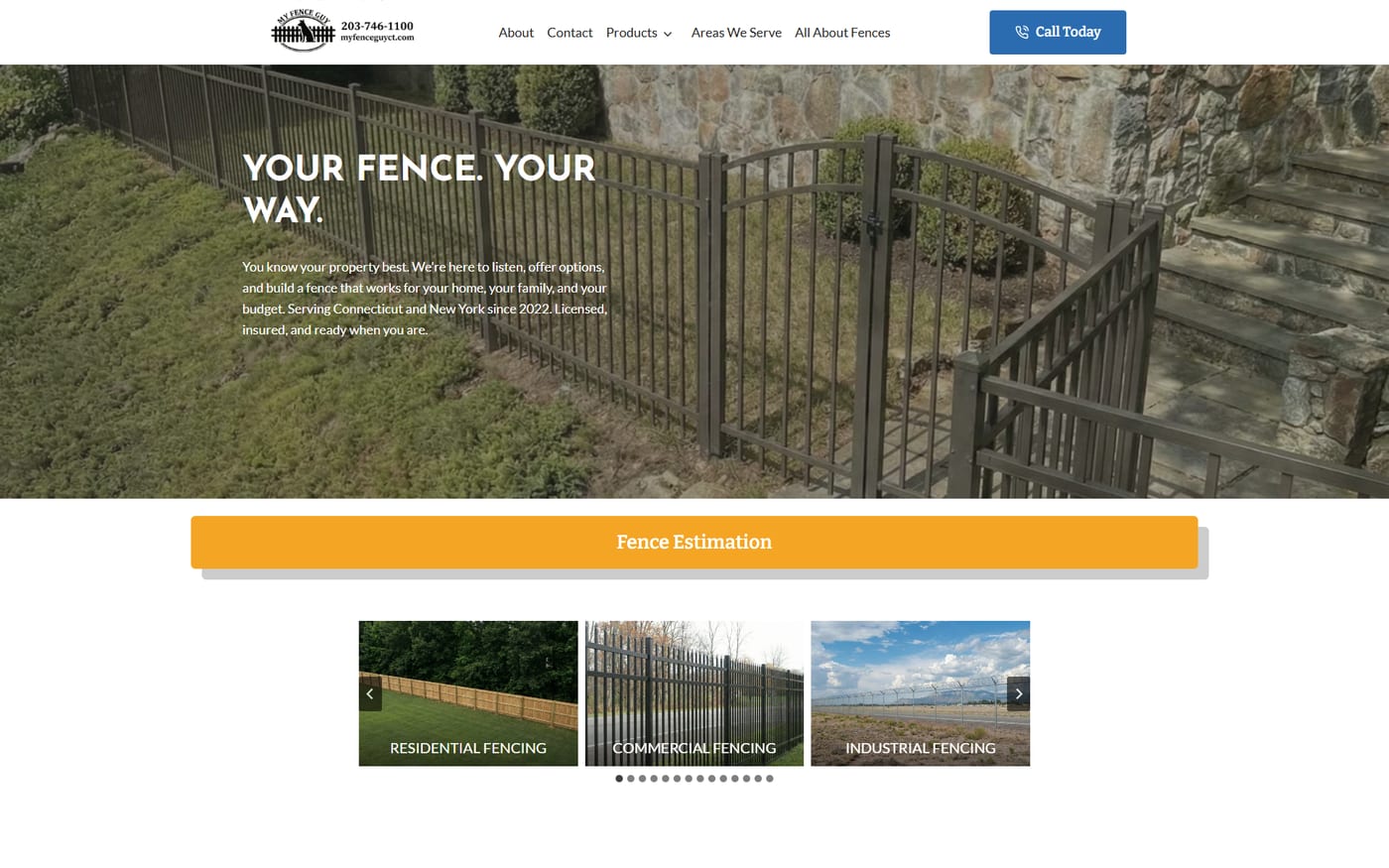
My Fence Guy
TypeFencing
LocationConnecticut
StatusLive
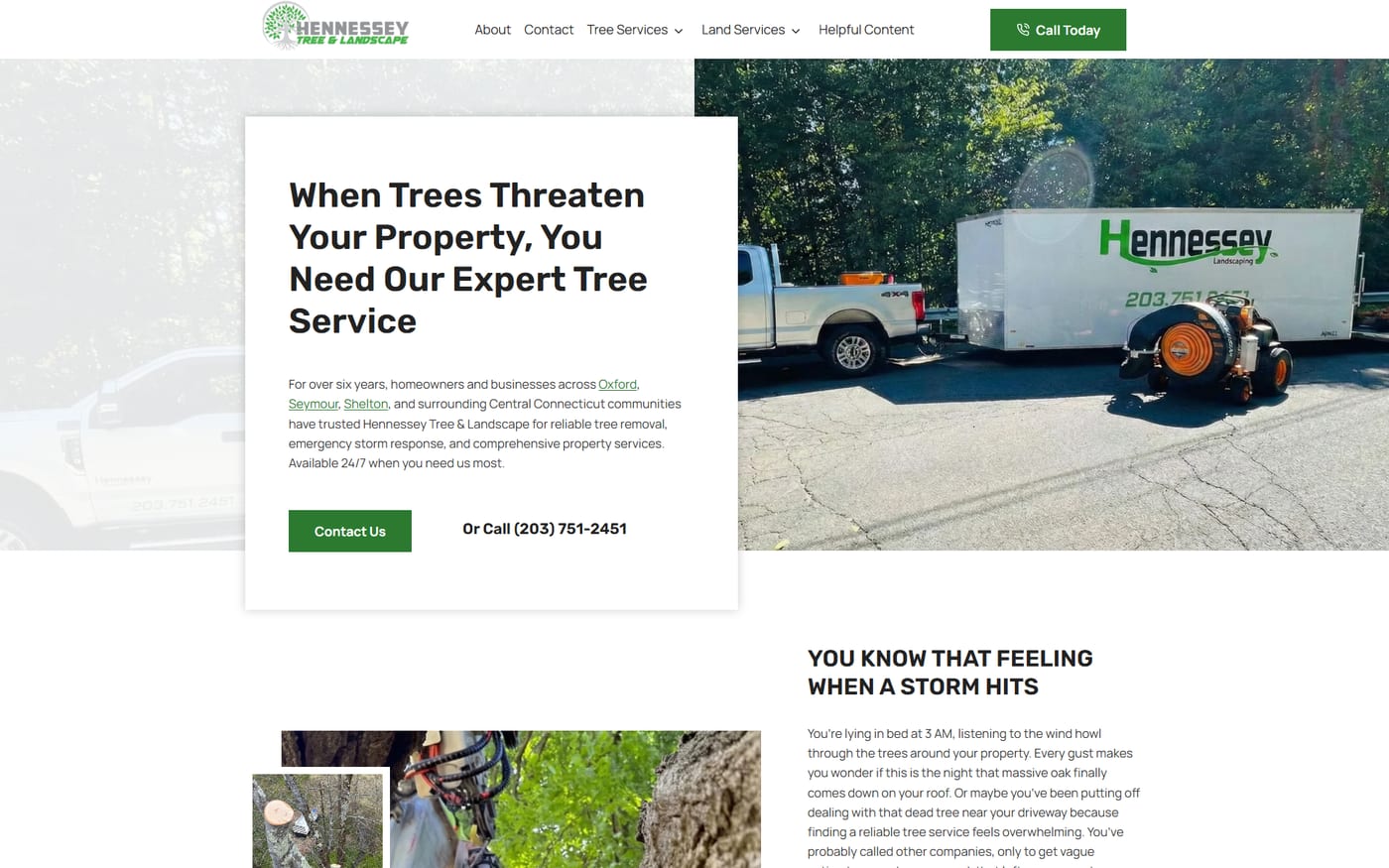
Hennessey Tree Service
TypeTree Service
LocationConnecticut
StatusLive
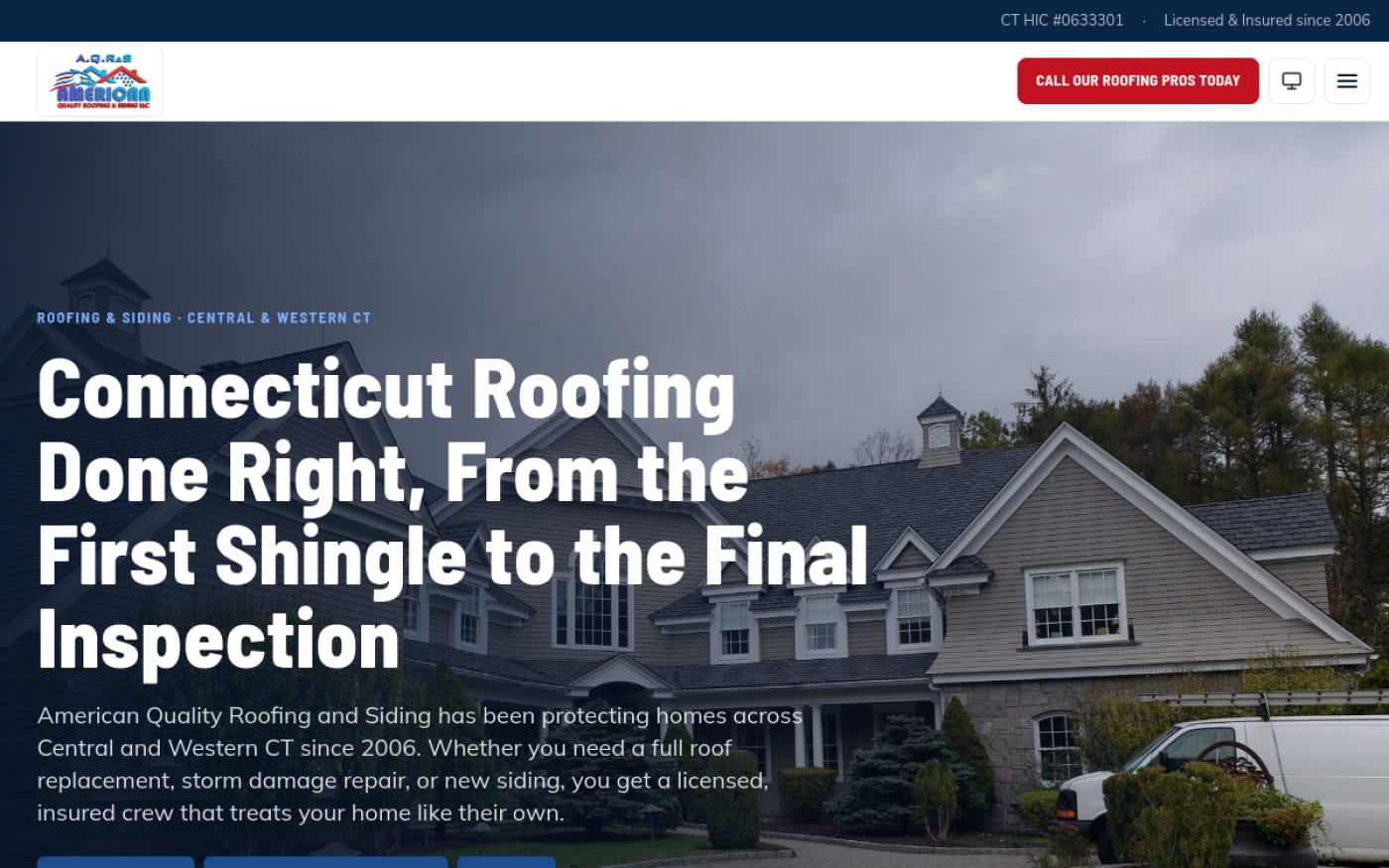
American Quality Roofing and Siding
TypeRoofing
LocationConnecticut
StatusLive
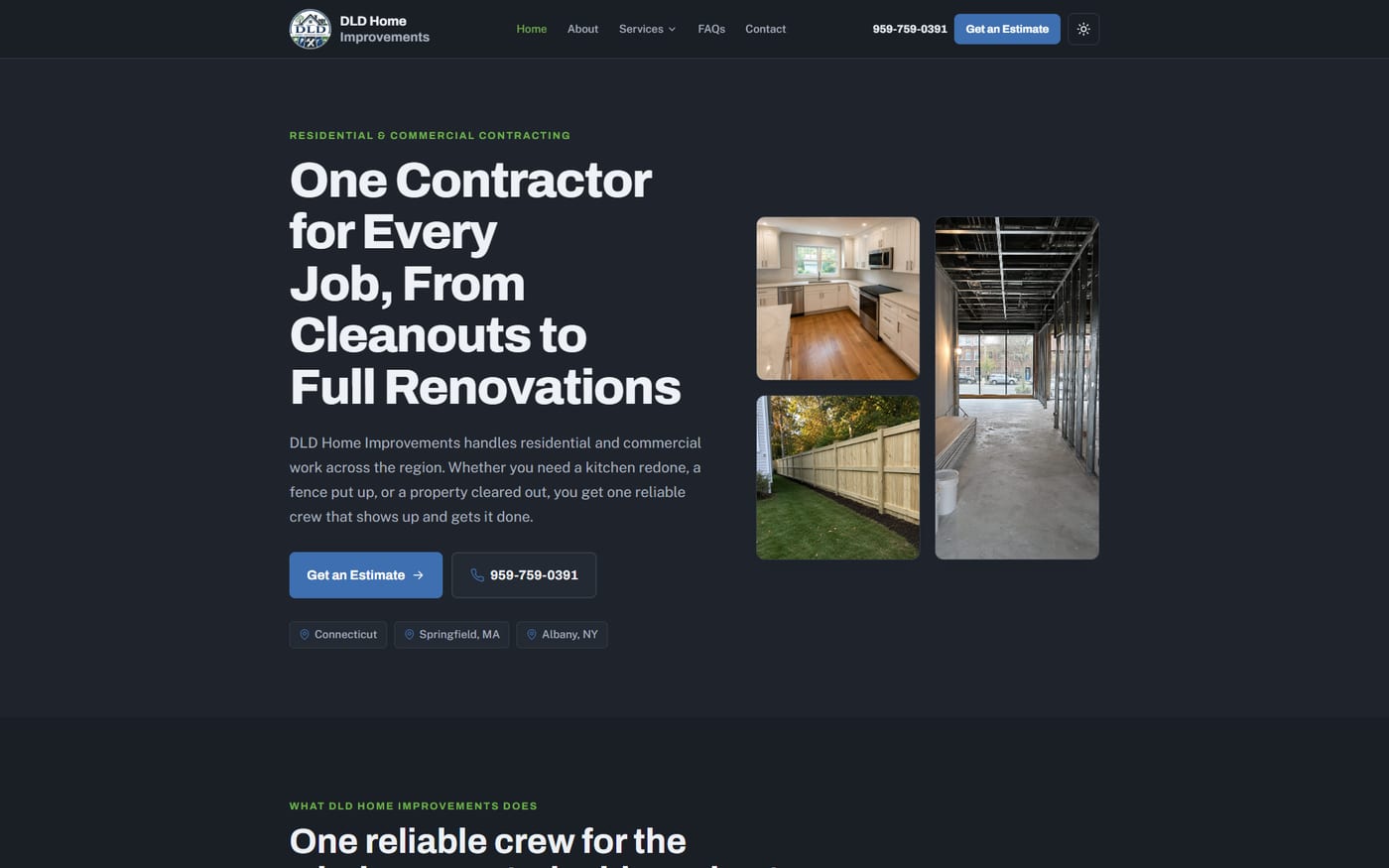
DLD Home Improvements
TypeHome Improvement
LocationConnecticut
StatusLive
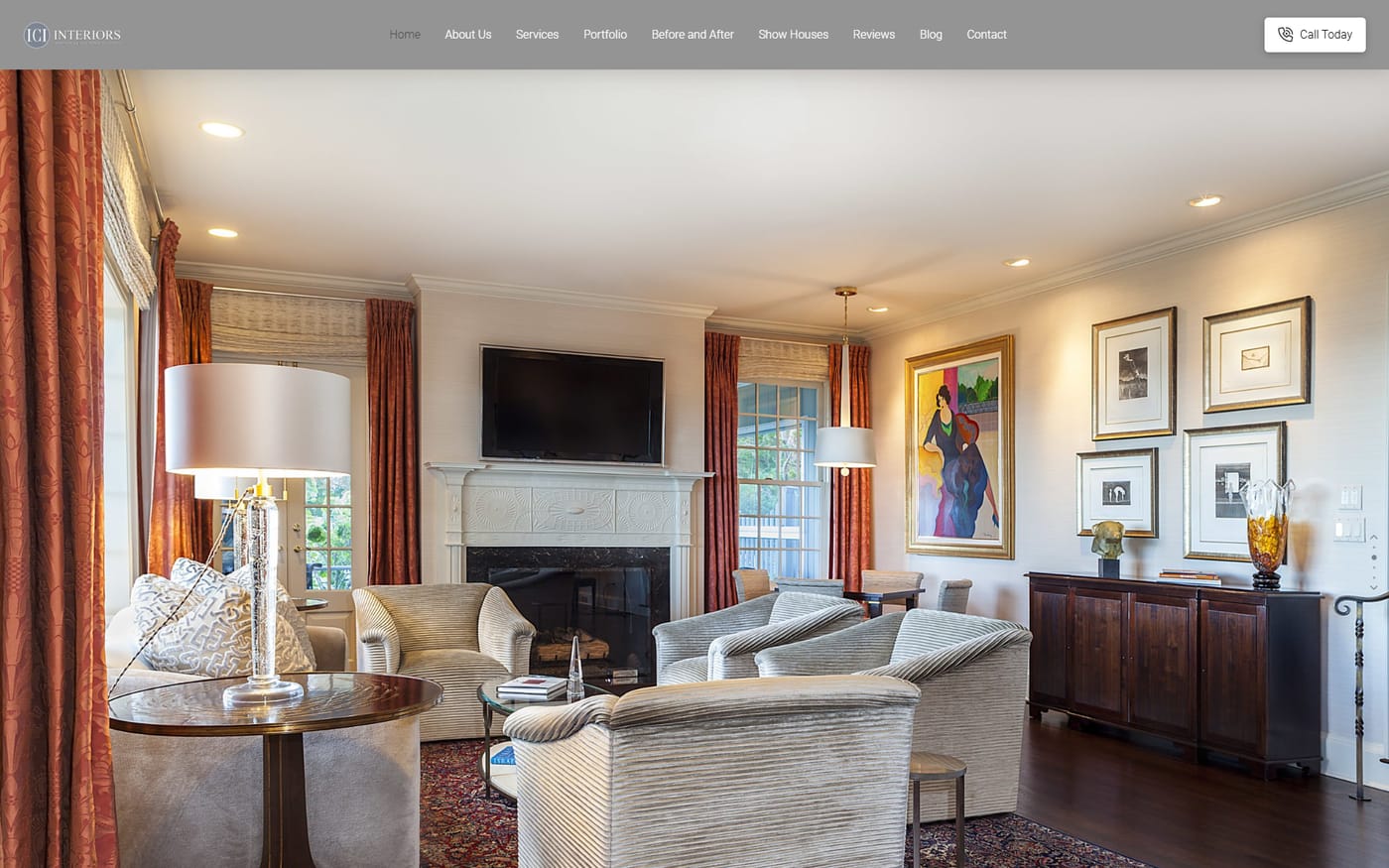
ICI Interiors LLC
TypeInterior Design
LocationConnecticut
StatusBuilt
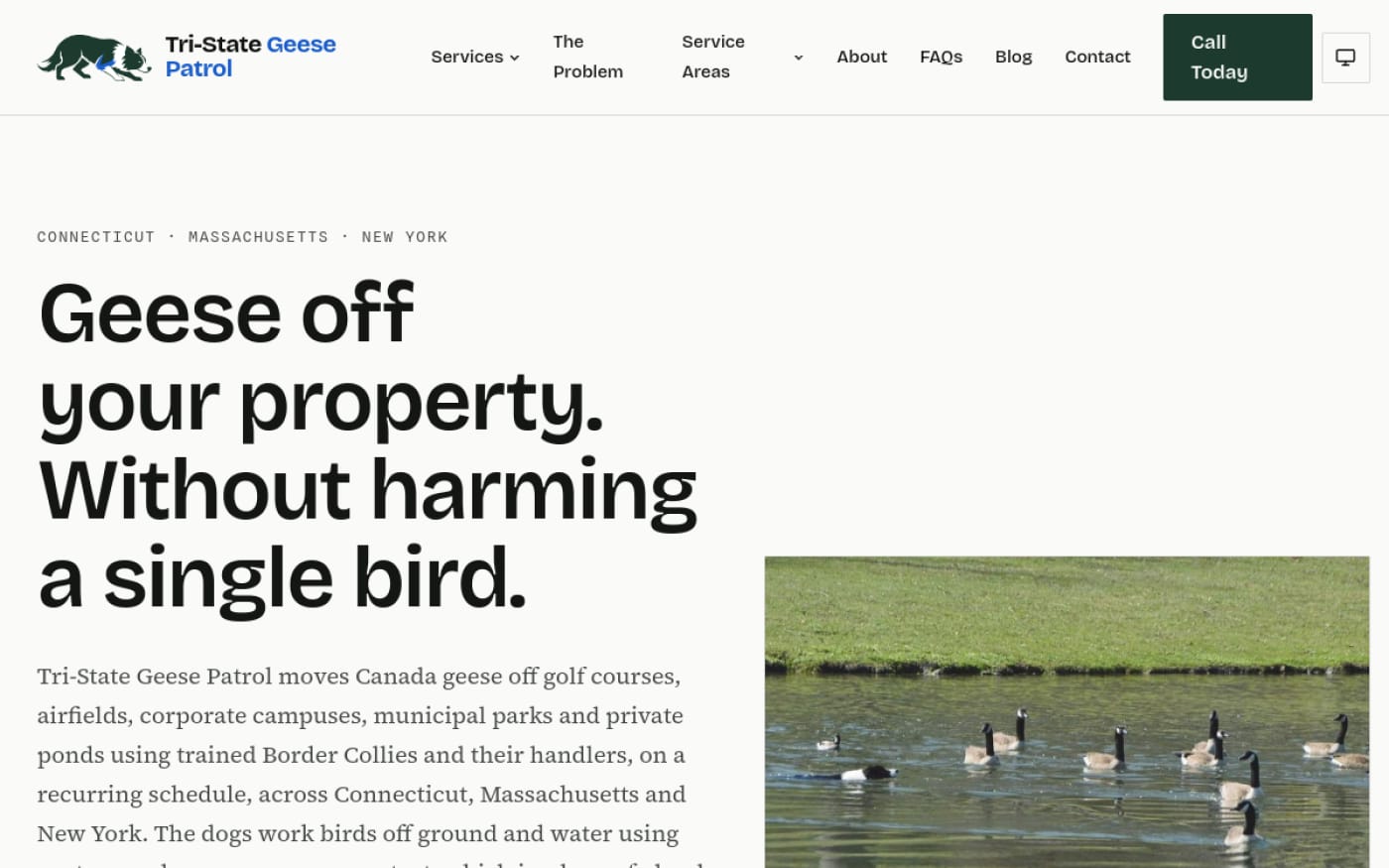
Tri-State Geese Patrol
TypeWildlife Control
LocationConnecticut
StatusLive