

On its November 6, 2026 earnings call, the CEO of Ziff Davis, a national digital-media publisher, said referrals from Google to its sites fell about 37% in the quarter ended September 30, 2026.
That is a year-over-year drop, and CEO Vivek Shah added that the company is "not planning on a search recovery."
If your own Google search traffic has dropped for several months, that headline can read like a forecast for your business. It is a report on one company's websites, which rest on broad information and shopping searches. Whether your site is in the same position shows up in your own Search Console, Google's free report on how your site appears in search.
Start there: three months of clicks and impressions, set against the same months last year, and the ten pages that lost the most. What those numbers show decides whether you have a Google problem, a website problem, or neither.
Key Takeaways
The CEO gave it on the November 6, 2026 earnings call for the third quarter of 2026, and it covers the company's national properties, not your site.
Compare Search Console clicks and impressions for the last three months with the same months last year, then list the ten pages that lost the most.
Falling impressions point to visibility or demand. Steady impressions with a lower click rate point to the results page or what searchers want.
Put the same pages next to calls, forms, bookings and sales to tell a traffic problem from a conversion problem.
Broken tracking, a failing form or one weak page can explain a drop, and steady impressions with steady leads may not justify a recovery project.
What did Ziff Davis say about Google traffic, and does it apply to my business?
Ziff Davis runs dozens of national digital-media brands. According to the earnings call transcript reproduced by Yahoo Finance, Shah said Google referrals to its properties fell about 37% year over year in the third quarter of 2026, and that the company was "not planning on a search recovery." The company lists the call on its investor relations page, and its third quarter financial results came out a day earlier.
| Date | Who | What |
|---|---|---|
| November 5, 2026 | Ziff Davis | Third quarter 2026 financial results released, for the quarter ended September 30, 2026 |
| November 6, 2026 | CEO Vivek Shah, earnings call | Google referrals to its properties fell about 37% year over year in the third quarter of 2026 |
| November 6, 2026 | CEO Vivek Shah, earnings call | The company is "not planning on a search recovery" |
| November 6, 2026 | CEO Vivek Shah, earnings call | Its content appeared in AI Overviews and AI Mode roughly 2.7 billion times in the quarter, nearly ten times its Google Search clicks |
A local business sits in a different spot. Ziff Davis's traffic rests on broad information and shopping searches, and an AI answer on the results page can settle many of those. Your traffic rests on service, location, map and branded searches, where a person may still need a provider, a price, your hours or a booking form.
That difference is no guarantee your numbers are fine. The 37% belongs to Ziff Davis; yours is sitting in your Search Console account.

What has Google said about clicks from AI Overviews and AI Mode?
In a post dated August 6, 2025, Google said AI Search was generating more queries and "slightly more quality clicks" to websites than the year before. It defined a quality click as a visit where the person does not quickly return to Google. Google's statement comes without a click-through rate, so you cannot turn "slightly more quality clicks" into a percentage for your own site.
Google also says AI Overviews and AI Mode include links to supporting web pages, and Search Central says traffic from AI features is counted in the overall Search Console performance report. Your clicks from those features sit in the same totals as every other result.
Outside studies show lower click rates on some searches, with limits. Pew Research Center (July 21, 2025) tracked 900 U.S. adults and 68,879 Google searches in March 2025. People clicked a traditional result on 8% of visits when an AI summary appeared, against 15% when none did, and about 1% clicked a link inside the summary. The sample was national and did not break out local or commercial searches.
Ahrefs, in a December 2025 study of 300,000 keywords, reported a 58% lower click-through rate for the top result where an AI Overview appeared. It was a keyword study, not a sample of local businesses.
Read these as signs that some searches now send fewer clicks. Neither one is your number, and an AI impression is not the same thing as a lost click.
How do I check whether my own Google clicks fell?
Search Console shows Google Search clicks, not every visit to your site, so visits from email, social posts or typed addresses live in your analytics instead. The comparison below takes about ten minutes, and Google's own help on traffic drops follows the same path of comparing periods and narrowing to pages and queries.
The Search Console check, in order
- 1
Step 1, Performance
Open Performance, choose Web search, set the last three complete months, and use Compare to add the same three months last year.
- 2
Step 2, Totals
Record clicks, impressions, click-through rate and average position for both periods.
- 3
Step 3, Pages
Open Pages, sort by the difference in clicks, and write down the ten pages that lost the most.
- 4
Step 4, Queries
For each of those pages, open Queries and note the searches behind the loss.
- 5
Step 5, Split
Separate branded searches, the ones that include your business name, from the rest, and check device and country.
Keep the result as a small table with one row per page. Google lists technical issues, indexing, seasonality, search demand, competition and ranking changes among the causes of a traffic drop, so the table is a set of leads to follow, not a verdict. The common tasks guide for the Performance report covers the filters if you get stuck.

What do falling impressions or a lower click rate point to?
Impressions count how often your pages appeared in results; clicks count the visits that followed. Falling impressions point to visibility or demand: pages ranking lower, a new competitor, a seasonal dip, or fewer people searching. Steady impressions with a lower click rate point to the results page or the searcher's intent: an AI answer, a map pack, or a title that no longer matches what people want.
| What you see | What it points to | Where to look first |
|---|---|---|
| Impressions down, clicks down | Visibility or demand | Rankings on those searches, the season, competitors, indexing |
| Impressions steady, click rate down | The results page or searcher intent | The searches that changed, your titles, any AI answer above you |
| One page lost most of the clicks | A page-level problem | That page's content, its links, and whether it is still indexed |
| Branded searches down | Fewer people looking for you by name | Reviews, listings, offline marketing |
| Clicks steady, calls and forms down | A conversion problem | Phone number, form, booking path |
If the loss looks sudden, our post on a website traffic drop that arrives overnight walks through the technical checks. If you want to see what Search Console shows for AI Mode, read our guide to AI Mode clicks data, and for searches on your own name, see how AI Overviews affect brand searches.
Do not judge the whole story by average position alone. It folds every search and device into one figure, so a page can hold its average while the searches behind it change. Clicks and impressions by page and query tell you more.
Are my calls and forms down too, or only my Google clicks?
Lay the same ten pages next to your calls, form submissions, bookings and sales for the same months. If clicks fell and leads held steady, the visitors you lost may have been people reading, not buying. If clicks held and leads fell, look at the phone number, the form and the booking path before anything else; a form that fails to send looks exactly like a traffic problem in the monthly totals.
When clicks and leads both fell on your service and location pages, the cause sits in visibility. Map and listing signals are the job of local SEO, and being left out of AI answers is a separate check, covered in what to do if your business disappeared from a Google AI Overview. When clicks hold but inquiries slip, conversion rate optimization is the closer match.
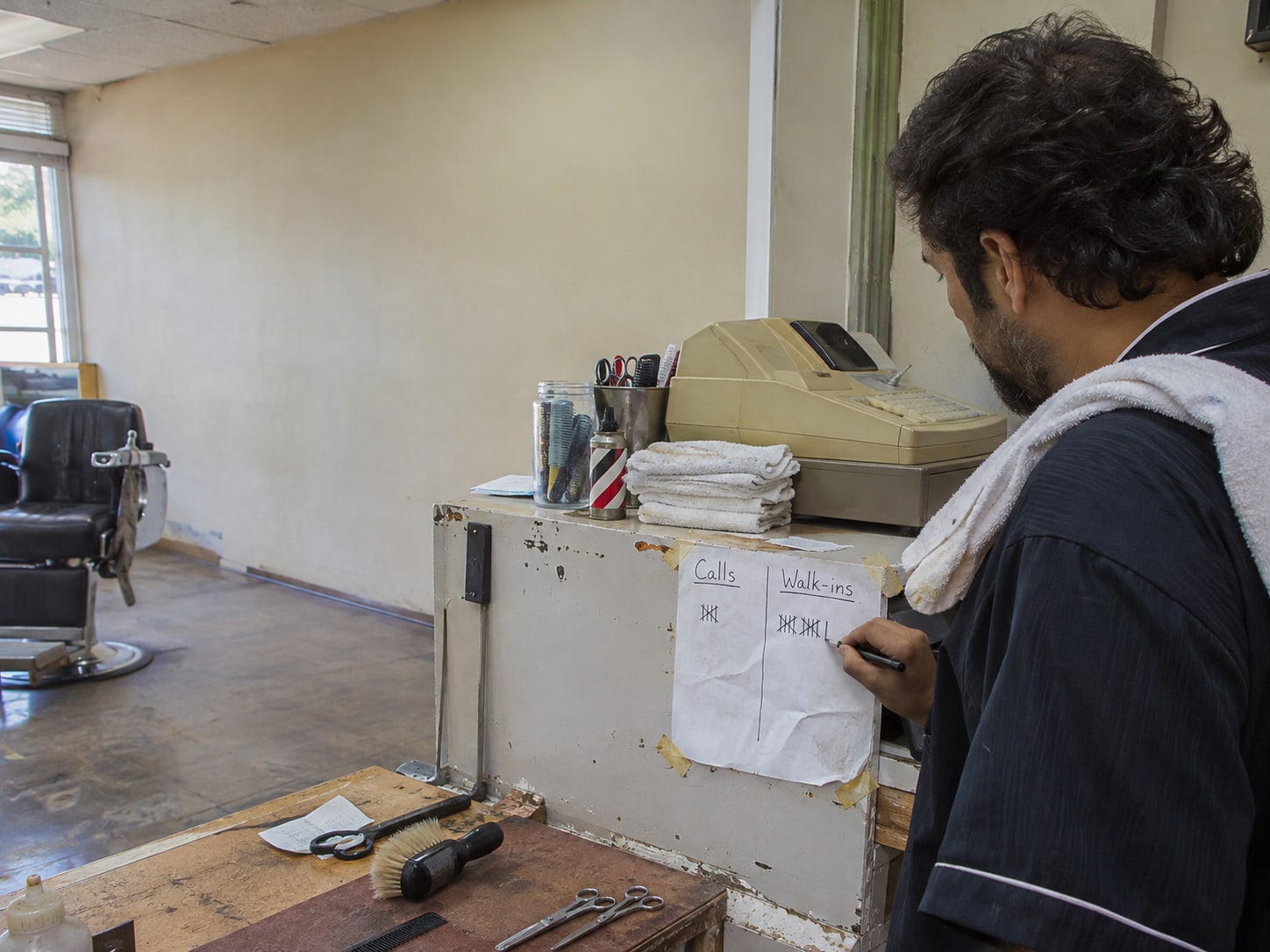
Ask each new caller how they found you and keep a tally. A Google click is only one of the ways a customer arrives, and the tally shows whether the drop in clicks has reached the cash register.
When is a small fix enough, and when is bigger work worth paying for?
If the drop traces to broken tracking, a failing form, one weak page or a narrow technical problem, a focused fix may be all you need. If impressions and qualified leads are steady, a traffic-recovery project may not be justified, and the money may do more in another part of the business.
If impressions fell on the pages and searches that bring you customers, and no single repair explains it, the work is larger: pages that answer the search with proof, prices and local detail, accurate listings, and tracking that ties each change to a call or a booking. Search Central says the same SEO best practices apply to AI Overviews and AI Mode, which is why the basics of crawlable, useful pages still carry the weight. For visibility in AI answers specifically, generative engine optimization is the matching service.
Whoever you ask for help should start with your Search Console and lead data, say what that data can and cannot show, and promise no recovery date. Paid search can bring calls while you find the cause, as a short-term stopgap.

Can you read your Google traffic drop?
Pick an answer to begin.
1. Where did the 37% Google referral figure come from?
2. Your impressions are steady but your clicks fell. Where do you look first?
3. Clicks are steady but calls and forms are down. What does that most likely point to?
Frequently Asked Questions About a Drop in Google Search Traffic
Does Ziff Davis's 37% decline apply to my small business?
It describes Ziff Davis's national digital-media properties in the third quarter of 2026. Your own Search Console clicks, impressions and pages, compared with the same months last year, show whether your site moved the same way.
Can AI Overviews reduce clicks to my website?
Some studies report lower click-through when an AI summary appears, including Pew Research Center's 8% versus 15% for traditional results. Those samples were national, and the effect varies by search, so confirm it against your own queries.
How can I tell whether my Google traffic fell?
Open Search Console Performance, choose Web search, and compare the last three months with the same months last year. Record clicks, impressions, click-through rate and average position, then list the ten pages that lost the most clicks.
What if my impressions stayed steady but clicks fell?
Open the affected queries and look at what appears on the results page for them. A new AI answer, a map pack or a title that no longer fits the search can lower the click rate without changing impressions.
Should I wait for my Google traffic to recover?
Waiting without a diagnosis leaves the cause unknown. Find the affected pages and searches, fix any problem you can name, and track calls, forms and bookings alongside the clicks.
Can Search Console show my AI clicks?
Google says traffic from AI features is included in the overall Search Console performance report. Compare clicks and impressions by page and query to see where your changes are.
The Bottom Line
The 37% belongs to Ziff Davis; the numbers that matter for your business sit in your own account. Split what you find into four questions: is demand down, is visibility down, are fewer people clicking, or are fewer clicks becoming customers? Each one has a different fix, and some of those fixes are small.
Once you can answer those four, you stop guessing from headlines. You can spend on the one thing the data supports, whether that is a technical repair, better pages, local listings, or a working form, and leave the rest alone.
If you want a second pair of eyes on those numbers, Web Leveling can go through your Search Console and lead data with you, say what it shows and what it cannot, and tell you when a small fix is all you need. Our search engine optimization work starts from measurement and promises no recovery date. We work with small and medium businesses across the country and overseas. Send us your Search Console numbers through the contact form and we will help you read them.
Terms
Words used in this post
Tap a term to see what it means.
Search Console. Google's free report on how your site appears in Google Search, including clicks, impressions and the pages and searches behind them.
Impressions. The number of times a page of yours appeared in a Google search result.
Click-through rate (CTR). Clicks divided by impressions, the share of appearances that became visits.
Average position. The average place your pages held in results, blended across searches and devices.
Branded search. A search that includes your business name.
AI Overview. A summary Google shows on some results pages, with links to web pages that support it.