

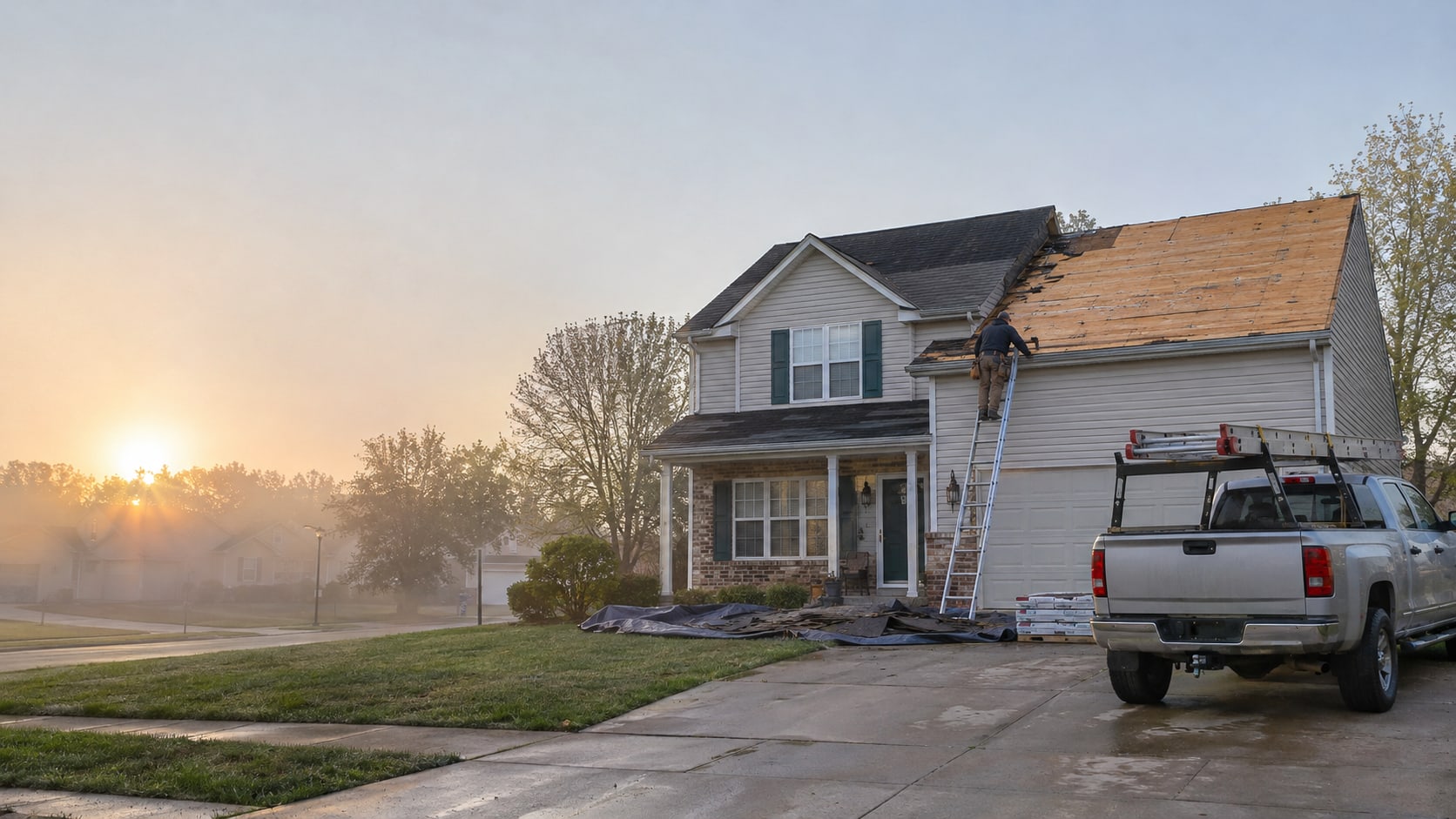
Your phone is busy all season, and the website still brings in almost no quote requests. If you are looking into SEO for roofing contractors, that gap is the thing to close. It looks the same for landscapers and remodelers who price planned projects.
Start with one strong page for each major job, real photos of finished work, a visible way to ask for a quote, and an accurate Google Business Profile. Then measure calls, form submissions and booked estimates.
A homeowner or property manager decides within moments whether your company looks real. Give them the proof first, and the quote requests have somewhere to land.
Key Takeaways
A roof replacement, a patio or a retaining wall each get a page with scope, process, price factors, questions, real completed work, a visible phone number and a short quote form.
Use the most specific primary category, list your real services, show the areas you actually serve (up to 20), and hide a home address where customers are not served.
Google says no one can pay for a better local ranking, so judge any spend by calls, form submissions and booked estimates.
Ten minutes on three competitor sites shows what yours is missing
Search your main service plus the town you work in most, such as "roof replacement" and the town name. Open three contractor sites that appear and write down what each one gives a visitor. Then check your own site and profile against the same list.
The ten-minute check
Real finished work from the company, or only stock images and equipment shots.
A page for each job, or one page that lists everything in a paragraph.
A range, a starting point or the things that move the price, plus a form that is short enough to finish.
A phone number visible without scrolling, reviews a visitor can read, and license information where your state requires it.
Clear words about which towns the company works in.
Planned-project searches usually combine a service, a property type and a place, such as "roof replacement contractor near me" or "retaining wall contractor." Google says local results rest mainly on relevance, distance and prominence, so there is no single keyword formula to chase. What the check turns up is missing proof, the kind that makes a quote request harder to send.
Emergency work runs on different habits. A caller with a leak tonight picks whoever answers first, which is the situation covered in SEO for locksmiths, towing and plumbers. Planned jobs get decided on what the visitor can see.

Every major job you quote needs its own service page
A visitor who searched for a patio, a retaining wall or a roof replacement wants to land on a page about exactly that. One page that lists every service in a single paragraph gives them nothing to hold onto. Give each core job its own page, with a plain URL and clear headings, written for a person rather than a search engine.
Google's SEO starter guide recommends descriptive URLs, a readable layout and useful, original content. Its guidance on helpful content asks for the same thing from another angle: pages that answer what a person came to learn.
Each service page should cover the scope of the job, how the work goes from first visit to cleanup, and what moves the price. Exact pricing is often impossible before an estimate, so use a range, a starting point or a short explanation of the factors. Add the questions homeowners ask before they call, a few real completed jobs, a visible phone number and a short quote form.
Around those pages sit a few more that carry trust. The table shows what each one does for the visitor.
| Page | What the visitor learns |
|---|---|
| Service page, one per major job | What you do, how the work goes and what affects the price |
| Project or case-study page | What finished work looks like, where, with which materials |
| Quote or consultation page | How to ask for an estimate and what happens next |
| About or team page | Who shows up at the house or property |
| Service-area information | Which towns you really work in |
| License and insurance details | Credentials, where applicable to your trade and state |
| Reviews or testimonials | What past customers said, in their own words |
Real project photos and write-ups do the convincing
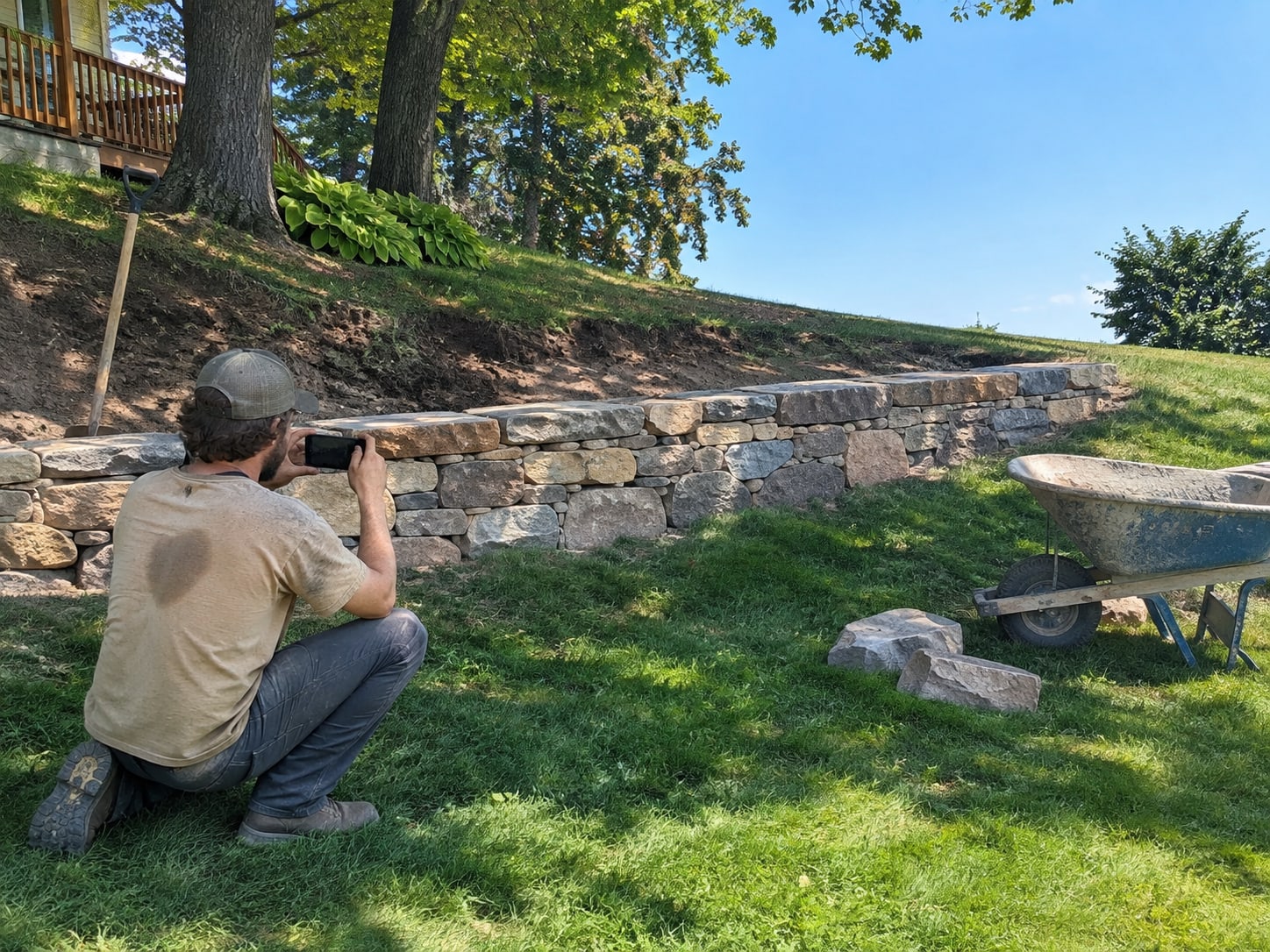
A homeowner who has never met you needs a reason to believe the work is yours. Stock photos and pictures of equipment do not supply one. Photos from your own jobs do, especially when each one comes with the scope, the town, the materials and how the job turned out.
That job is medium sized, and it never really ends. A good habit is to take photos at the end of every completed project and write four lines about it while the details are fresh. Over a season, the pile becomes your project pages and your profile photos.
The same proof makes your name stand out on the page. Self-awarded labels such as "best" or "leading" prove nothing, while a finished retaining wall with its location and materials does. If you add business details in structured data, Google's local business markup guide says it can help Google understand them, though it does not guarantee a search feature or a ranking.
The quote path should be the easiest thing on every page
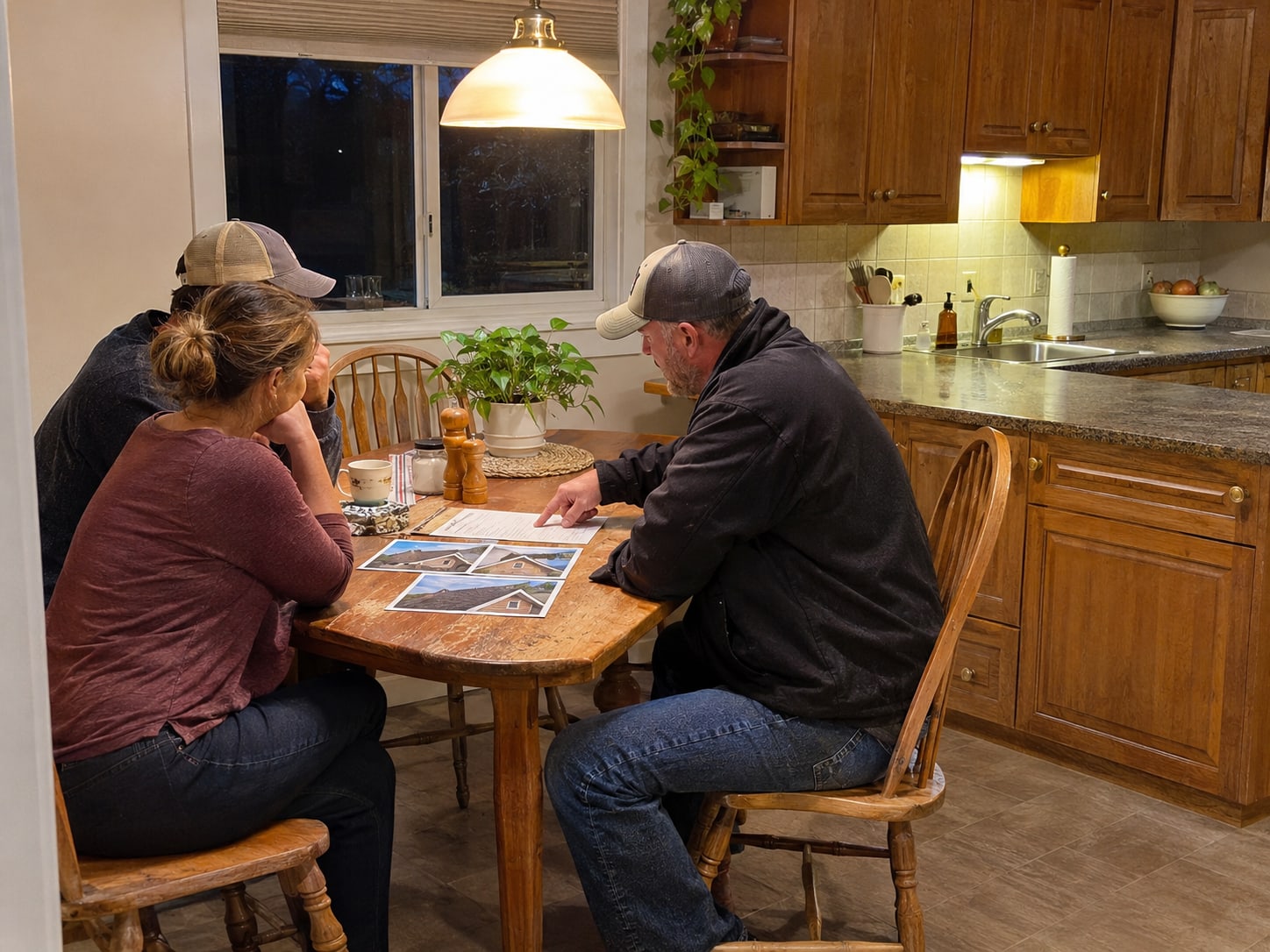
A visitor who likes what they see needs one obvious next move. Put your phone number where it can be seen without scrolling, add a short quote form, and offer a consultation option if your jobs start with a design visit or a site walk. After the form is sent, tell them what happens next and roughly when they will hear from you.
Landscapers and remodelers often begin with a consultation, while a roofer may begin with an estimate visit. Name whichever applies, so a visitor knows what they are asking for.
Speed of follow-up belongs here too. A quote form that sits unanswered for days undoes all the work above it, and no amount of SEO repairs that. Check who reads the form, and how fast.
If your Google Business Profile and region support a booking or consultation link, add one so the same path exists in both places. A link that takes a visitor to a page asking for twelve fields sends the wrong message, so keep the form to what you need for a first conversation.
Set up your Google Business Profile to match the website line for line
Your roofing company Google Business Profile is often the first thing a homeowner sees, ahead of your site. Google's help pages on business categories say a category should describe what the business is, not every service or keyword. Pick the most specific primary category, then add only secondary categories that truly apply.
Services go in the Services editor, where Google's services guidance lets you list what you do, group it, and add descriptions or prices when they are accurate.
| Setting | What to enter |
|---|---|
| Primary category | The most specific one that describes what you are |
| Other categories | Only those that truly apply |
| Services | The real jobs you do, grouped, with accurate descriptions |
| Photos | Real project, team, equipment and completed-work pictures |
| Contact | Phone, website, hours, and a booking or consultation link where supported |
| Service areas | The cities or postal codes you actually serve, up to 20 |
A contractor who visits customers is a service-area business. Google's service-area guidance says to hide the public address if you do not serve customers there and to list the areas you really work in. It allows up to 20 service areas and says the overall area generally should not extend more than about two hours of driving time from your base.
Check the name, phone number, hours and service area against your website. When the two disagree, a visitor has to wonder which one is right. Whether to show an address at all is a separate question, covered in service-area business or storefront on Google.
A town page earns its place only when it describes real work there
Repeating a town name on page after page does not create local relevance. A page for a nearby town belongs on the site when you serve that place and the page says something distinct about it: the kinds of jobs you do there, the neighborhoods, the permits or materials common to the area, and photos from projects you completed.
If you cannot fill a town page with that, leave it out. The same goes for a Business Profile. A service-area business normally has one profile for its service area, and Google's guidance on virtual offices and unstaffed locations rules them out as storefronts. A made-up office in every town invites a suspension rather than customers.
"Near me" works the same way. It describes what the searcher wants, which is a nearby company, and it does not need to be repeated through your site. Write about the work, the place and the next step in ordinary language. The wording that matches how people phrase requests, such as "roof replacement estimate" or "patio contractor," belongs in headings and body copy where it fits naturally.
Reviews, license numbers and ads follow rules that differ by state
Ask customers for reviews after a job, and ask everyone. Google's review policy says reviews should reflect genuine experiences and prohibits paid, fake or manipulated engagement. The FTC's Consumer Reviews and Testimonials Rule took effect October 21, 2024. It prohibits fake or false reviews and buying reviews conditioned on a particular sentiment. Do not offer a discount for a five-star rating. Replying to the reviews you receive is covered in reputation work for contractors.
License numbers are a state-by-state matter. California's Contractors State License Board says contractor ads, including online ads, must include the state license number. Arizona's Registrar of Contractors allows some internet advertising to omit it when the license number is shown prominently on the website. Those two are examples, not a national rule.
Contact the licensing board in every state where you advertise and ask what your site and ads must show. Put the license number and insurance details where a visitor can find them, since that is also the kind of proof a property manager looks for.
Skip the packages that promise a ranking
No vendor can promise a position, a lead count or a date. Google says there is no way to request or pay for a better local ranking, and its SEO guide says no secret trick puts a site first. So, when a proposal guarantees page one, treat the guarantee as the reason to look elsewhere.
Skip keyword-stuffed categories, dozens of near-identical town pages, fake office addresses, paid reviews and directory packages sold by the listing count. A directory number is not a measure of success. The stronger priorities are accurate information, useful service pages, real project evidence, a compliant profile and an easy quote path.
Sometimes the first need is not SEO at all. Better project photos, a plainer estimate process, faster call handling or a corrected profile can do more than a large campaign, and help from outside is worth paying for when it fixes one of those gaps and you can see the result.
Calls, form submissions and booked estimates show whether the work paid off
Rankings and impressions are not the goal. The goal is a homeowner or property manager who asks for a quote, so count what comes in: phone calls, form submissions and booked estimates. Write down the numbers for a month or two before you change anything, then compare.
A simple habit works well. Ask every new caller how they found you and write it in a log, with a note on whether the inquiry became an estimate. Send yourself a test message through the quote form once in a while, and call the number from a phone, so you know both reach a person.
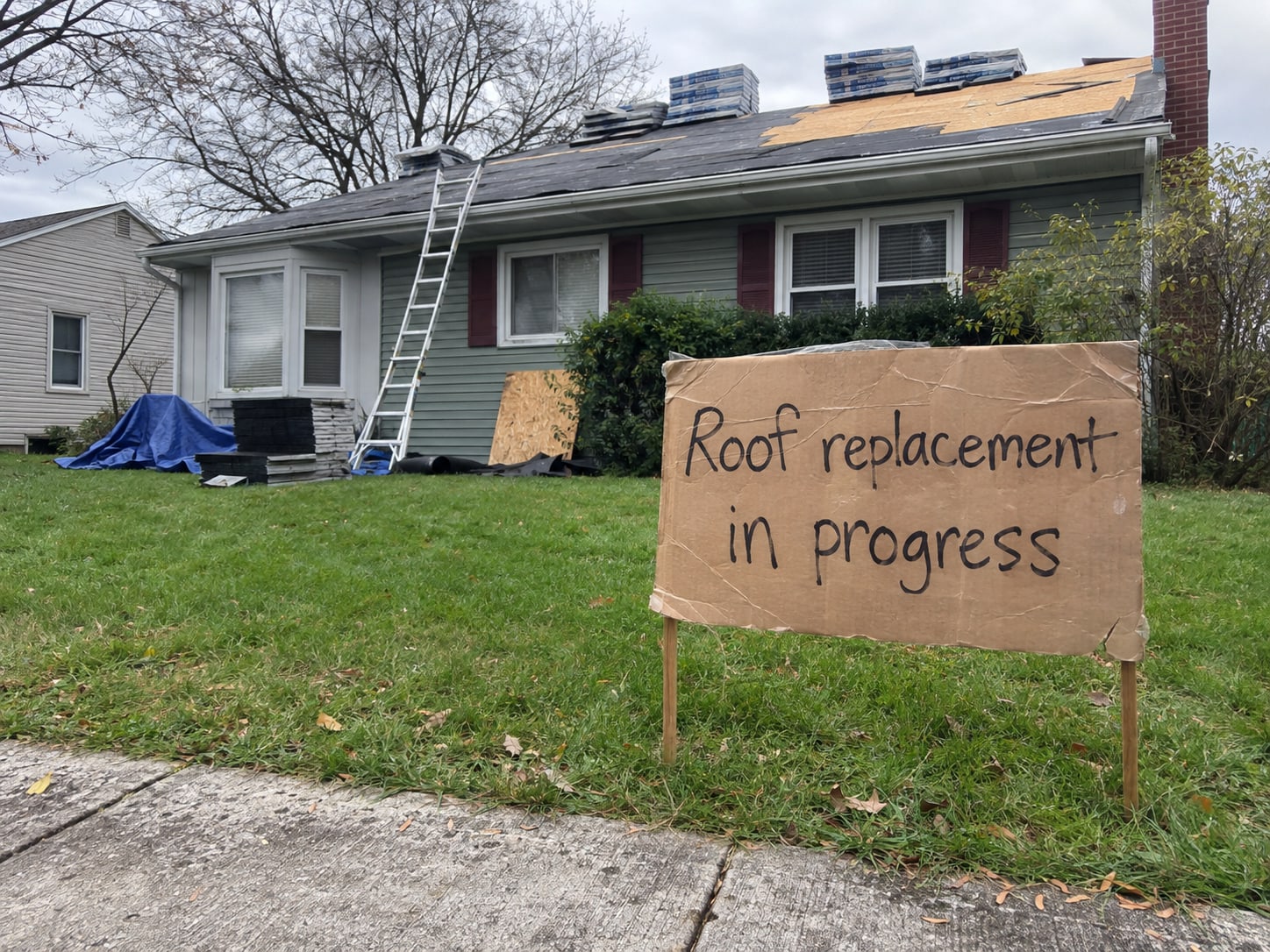
If you change one page at a time, you can tell which change helped. A new roof replacement page with real photos and a short form is a change you can watch. Ten changes at once are not.
What This Means for You
Start with the ten-minute check, then give every major job its own page with scope, process, price factors, real completed work, a visible phone number and a short quote form. Match your Google Business Profile to the site, with the most specific category, your real services and the areas you actually serve. Ask real customers for reviews, check each state's license rules, and count calls, forms and booked estimates.
Done in that order, the work builds on itself. Project pages give the profile something to point to, the profile sends people to pages that answer them, and your numbers show which part is working. You keep what you build, and it keeps working through the slow weeks.
If you would rather hand part of this off, Web Leveling builds the service pages, project pages and quote paths for contractors through our web design work. We work with small and medium businesses across the country and overseas. Contact us about your service pages and quote path and we will look at what a homeowner sees when they land on yours.
Is your contractor site built to win quote requests?
Pick an answer to begin.
1. A homeowner searches for a patio contractor. What should they land on?
2. You work out of your home and visit customers at their properties. What does Google say to do with your address?
3. A vendor guarantees a top place on the map. What is the best response?
Frequently Asked Questions About SEO for Roofing Contractors
What should a contractor do first for SEO?
Build or improve the main service page, the quote path, the project proof and an accurate Google Business Profile. Those four decide whether a visitor trusts you enough to ask for an estimate.
Should a service-area contractor show a home address on Google?
Not publicly if customers are not served there. Hide the address and list the real service areas instead. Google allows up to 20 service areas.
How many Google categories should a roofing company use?
Use the most specific primary category that describes what the business is, then only the additional categories that truly apply. Google says categories should describe the business, not every service.
Should a landscaper make a page for every town?
Only for towns the business serves, and only when the page offers something distinct, such as local project examples. Pages that swap the town name and nothing else add no value.
Can a contractor buy better Google Maps rankings?
No. Google says there is no way to request or pay for a better local ranking.
Can a contractor pay for five-star reviews?
No. Google's policy and the FTC's Consumer Reviews and Testimonials Rule both prohibit fake reviews and buying reviews conditioned on a particular sentiment.
Terms
Contractor SEO words in this post
Tap a term to see what it means.
Service-area business. A business that visits customers at their location rather than serving them at its own address.
Primary category. The Google Business Profile category that best describes what the business is.
Services editor. The part of a Business Profile where you list the jobs you do, with descriptions or prices.
Project page. A page on your site that shows one finished job, with scope, location, materials and outcome.
Quote path. The steps from a visitor's first click to an estimate request, including phone number, form and confirmation.
Booked estimate. A scheduled visit or consultation that came from a call or form.