

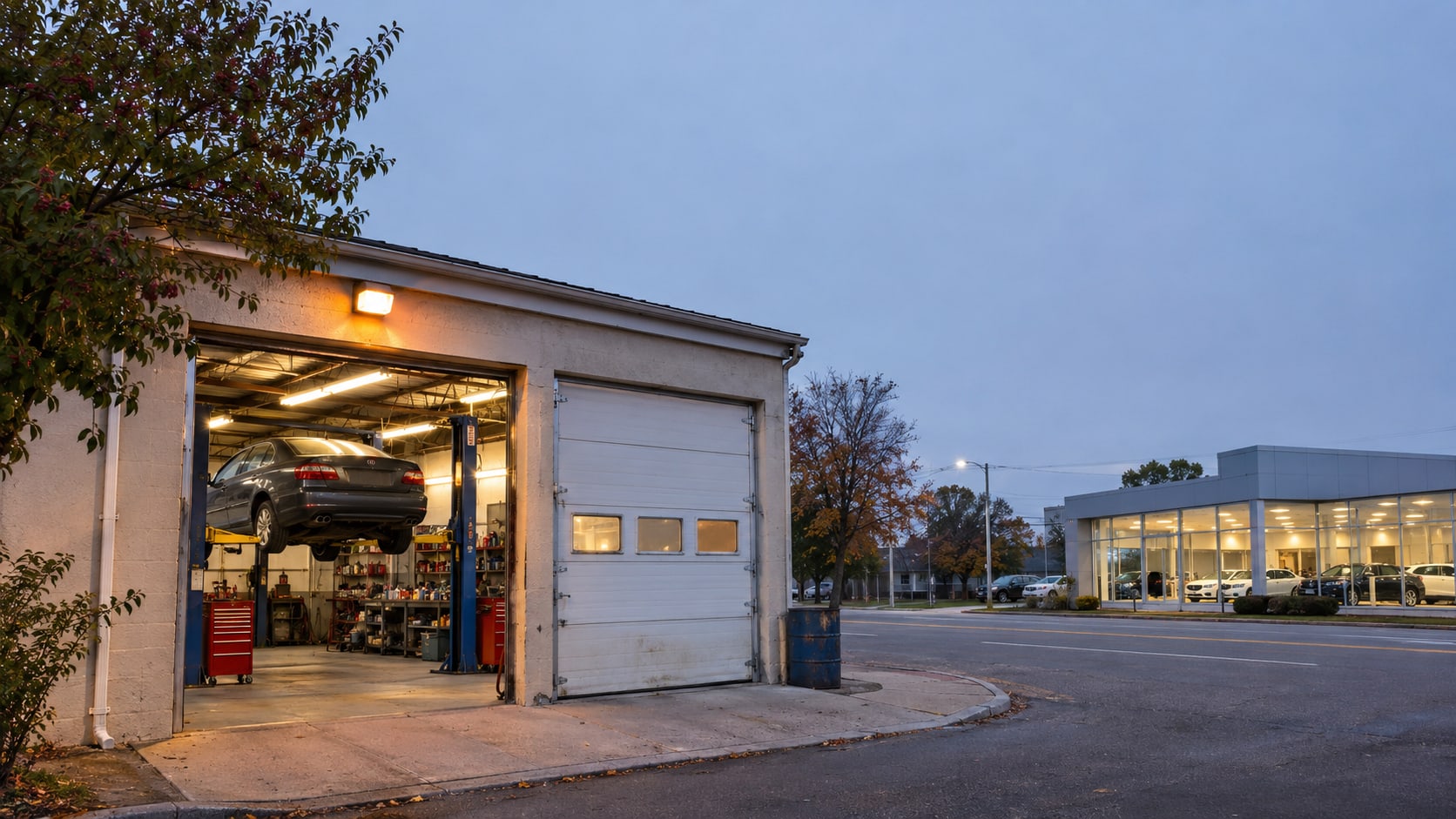
The shop closed an hour ago, the week was slow, and you typed "mechanic near me" to see who is getting the calls. The dealer is on top. So is the national chain, and so is a garage two exits away that you have never thought much about. Where you land on that list feels like a verdict on the whole business.
SEO for auto repair shops comes down to a short order of work. Fix your Google Business Profile first, then the website pages for the repairs you actually do. Paid help comes after both are right.
Google says local results are based mainly on relevance, distance and prominence. Profile and page fixes work on relevance and prominence. They do not move your shop closer to the person searching, so judge them by calls and booked repairs, not by a map position.
Key Takeaways
Pick the most specific accurate primary category, list the repairs you really perform, correct the hours and phone number, add real photos, and reply to reviews before spending anything on promotion.
Search "mechanic near me" and your main repair plus your town, then fix the biggest customer-facing gap between your listing and the top three.
The FTC advises written estimates that name the condition, parts, labor and approval threshold, and California bans advertised prices that leave out necessary parts or labor.
Count calls, forms and appointments that turn into repair orders so you can see which fix moved business.
What should an auto repair shop fix first when the dealer shows up above it?
Fix the Google Business Profile first. It is the listing people see before they see your website, and it is the part of your online presence you can correct in an afternoon. The order is the primary category, the real services you offer, hours and holiday hours, the phone number, shop and work photos, and replies to reviews that are sitting unanswered.
The website comes second. Your main repair pages need to say what you fix, which vehicles you work on, and how an estimate works. A big link-building package or an ad budget comes after those two, because it sends people to a listing and a site that may still be losing them.

Be clear about the limit. Google's local ranking guidance says results are based mainly on relevance, distance and prominence. A dealer with a lot on the same road as the searcher has a distance advantage you cannot edit away. What you can change is whether your shop looks like the better match once the searcher compares listings.
Google also says there is no way to request or pay for a better local ranking. Nobody can promise you first position, and no word count is required on your pages.
How do you compare your listing with the top three for "mechanic near me"?
Run this check once, with a pen. It takes about ten minutes. Search "mechanic near me," then search your most important repair plus your town, such as "brake repair" and the town name. Write down the top three listings each time.
What to write down for each of the top three listings
The label under the business name.
Which repairs show up and which are missing from yours.
Regular and holiday hours, and whether the listing shows as open now.
Whether it leads to a page where someone can finish the task.
Count, rating, how recent they are, and whether the owner replied.
Then look at photos, the phone number and address, and which website pages each profile sends people to. Put your own listing next to them and note every gap a customer would notice. The first fix is the largest gap that is accurate and easy to correct: wrong hours, missing services, a phone link that does not work, or an appointment button with nowhere useful to land.
Choose one gap and finish it before starting the next. A shop that fixes one thing a day for ten days ends up further ahead than one that starts everything at once.
How should a repair shop set up its Google Business Profile?
Start with the category. Google's help page on choosing categories says to use the most specific primary category that describes your core business, such as Auto Repair Shop when that is accurate. Add only a small number of secondary categories. A category describes what the business is, not every service it has. The longer walk-through is in our post on choosing Google Business Profile categories.
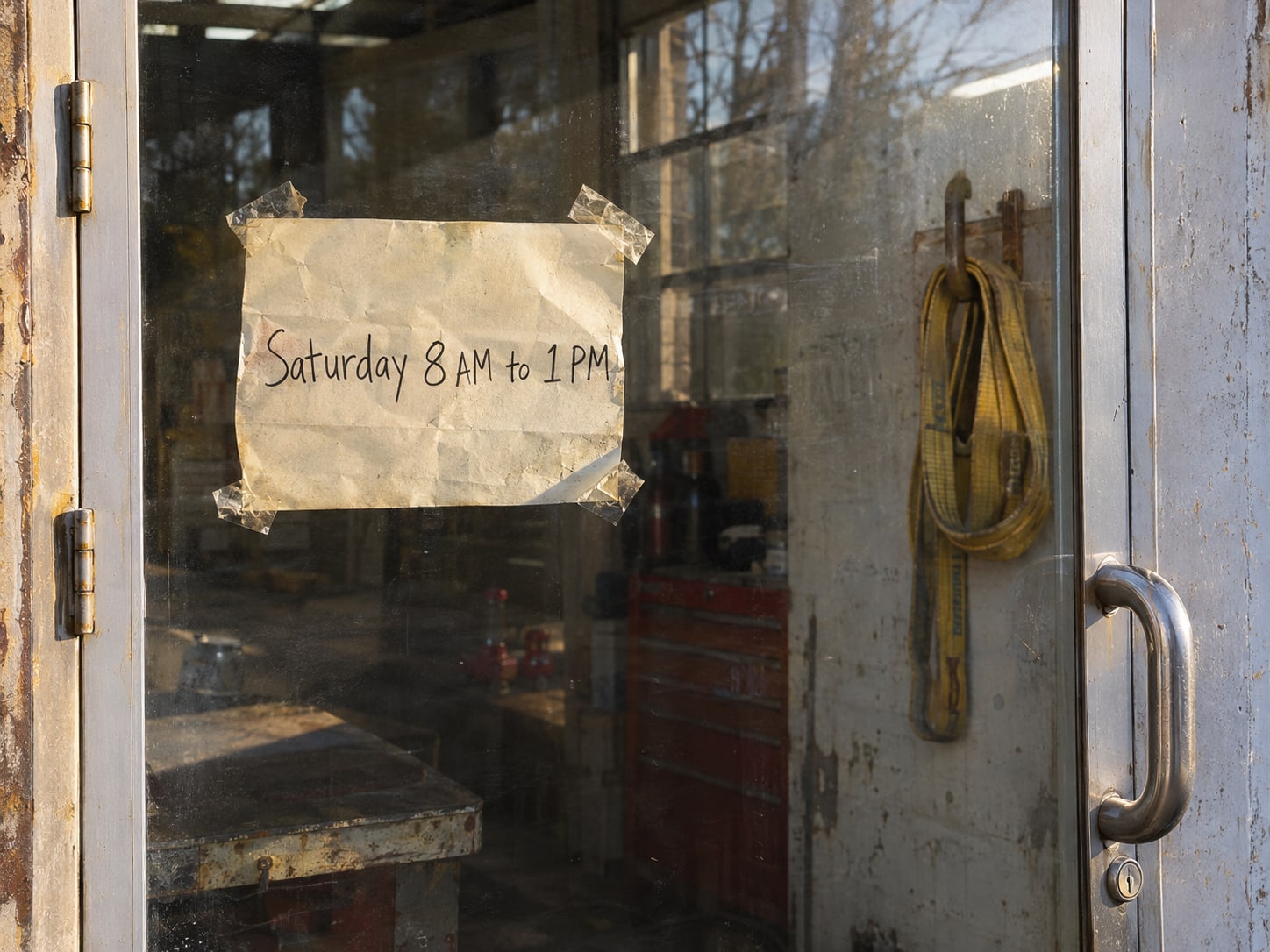
Next come the basics: name, real address, phone, website, hours and holiday hours. A garage that takes customers at its address can also serve roadside calls, which Google handles as a hybrid service-area business. Add the service area only if you work that way.
Services come after categories. Google's services editor guidance lets you group services, such as brakes, diagnostics, maintenance, tires and electrical repairs, with a description and a price on each one. Custom service names should not contain prices or phone numbers.
Add an appointment or action link only when it leads to a dedicated page where the customer can finish the task. A button that drops people on a home page they must search is worse than no button.
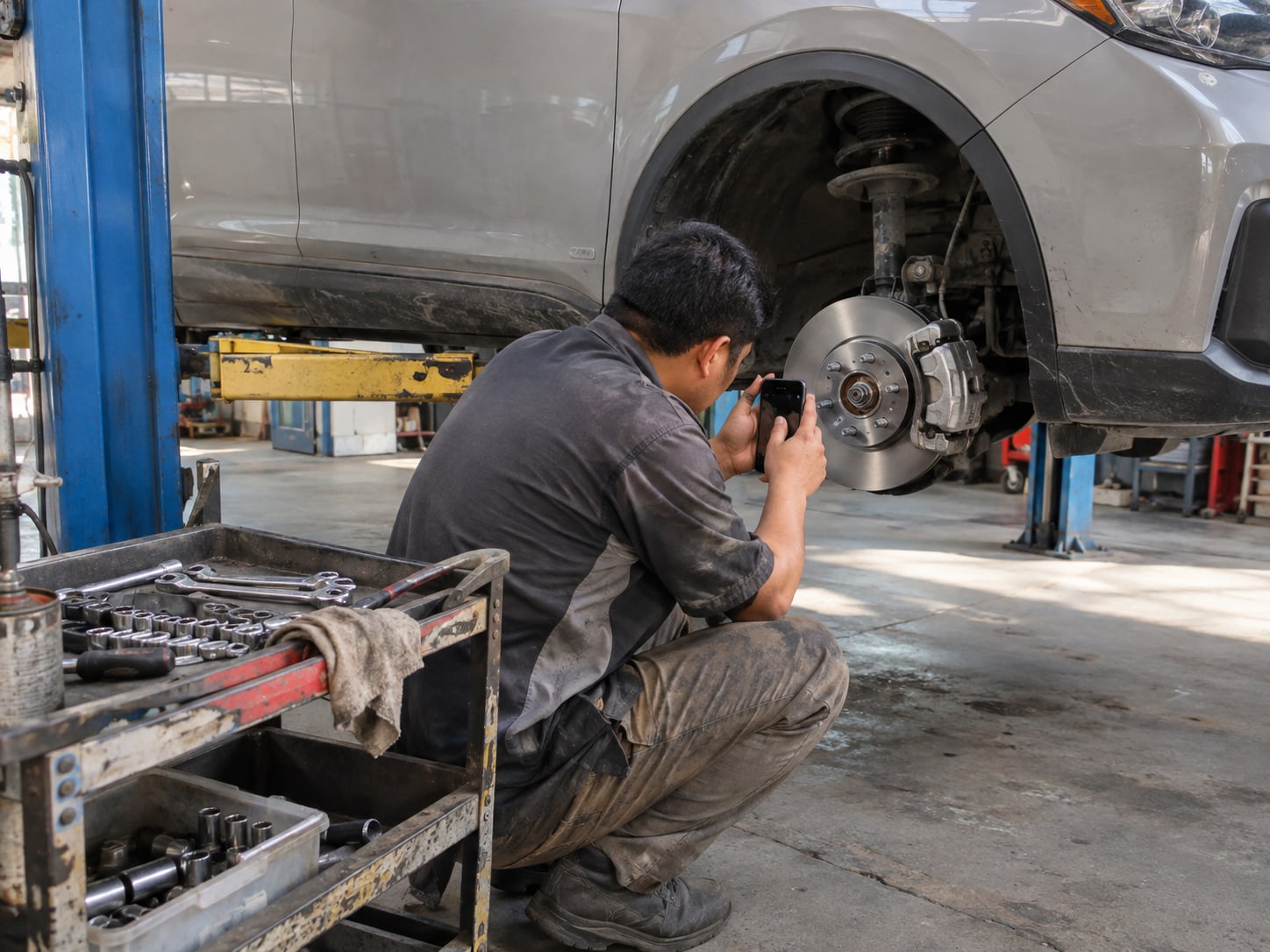
Photos are the part owners skip. Google's photo guidance covers exterior, interior, team and work shots. Take the storefront, the bays, the equipment, the technicians and the finished work, since someone deciding between you and a dealer is looking for proof of a real shop.
Which pages does an auto repair website need?
Build a page for each repair the shop actually performs. Google's Search Essentials asks for helpful, reliable, people-first content, descriptive headings, crawlable links and the words customers use. No set number of pages is required. A shop that does brakes, diagnostics and air conditioning needs those pages, not a page for transmission rebuilds it sends elsewhere.
| Page | What goes on it |
|---|---|
| Home | Address, phone, hours, vehicles served, main repairs, appointment action |
| One page per repair | Symptoms, the vehicles you work on, what happens during the repair, how the estimate works, photos |
| Estimates and fees | Diagnostic fee wording, starting-at prices where accurate, approval before extra work |
| Proof | Technician certifications you hold, warranty terms, reviews, shop and work photos |
| Contact or booking | A form or scheduler that works on a phone, plus click-to-call |
Name a car make only when your shop works on it. "Domestic and Asian vehicles" or a verified list of makes is safer than implying you can fix anything. Use the phrases customers type, such as "brake repair," "check engine light" and "AC repair," then explain exactly what your shop does under each one.
A page for every nearby town without real local detail is thin. Google's SEO Starter Guide points toward pages that serve a visitor, so write about repairs and the area you truly serve. If a rebuild is the real fix because the current site is slow, hard to edit or broken on phones, that is web design work and it comes after the profile is right.
How do you advertise repair prices without misleading anyone?
Publish a price only when it holds. Diagnosis, the vehicle, parts and labor can all change the total, so a fixed number on a page can set up an argument at the counter. Wording such as "starting at," "diagnostic fee" and a plain explanation of how estimates work is usually the accurate choice.
The FTC's auto repair basics advise customers to get a written estimate that names the condition, parts, labor and the amount at which they must approve more work. Put that same sequence on your estimate page, and the customer who reads it knows what to expect before calling. The FTC also says warranty advertising must not be deceptive, so state warranty terms and their limits in full.
State rules go further in places. California's automotive repair price advertising rule, 16 CCR 3372.1, prohibits advertised prices that omit necessary parts or labor. Other states may have different rules. Confirm yours with the state attorney general, the consumer protection agency or an attorney before you publish a price.
How do you ask for reviews without breaking Google's rules?
Ask every customer, in the same way, after the work is done. Google's review policy prohibits paid or incentivized reviews and asking only the customers you expect to be happy. Do not offer a discount for a review and do not screen out the unhappy customers first.
Replying to the reviews you already have matters as much as getting new ones. A short, calm answer to a complaint, naming the fix you offered, shows the next reader how you treat people when something goes wrong. A thank-you that mentions the repair works for the good ones.
Reviews also count toward prominence, which is part of how Google ranks local results. The fuller plan for a shop, including how to handle an unfair one-star, is in our post on reputation management for auto repair shops.

How do you tell which fix brought in the work?
Count what happens after the click. Calls, form requests, appointment requests and direction taps are the early signs. Booked repair orders are the result. Write each one down with how the customer found you, and ask new callers directly.
Google's Performance report shows the profile's calls, directions and website clicks. A call there is a tap on the call button, so match it against your own call log or shop management system. For paid campaigns, our post on tracking phone calls from Google Ads covers connecting a call to the ad behind it.
Change one thing at a time and write down the date. If the hours were wrong and you corrected them on Monday, the weeks after show whether callers stopped arriving at a closed door. A shop that edits twelve things in one weekend learns nothing about which one worked.
The order the work gets done
- 1
Day 1
Run the ten-minute comparison and write down the gaps.
- 2
Week 1
Fix the category, services, hours, phone number and photos on the profile.
- 3
Weeks 2 to 3
Build or correct the pages for your main repairs, with estimate wording.
- 4
Ongoing
Ask every customer for a review, reply to the ones you have, and record calls and booked repairs.
When is paying for SEO help worth it for a repair shop?
Most of the first fixes are yours to make. Google says a small local business can probably do much of its own SEO work, and its guidance on whether you need an SEO recommends the SEO Starter Guide for that. You do not need an agency to correct a category or take photos of your bays.
Paid help starts to make sense when the shop has several locations, needs the website rebuilt or the changes put in place, cannot connect calls to booked work, or has no time to keep the profile and pages accurate. In those cases local SEO or broader search engine optimization can carry the ongoing work.
A good provider will tell you when a basic fix must come before an advanced campaign. If your hours are wrong and your service pages are thin, a link package is the wrong purchase. Ask any vendor to show the specific defects, keep the profile in your name, and report calls and booked repairs, not only positions.
Which fix comes first for your shop?
Pick an answer to begin.
1. Which fix belongs at the front of an auto repair shop's SEO work?
2. What should a written repair estimate name, according to the FTC's advice?
3. A profile shows 30 calls this month. What do you do with that number?
Frequently Asked Questions About SEO for Auto Repair Shops
What should an auto repair shop fix first for SEO?
Correct and complete the Google Business Profile, then improve the website's main repair pages and the ways customers can call, book or ask for an estimate.
What category should a repair shop use on Google?
Use the most specific category that accurately describes the core business, such as Auto Repair Shop, with only a few relevant secondary categories.
Should a shop add every service to Google?
Add the services the shop performs, grouped into clear categories with accurate descriptions. Keep the list to repairs the bays can actually handle.
Can a shop buy Google reviews?
No. Google prohibits paid, incentivized, biased and selectively solicited reviews.
Should the website publish repair prices?
Publish prices or starting prices when they are accurate, and explain the diagnostic fee, parts, labor and approval conditions. Check your state's rules first.
Do Google Business Profile posts guarantee a better ranking?
No. Posts can share updates, offers and events, and Google does not promise a ranking benefit from them.
Wrapping Up
The order is the profile, then the repair pages, then proof, then measurement. Run the ten-minute comparison against the top three listings for "mechanic near me" and your main repair plus your town, choose one gap, and fix it. Keep the category accurate, the services real, the hours right, and the estimate wording clear about what can change the total.
You cannot move your shop closer to the searcher, and nobody can sell you a guaranteed position. What you can do is become the clearer, more trustworthy match once someone compares listings, and the proof that it worked is a repair order, not a rank.
If you want help, Web Leveling can handle the work when you have no time for it, and our Google Business Profile management keeps your listing accurate. If the audit shows you can do the fixes yourself, we will say so. We work with small and medium businesses across the country and overseas. Send us your profile and your top three competitors, and we will tell you which gap to close first.
Terms
Auto repair SEO words in this post
Tap a term to see what it means.
Primary category. The Google Business Profile label that describes the core business, such as Auto Repair Shop.
Prominence. Google's measure of how well known a business is, drawn from reviews, links, articles and directories.
Hybrid service-area business. A business that serves customers at its address and also travels to them, such as a garage with roadside calls.
Written estimate. A document naming the condition, parts, labor and the amount at which the customer must approve more work.
Diagnostic fee. A charge for finding the cause of a problem, separate from the cost of the repair itself.
Booked repair. A repair order that follows a call, form or appointment request.