
Audio that sounds like you, and actually ships.
You know your voice should be out there. But recording sounds amateur, editing eats your week, and the show you meant to start is still a folder of good intentions. This is the service that turns it into episodes people can listen to, or a single clean voiceover, done and published on schedule.
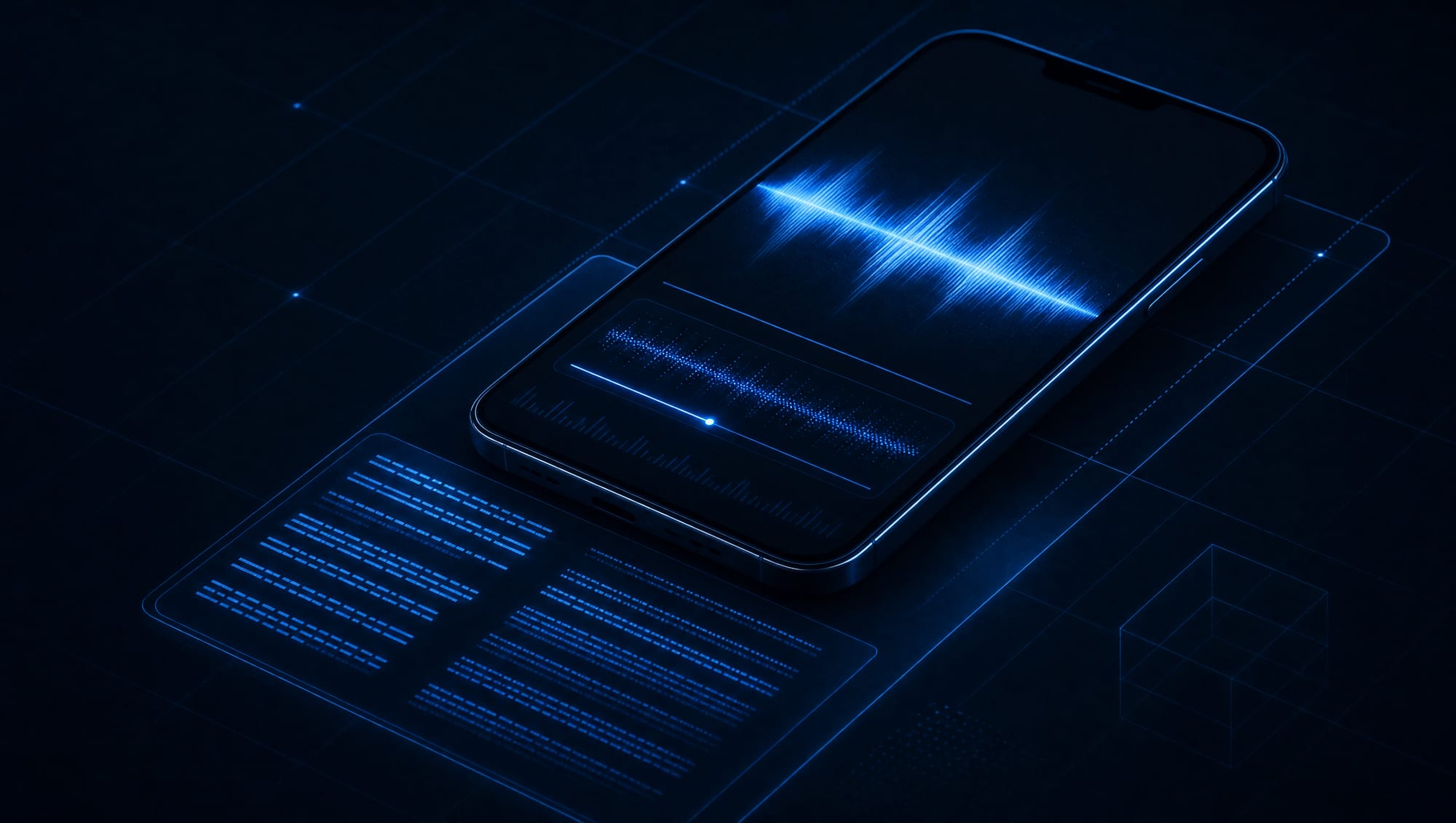
An episode on a phone, playing, with a clean waveform and a transcript underneath.
First, the thing itself.
When we say "audio," here is what you should hear: a recording that sounds like you, cleaned up so it is easy on the ear, and published where people can actually find it. A full podcast if you want a show. A single voiceover if you need one clean read for a video or a phone system. Either way, the finished audio is the point, not the gear, not the jargon, not a folder of raw files you never touch again.
Every job carries the same spine:
- A plan before a microphone turns on: who this is for, what it is supposed to do, how long, how often, and where it goes to live.
- Recording that works wherever you are. You and any guests record remotely, on separate tracks, so a bad connection on one end does not sink the whole take.
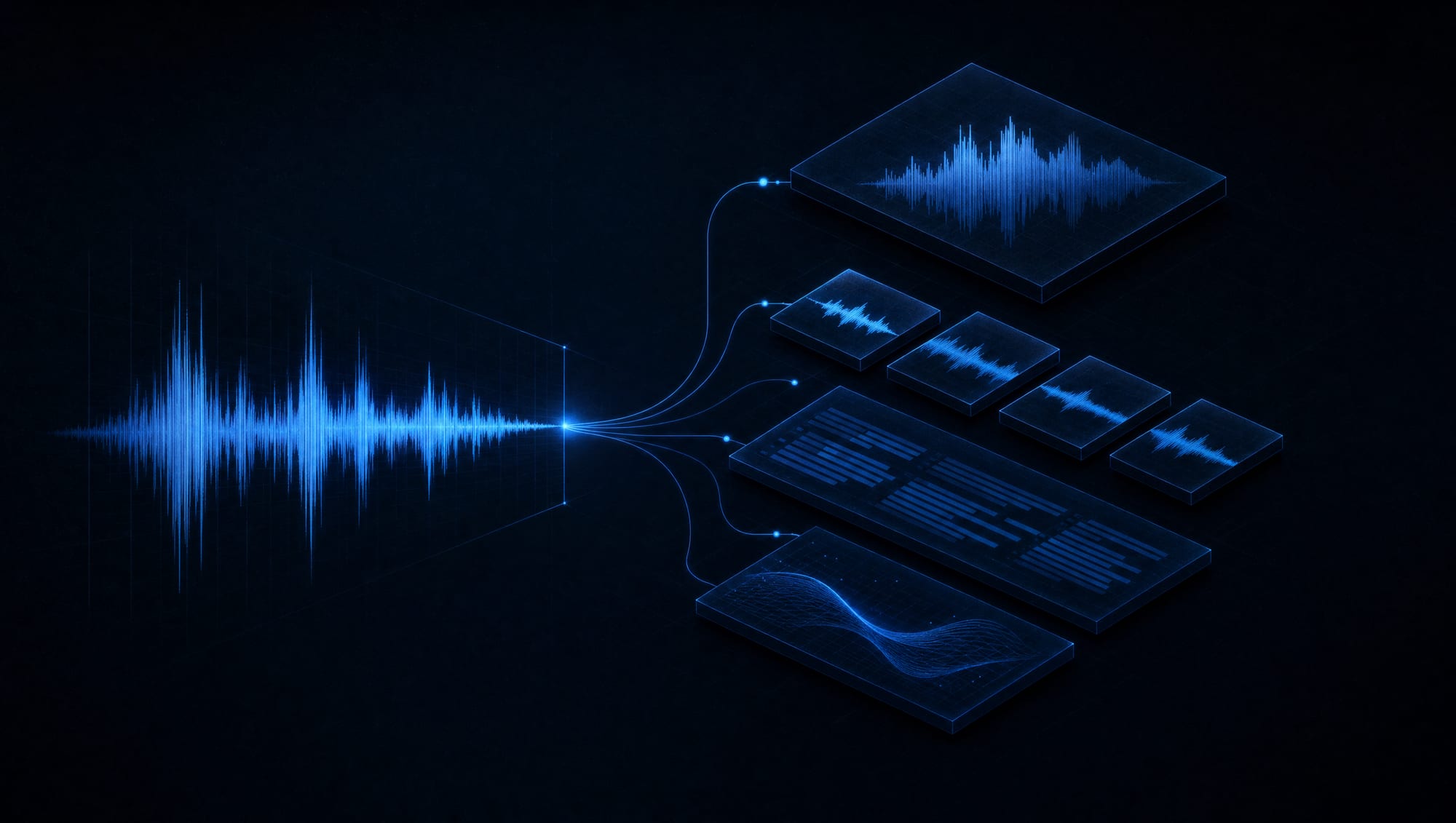
- Editing that earns its keep: background hiss gone, long silences and false starts trimmed, levels evened out so nobody reaches for the volume knob mid-listen.
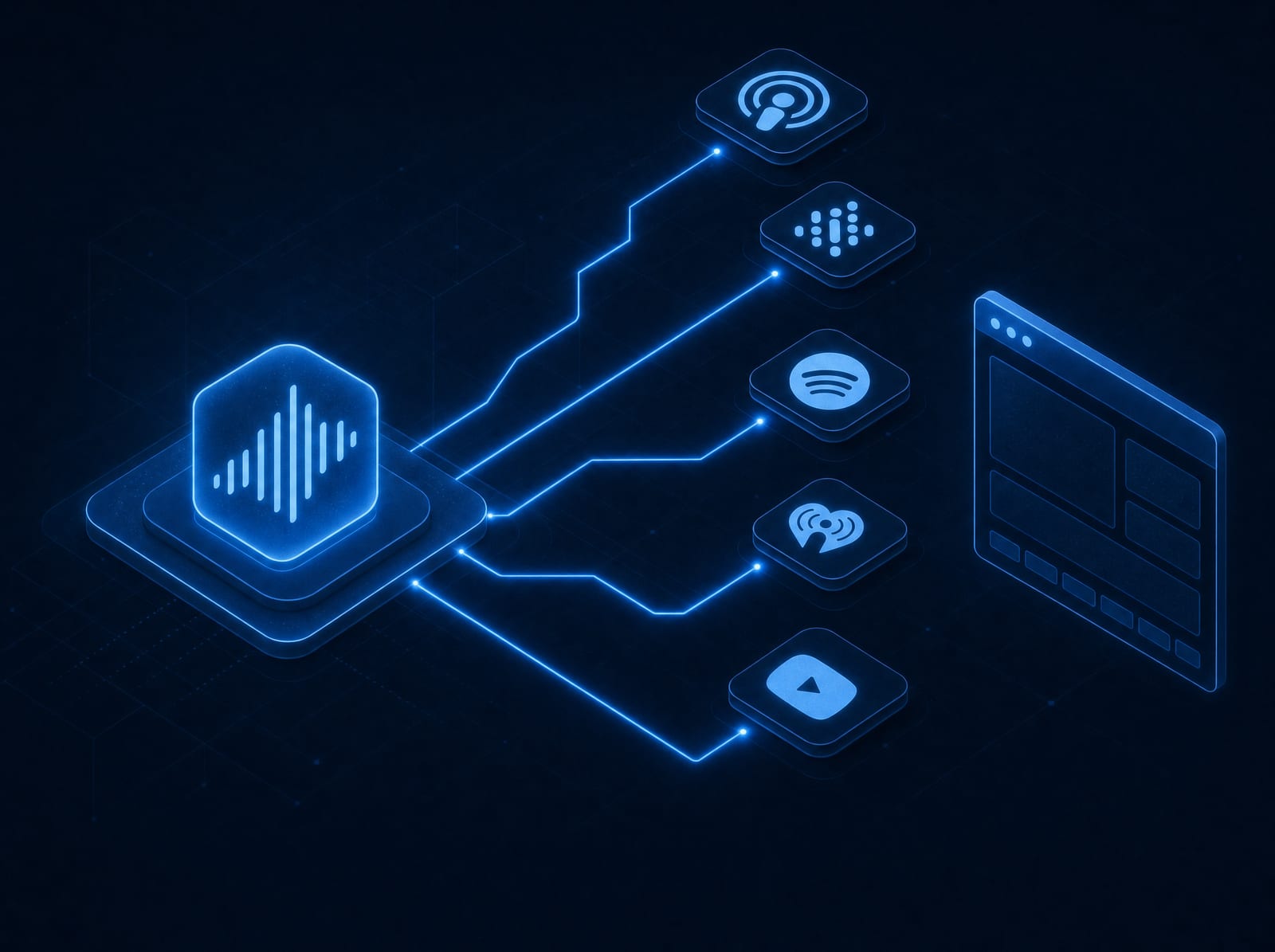
- Published for you, to the podcast apps, to YouTube when it fits, embedded on your own site with a real player and a transcript.
- The extras that make one recording go further: short clips for social, a transcript for search and accessibility, show notes, and artwork that looks like your brand.
- Your voice, or a licensed one. A human narrator, your own recorded voice, or an AI voice used only with real consent and rights in writing. Never a robotic read passed off as you.
What you will not get matters too. No echoey closet audio that screams "recorded on a laptop." No robotic AI voice read that makes a listener trust you less. No pile of untouched raw files handed back as if that were the deliverable. You get audio that is finished, and a way to keep publishing it.
A show is not a single read. We do both.
People arrive here wanting one of two very different things, and it helps to name which is yours.
The first is a podcast: an ongoing show. Episodes, a schedule, guests maybe, a feed that people subscribe to. This is a habit you are building with an audience, and the hard part was never the first episode. It was the tenth.
The second is a voiceover: one clean recording for a specific job. The narration on an explainer video. The read for a training module or an online course. The greeting on your phone system. The voice on an ad. You need it to sound professional, you need it to sound like your brand, and you need it done, not turned into a six-week project.
Both jobs share the same craft: plan it, record it clean, edit it so it sounds like you meant it, and deliver it ready to use. The voiceover is a sprint. The podcast is a season. We size the work to the one you actually need, and we say so plainly if you have talked yourself into the bigger one.
Voiceover pairs naturally with moving pictures, which is why it lives so close to our video marketing service: most explainers and ads need a voice, and the same session that scripts the video can record the read.
The gap between "recorded" and "listenable."
Anyone can hit record. That is not the problem. The problem is the distance between the audio you capture in a spare room and the audio a stranger will actually sit through.
You have heard the bad version. Echoey closet audio, where every word bounces off bare walls and the speaker sounds like they are calling from a stairwell. Levels all over the place, so one person booms and the next one whispers. A steady hiss under everything, the sound of a cheap microphone or a laptop fan, that a listener cannot name but can definitely feel. Long dead pauses. Ten "ums" a minute. The recording that is technically fine and completely unpleasant.
“Nobody quits a show because the content was bad. They quit because it was tiring to listen to.”
Editing is where the gap gets closed. We pull out the hiss and the room echo. We even the levels so the quiet guest and the loud host land at the same comfortable volume. We trim the false starts, the tangents that go nowhere, the pauses that drag. Not to make you sound like a robot reading a script, but to make you sound like the best version of the conversation you actually had. The goal is simple and physical: a listener puts in earbuds, presses play, and never once thinks about the audio. They just hear you.
That same standard covers the AI-voice question honestly. A synthetic voice can be useful, and we can use one, but only with consent and licensing written down, and only where it fits. What we will not do is generate a robotic read, slap your name on it, and call it your voice. The moment audio sounds fake, it costs you the trust you were trying to build.
Consistency beats studio polish. Every time.
Here is the honest truth most producers will not lead with, because it does not sell expensive gear: the show that wins is not the one with the best microphone. It is the one that keeps showing up.
You have seen the graveyard. The podcast that died at episode 3, because life got busy and there was no system to keep it moving. The voice that recorded one beautiful episode and never made a second. The feed with a two-year gap at the top. Every one of them had decent audio. What they did not have was a way to keep publishing when the initial excitement wore off.
That is the actual job. Not one perfect episode. A durable habit.
So, we build for the long haul, not the launch. We batch: you record several episodes in one sitting while you have the energy and the setup is live, and we release them on a schedule so your feed never goes quiet while you are busy running your business. We handle the editing and the publishing so the recurring work does not pile up on your desk. We keep the format simple enough that you can sustain it, because an ambitious format you abandon is worth less than a plain one you keep.
And we make each recording go further, so the effort pays off more than once. One conversation becomes the episode, plus short clips for social, plus a transcript, plus raw material your written content can draw from. That repurposing is where audio starts feeding the rest of your marketing: the clips fuel your social media presence, and the transcript becomes searchable pages under content marketing. The people who stopped reading your emails years ago will listen to you in the car. This is how you reach them.
Four steps. No mystery.
You will always know which step we are in, what is done, and what is next. Open each one.
A note before you do: the audio work is remote-friendly by nature, which is a plus, not a compromise. You record from wherever you are, guests join from wherever they are, and the editing and publishing happen without anyone in a room together. Distance does not lower the quality. It just removes the excuse to not start.
Plan
We start with what the audio is for, not what gear to buy. A podcast or a single voiceover. Who it is for and what it should cause: subscribers, trust, a video that finally ships, a phone line that sounds professional. For a show, we settle the format, the length, the schedule you can actually keep, and where it will be published. For a voiceover, we lock the script and the voice. You approve the plan before anyone records.
Record
You record from wherever you are. For a show with guests, everyone records on separate tracks, so one person's shaky connection never ruins the take, and we can fix each voice on its own. We guide the setup so what you capture is clean going in, because the best edit in the world starts with a decent recording. Voiceover reads can be your own recorded voice, a human narrator, or a licensed AI voice with consent in writing.
Edit
This is where raw turns into finished. Hiss and room echo removed, levels evened out, false starts and long silences trimmed, the pace tightened so it holds attention. You get a review pass to flag anything, and the revisions are agreed up front so "one more change" never becomes an open tab. The result sounds like you on your best day, not like a robot and not like a laptop in a closet.
Publish and distribute
The finished audio goes where your audience already is. A show gets published to the podcast apps through a feed you own, added to YouTube when video fits, and embedded on your own site with a real player and a transcript. A voiceover gets delivered in the formats you need, ready to drop into the video or the system it was made for. Then the clips, show notes, and artwork that help it travel.
1
The recordings, the feed, the files. All of it.
Ask any audio producer one question: "If we part ways next month, what do I keep?" Where the accounts were opened in somebody else's name, the answer is uncomfortable. The feed is in their account. The publishing login is theirs. The raw recordings live somewhere you cannot reach. You built an audience on a foundation you do not actually hold.
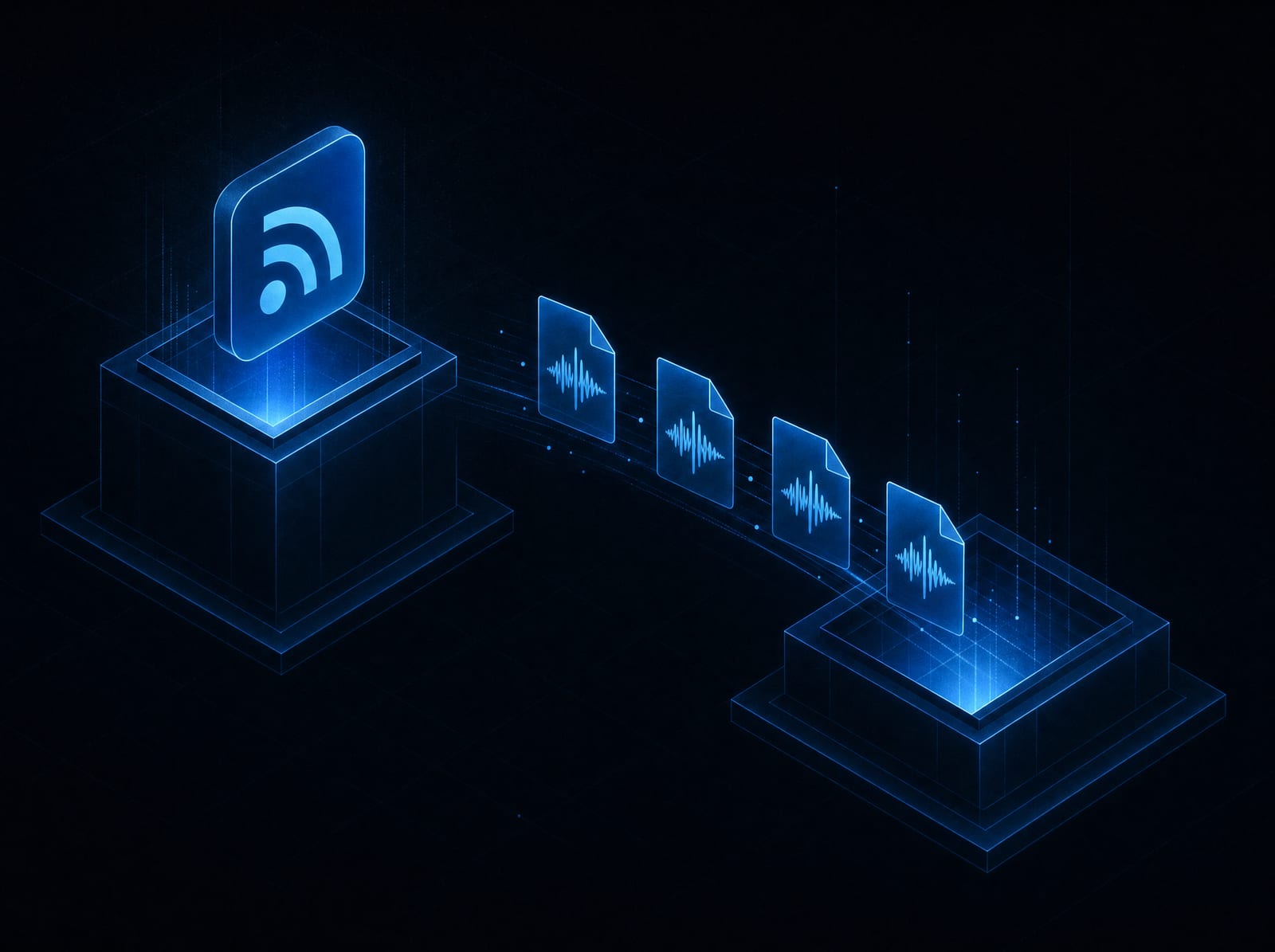
Here is our answer. Everything leaves with you. The recordings, the edited episodes, the transcripts, the artwork, the show notes: yours. The podcast feed and the accounts it publishes through sit in your name, so your subscribers are yours and your show cannot be held hostage. If you ever want to take your audio and go, you can, and the next producer can pick it up the same day.
“If you can't take your show and leave, you don't really own it. You're renting your own voice.”
This is not generosity, it is the product. We keep your business by making audio worth keeping, not by locking you out of your own feed. The terms are written down, the ownership is real, and the two do not depend on each other.
One honest note on the AI-voice side of ownership: a synthetic voice trained on you is a sensitive asset. If we ever build or use one, the consent, the licensing, and the usage rights go in writing, and the rights around your own voice stay yours. That is not legal fine print for its own sake. It is the difference between a tool you control and a copy of you that someone else owns.
Ready when you are. Your work, actually yours.
Tell us about your business and what this needs to cause. You'll have a plan back within one business day, including when the answer is that you do not need this.
Tell us your caseA subscribe feed and a set of files handed across, nothing held back.
Asked and answered, before the call.
What does it cost?
Honestly, it depends, and any producer who quotes a flat number before knowing the job is guessing. A single voiceover is a small, fixed piece of work. An ongoing show depends on episode length, how often you publish, whether you want video and clips, and how much of the planning and publishing you want off your plate. We quote per project or per month: a setup fee and a clear number you see before we begin, in writing, with the deliverables spelled out. No hourly meter and no surprise line items.
Get Podcast & Voiceover Production priced for your businessDo you help with the concept and script?
Yes. For a show, we help shape the format, the length, and a schedule you can actually keep, which is usually where a podcast lives or dies. For a voiceover, we can work from your script or help tighten one so it reads well out loud, which is not the same as reading well on paper.
Ask us about Podcast & Voiceover ProductionCan you record remote guests properly?
Yes, and most shows are made this way now. Everyone records from wherever they are, on separate tracks, so one person's weak connection never wrecks the whole episode and each voice can be cleaned up on its own.
Talk Podcast & Voiceover Production through with usHuman voice or AI voice?
Both are options. Your own recorded voice, a human narrator, or an AI voice used only with consent and licensing in writing. We will tell you plainly where a synthetic voice fits and where it will cost you trust. We do not pass off a robotic read as a real person.
Ask how we actually run Podcast & Voiceover ProductionAre transcripts and captions included?
They are part of the standard work, not an upsell, because they earn their place. A transcript makes your audio searchable, opens it to people who cannot listen, and becomes written content you can reuse. Captions do the same for video.
Tell us what you need from Podcast & Voiceover ProductionCan you get my show onto YouTube and the podcast apps?
Yes. A show publishes to the podcast apps through a feed you own, goes onto YouTube when video makes sense, and gets embedded on your own site with a real player. One recording, published everywhere your audience already is.
Ask what we promise on Podcast & Voiceover ProductionCan you guarantee downloads or subscribers?
No, and be wary of anyone who does. We can guarantee clean audio, a schedule you can keep, and distribution done right. Growing an audience takes consistent, good episodes over time, which is exactly why we build for you to keep publishing instead of burning out after three.
Ask where the limits are on Podcast & Voiceover ProductionIf your voice has been stuck in a folder of good intentions, or you need one clean read and nothing more, say which of the two it is. They are different jobs and we scope them differently.