

A website for your Jamaican business that ends with you owning everything.
This is our Jamaica page. Custom web design, e-commerce, and search work for on-island businesses and the diaspora abroad, built to be fast, findable, and yours. Here is what that means from Kingston to Montego Bay and every parish in between.
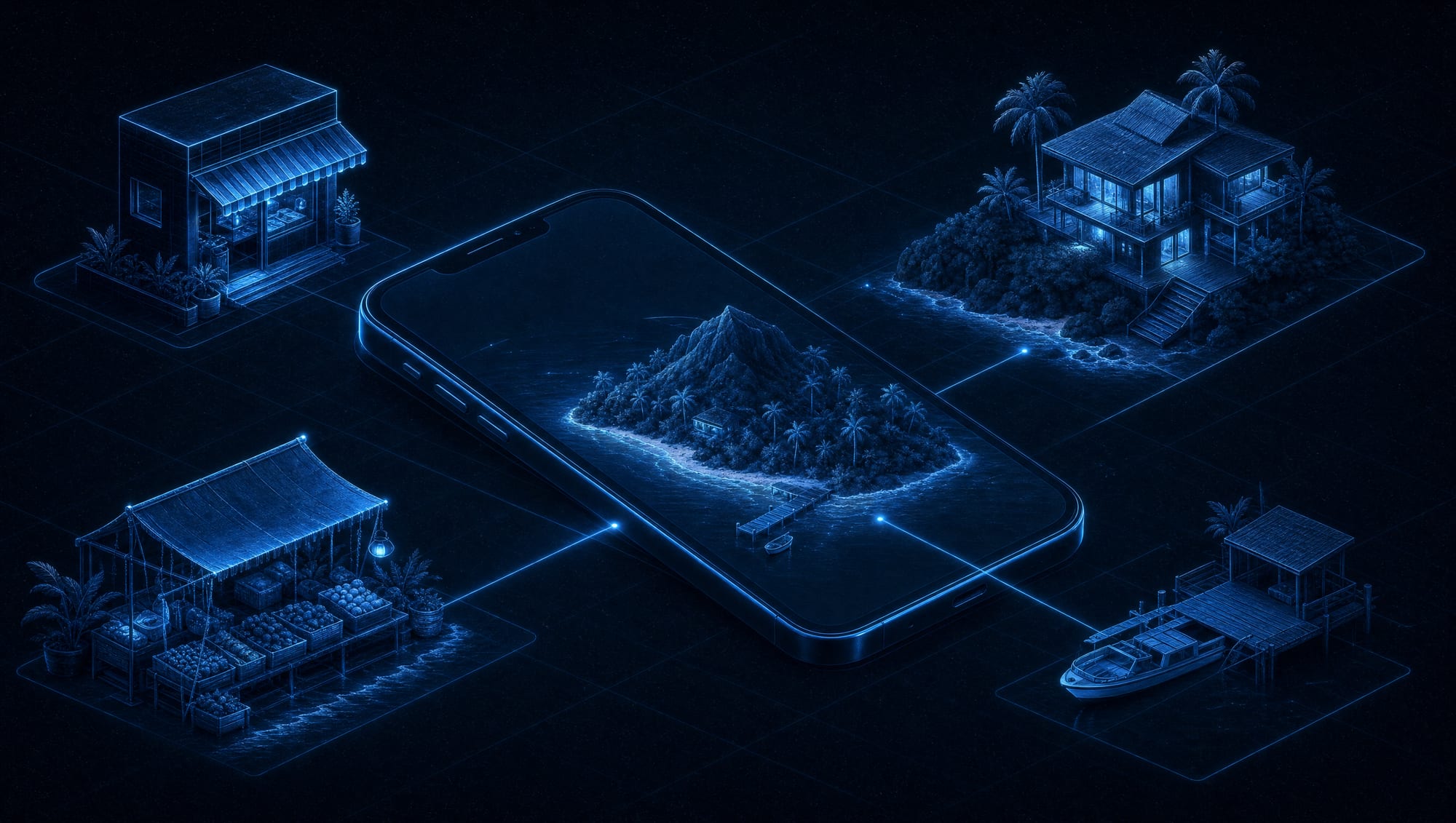
Jamaica seen through the screen of a phone: a shopfront in Kingston, a villa on the north coast, a market stall, all reachable by one tap.
Your customer is on a phone. The question is whether they find you.
Think about how business actually starts in Jamaica right now. Someone is standing in a shop in Kingston, or waiting on a route taxi in Portmore, or sitting in a villa in Negril the night before their tour, and they reach for their phone. They type a few words. They tap the first thing that looks real and fast, and they call the number on it. If that thing is your site, you get the customer. If it is a competitor's, or if it is your Instagram page buried three scrolls down, you don't.
That is the whole game, and it turns on three plain facts.
- Speed. A slow site on a mid-range Android over a spotty mobile signal loses the visitor before your logo even loads. On the island, mobile is not a segment. It is the room.
- Findability. People and machines both have to be able to read your site. If a search engine or an AI assistant can't see your content, you don't exist to the buyer who asked it a question.
- Ownership. When the site is finally bringing you business, you do not want to discover that you were only renting it, and that leaving means starting over from zero.
Most Jamaican small businesses run almost entirely on Instagram, Facebook, and WhatsApp. Those are useful. But you don't own the platform, the algorithm, the account, or the customer's path to you, and none of them show up when a buyer searches for what you sell. A real website is the one asset in your web presence that answers to you.
We are branching into Jamaica the way we build everywhere: custom, hand-coded, and handed over. This page tells you exactly what that looks like on the island, and why the timing works in your favor.
There is no map pack yet. That is the opportunity, not the problem.
Here is an honest thing about the Jamaican market today. When someone searches for a web designer, or a hotel, or a contractor, the neat little map of local businesses with stars and pins is thin or missing for a lot of searches. The habits that dominate elsewhere, the map-pack-first behavior, haven't fully set in. Buyers find providers through referrals, through social, and increasingly through plain search and AI answers.
For an established competitor that sounds like a gap. For a business willing to build the right site now, it is an open lane.
Two kinds of engines decide who gets found. The first is the search engine you already know: someone types "web design Kingston" or "website for tour company," and Google returns a page of results. The second is newer and growing fast: someone opens ChatGPT, Perplexity, or Google's AI answers and asks, in plain words, "who can build a website for my business in Jamaica?" The engine replies with a name, sometimes just one.
“Your next customer may never see a results page. They will ask an AI who to hire, and it will answer with a name.”
Both of those engines reward the same thing: a site that is fast, structured, and factual, shipped as real content a machine can read on the first pass. That is the natural shape of a hand-built static site, and it is the exact opposite of a heavy template that makes a crawler wait for scripts to fill an empty shell. So, while the market is still figuring out its map-pack habits, the businesses that show up in organic search and in AI answers get to define the field.
None of this is guesswork or a bolt-on. Ranking in search is the whole point of search engine optimization, and it is built into the foundation of every site, not sprinkled on at the end.
The site, and everything that makes it work.
A website on its own is a brochure. What earns you business is the site plus the plumbing that turns a visitor into a call, an order, or a booking. Here is the full picture of what we build for a Jamaican business.
The site itself. A custom design drawn from your business, your customers, and your voice, then hand-coded and shipped as fast static files. Not a bought theme with your logo dropped in. Not a page-builder subscription. A real custom web design that loads fast, reads clearly, and looks like nobody else in your parish.
WhatsApp where your customers already are. On the island, WhatsApp is often the front door. We build click-to-chat straight into the site, so a visitor goes from your page to a conversation in one tap, on the app they use all day.
A store, when you sell online. If you take orders, we build the shop custom with a hand-written cart, designed around your products instead of cramming them into a platform's checkout. You keep the customer list and the payment account, with no percentage skimmed off every sale. That is its own craft: custom e-commerce development.
Payments that fit reality. Jamaica runs on a mix. Cash and bank transfer still matter, and card, wallet, and online gateways are growing fast, with most Jamaican small businesses already taking digital payments. We build the checkout around what your business can actually process, in the currencies your customers actually use, on-island and abroad.
Bookings for tourism and services. Hotels, villas, tours, transportation, restaurants, weddings, and clinics all live or die on the inquiry. We build direct booking and lead capture so a traveler in London or a customer in Mandeville can reserve without a middle platform taking a cut.
Search and answers, built in. Metadata written per page, structured data that tells engines exactly what your business is, clean URLs, a sitemap that updates itself, real HTML crawlers can read instantly. This is what gets you cited when a buyer asks.
Hosting and upkeep, in your name. Fast static hosting on accounts registered to you, so the bills stay near zero and stay yours. Updates and edits handled when you want them, without a contract that holds your site hostage.
What you will not be paying for matters just as much. No page-builder bloat slowing every visit. No plugin treadmill. No mystery line items. No account held in someone else's login so you can never fully leave. The site carries exactly what your business needs to win a customer, and nothing that only serves the vendor.
Two audiences, one island, and the millions who left it.
We serve businesses across Jamaica, and the shape of the work shifts by where you are.
Kingston is the deep end: finance, professional services, technology, BPO, healthcare, education, entertainment, and startups. These buyers need polish, credibility, clear credentials, and a site that performs at an international level because their customers and recruits judge them against firms abroad.
Montego Bay, Ocho Rios, and Negril run on tourism. Hotels, villas, tours, transportation, restaurants, weddings, and wellness all need fast mobile sites, direct booking, strong photography, maps, reviews, and international payment, so an overseas traveler books you directly instead of handing a platform its fee.
Portmore, Spanish Town, Mandeville, and May Pen hold a large, less crowded market of retail, real estate, contractors, clinics, schools, agriculture, and regional commerce. Less saturation than Kingston means a well-built site can own its niche quickly.
Wherever you sit, the site names your real service areas by parish and town, so a search happening a few miles away finds you.
Then there is the audience that doesn't live on the island at all. The Jamaican diaspora is large, with government sources citing roughly three million people abroad, concentrated in the United States, the United Kingdom, and Canada. Those are your customers too. They send business home, they invest in property and companies, they buy from Jamaican brands they trust, and diaspora-owned businesses abroad need sites that carry Jamaican context with international polish.
“Your market is bigger than your parish. It reaches every city where a Jamaican picked up and started over.”
A site built the way we build it speaks to both at once: affordable, mobile-first, WhatsApp-ready, and dependable for the customer on the island, and fast, credible, secure, and remote-friendly for the one in Brooklyn, Birmingham, or Toronto. Currency shown the way each buyer expects, timezones no obstacle, ownership never in question.



Ask any provider one question. "If we part ways, what do I keep?"
It is the most clarifying question in this business, and in a market where buyers have been burned by copied templates and inaccessible accounts, it matters even more. Where the site was never in your name, the answer is a cancellation and a folder of images. The site was theirs all along. You were subscribed to it.
Here is our answer. Everything leaves with you. The site, the design, the content, the data, the domain, and every account are registered in your name from day one. There is nothing to "transfer" because you always held it. And none of it needs you to be technical. Any competent developer can pick it up the same day and keep it running, whether that developer is us or anyone you choose.
That is why custom beats the alternatives here. A bought template is cheap on day one and expensive forever: you spend the life of the site fighting layout decisions made for a demo business that doesn't exist, and your homepage ends up looking like four other companies in your industry because, statistically, it is their homepage. A social-only presence hands your entire customer path to a platform that can change the rules or lock the account overnight. Custom is the opposite of both. The design starts from your content and works outward, so nothing gets squeezed and nothing gets padded, and the accounts stay yours.
The honest counterpoint: custom costs more up front, and it should. Real work runs on real terms here, a setup fee, a clear process, and commitments that match how long results actually take. What you will never sign is a trap. Clear terms up front, and everything yours at the end.
“If you can't take your site and leave, you don't own it. You rent it.”
All of this is the product, and it is also what keeps us honest. We keep your business by being good at the work, not by holding your website hostage. The door is never locked.

Five steps. No mystery, no matter the distance.
You will always know which step we are in, what is done, and what is next. Remote changes nothing about that.
A note on timelines first: the calendar is usually yours, not ours. Hand-coding moves fast once decisions are made. What stretches a build is waiting on photos, copy, and approvals, so we tell you everything we need up front and the work never idles on our side.
Listen and map
We start with your business, not a mood board. What you sell, who buys it in Jamaica and abroad, what they type into a search box, and what the site has to cause: calls, bookings, orders. Out of that comes a sitemap and a content plan you approve before any design begins.
Design the system
We design the system before the pages: type, color, spacing, and the patterns your pages are built from, tuned for mobile-first Jamaican traffic. Then a homepage concept, so you can judge the direction on something real. You mark it up, we revise, until it reads like you and no one else.
Build by hand
Every page written in code and shipped as fast static files. Your content placed with intent, nothing dropped. WhatsApp click-to-chat wired in, phone numbers made tappable, booking or cart built where you need it, both light and dark themes finished, and the search plumbing laid as we go.
Prove it works
Quality by numbers, not by eye. Contrast measured against accessibility standards in both themes. Real phone widths checked for anything that clips or drags sideways. Speed audited on the production build. The rendered HTML inspected so we know engines and AI assistants see your full content.
Launch and hand over
Domain pointed, analytics live in your account, sitemap submitted. Then the handover: credentials, accounts, content, and documentation, handed to you and walked through together. When you set up a Google Business Profile, we wire it in. Launch day is the day you own a website, not the day you start renting one.
1

Ready when you are. Your work, actually yours.
Tell us about your business and what this needs to cause. You'll have a plan back within one business day, including when the answer is that you do not need this.
Tell us your caseDesign QA in progress: both themes, every breakpoint, measured rather than eyeballed, checked on the mid-range phone your customers actually carry.
Asked and answered, before the call.
Do you work with Jamaican businesses?
Yes. We build for businesses across Jamaica, from Kingston and Montego Bay to Ocho Rios, Portmore, Spanish Town, Mandeville, May Pen, and Negril. The site names your real parishes and towns so nearby searches find you, and it is built for the mobile-first way your customers actually browse.
Ask us about a website in JamaicaDo you work with the diaspora abroad?
Yes, and it is a core part of why this page exists. If your business is Jamaican-owned but based in the United States, the United Kingdom, or Canada, or if you sell from the island to customers overseas, we build a site that carries Jamaican context with international polish, remote collaboration included.
Talk your Jamaica project through with usCan you build the whole thing remotely?
Yes. We already work with clients across the country and overseas, so distance is routine. You see the design and the build as they happen, updates come in clear terms, and nothing about the process needs us in the same room.
Ask how we work with businesses in JamaicaWhat about the timezone difference?
It is a non-issue. We schedule around your hours, keep progress visible so you are never waiting blind, and reply to anything you send within one business day. You will not be chasing us across a clock.
Tell us what you need in JamaicaCan the site take payments and connect to WhatsApp?
Yes. We build WhatsApp click-to-chat straight into the site, and we build checkout around what your business can actually process, cash and transfer realities included, in the currencies your on-island and overseas customers use. Pricing on the site can be shown in JMD, USD, or both.
Ask how long a Jamaica build takesDo I own the website?
Completely. The code, the design, the content, the domain, and every account are yours and registered in your name from day one. If you ever leave, everything leaves with you, and any developer can pick it up the same day. The door is never locked.
Get a straight answer about JamaicaThat is the Jamaica page. Tell us what is bothering you about your web presence, on the island or abroad, and we will reply with the shortlist within one business day.
The other places we build for.
Work we have done in Jamaica.

450 Music
TypeMusic / Entertainment
LocationJamaica
StatusLive
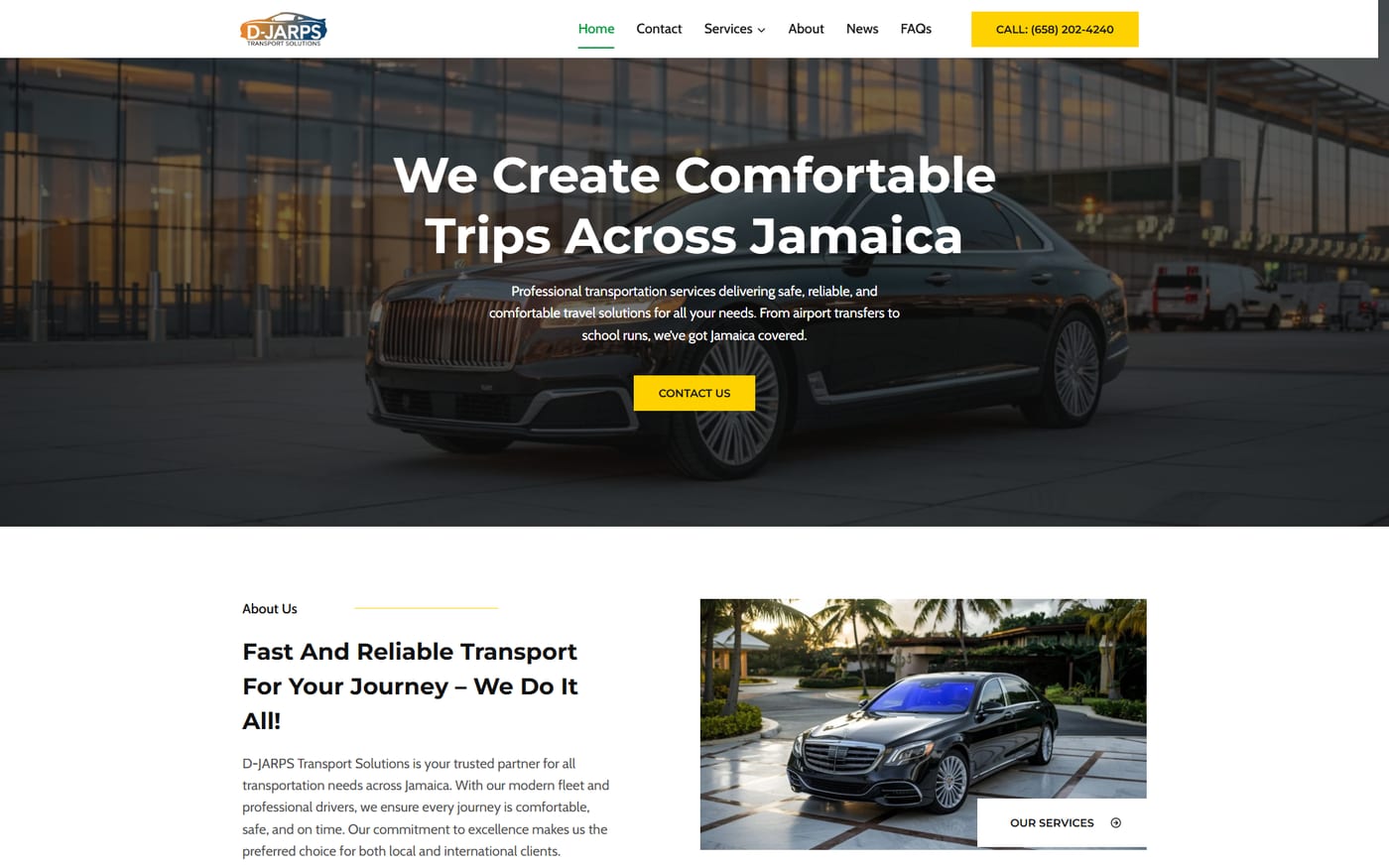
Djarps Transport Solutions
TypeTransport / Logistics
LocationJamaica
StatusLive
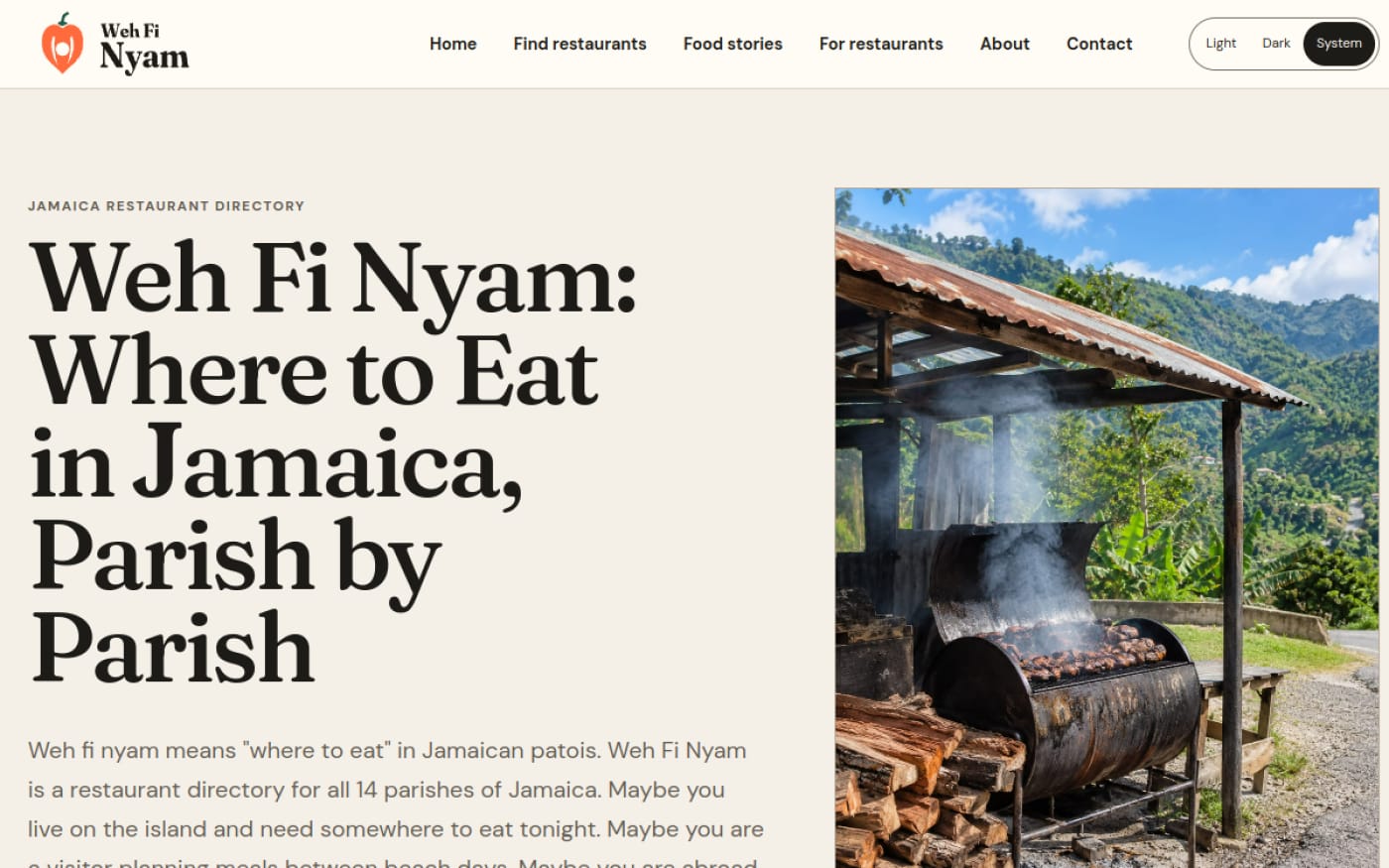
Weh Fi Nyam
TypeFood and Restaurants / Directory
LocationJamaica
StatusLive
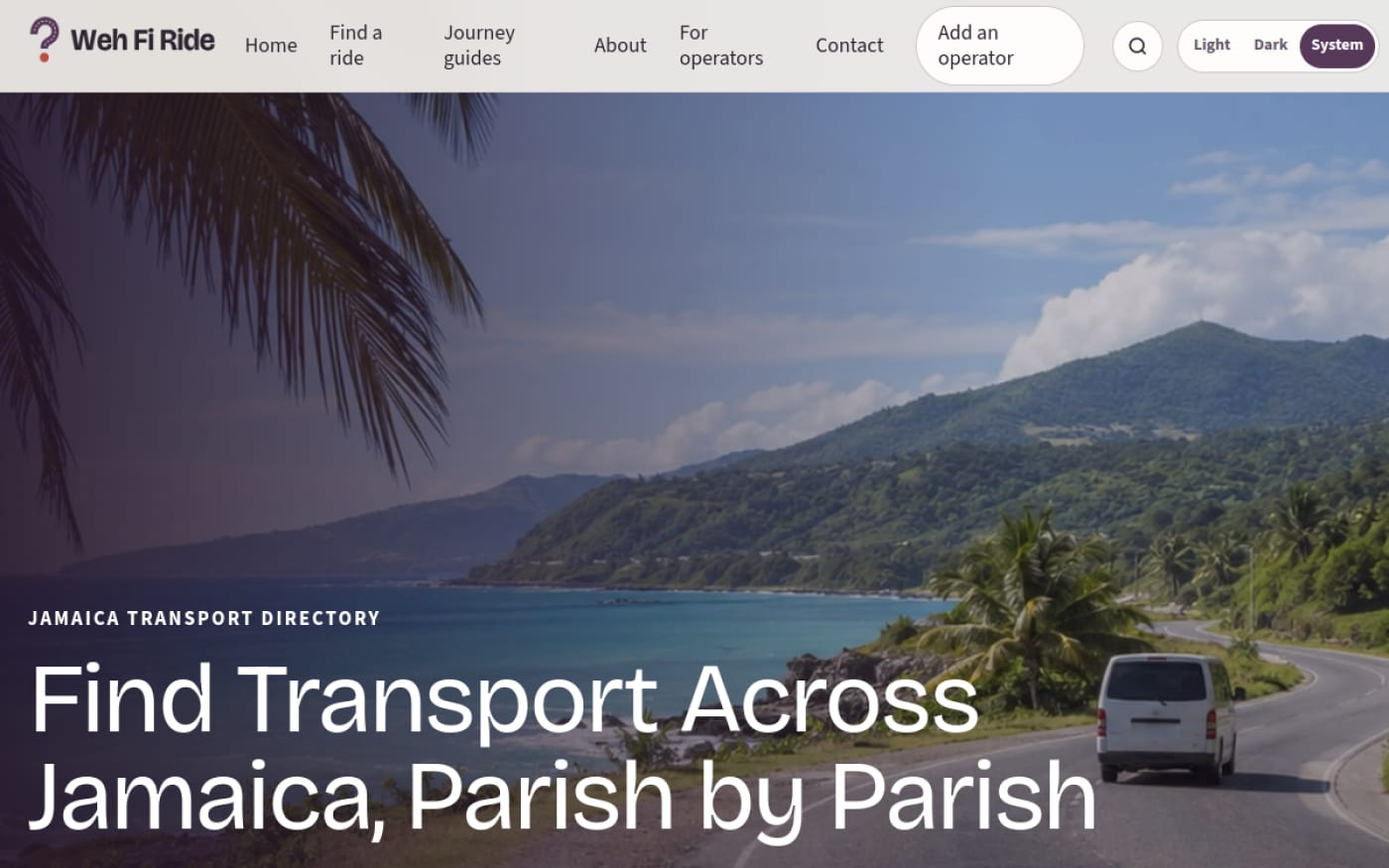
Weh Fi Ride
TypeTransport / Directory
LocationJamaica
StatusLive
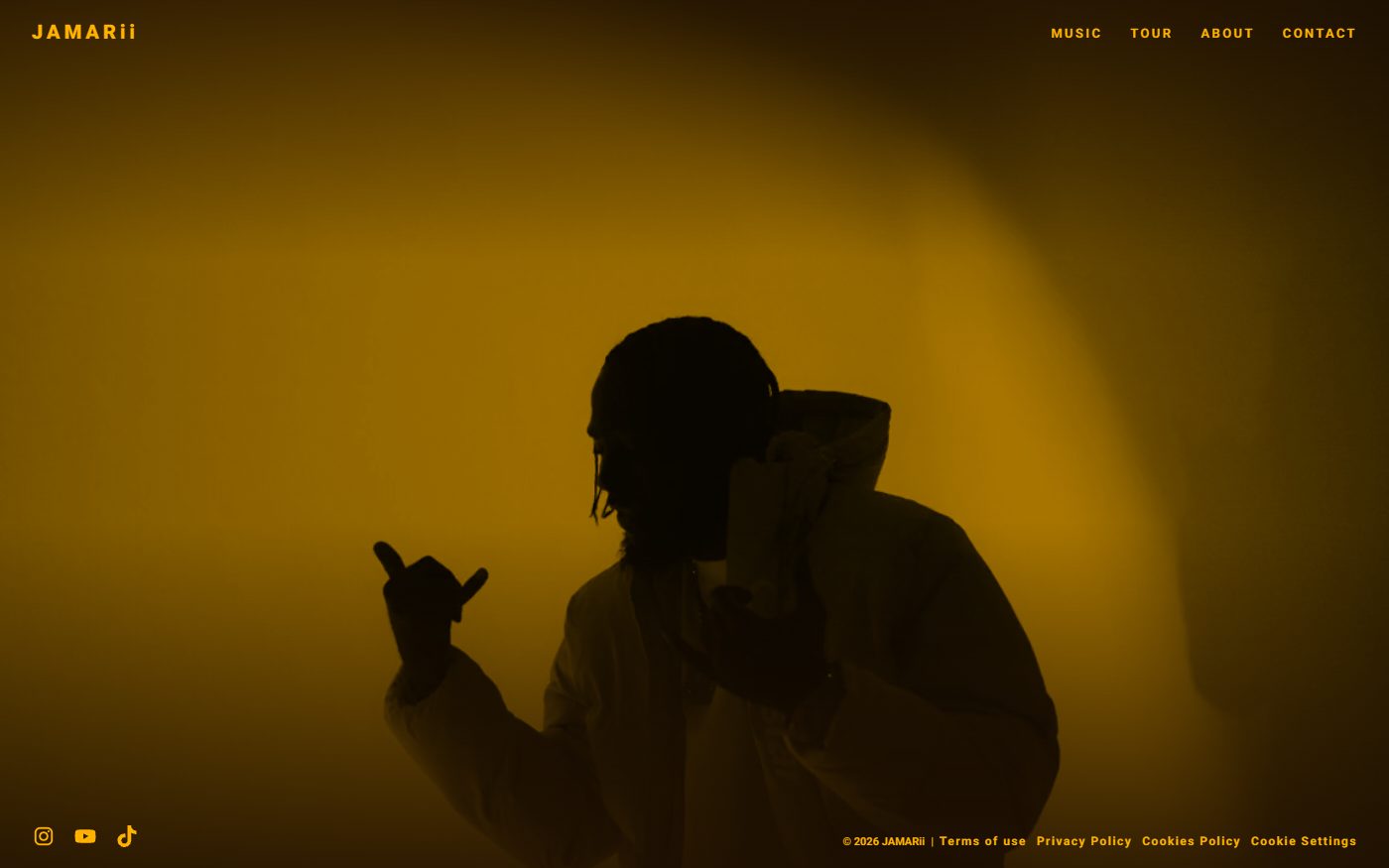
JAMARii
TypeMusic / Entertainment
LocationJamaica
StatusLive