


You usually find out secondhand. A customer says they never got the quote, the invoice or the reply, and you realize you cannot tell how long this has been going on. If you are asking why your emails are going to spam, this is about mail you send landing in other people's junk folders, and the answer is usually findable in about ten minutes with tools you already have. You may have already been told to set up SPF, DKIM and DMARC, done it, and still be landing in junk. That is common, and there is a reason for it. The fix can be a single setting or a slower rebuild of trust with the mailbox providers, and the first checks tell you which one you are facing.
Key Takeaways
Send a test to an inbox you control, open the full headers, and look for spf=pass, dkim=pass and dmarc=pass. That one step separates a setup problem from a reputation problem.
DMARC also needs the domain that passed to match the address in your From line. A newsletter signed with your email platform's domain can pass both and still fail.
Google tells every sender to stay below 0.3 percent in Postmaster Tools, and bulk senders to stay below 0.10 percent and never reach 0.3 percent. Nobody, including us, can guarantee the inbox.
Your first ten minutes should be spent reading, not changing
The instinct is to start fixing: rewrite the email, switch platforms, buy a new domain. Hold off. The most useful thing you can do first is look at one of your own messages the way a mail server sees it, because the answer is often printed right there.
Send a plain, ordinary message from your business address to a Gmail, a Yahoo and an Outlook address you control. Open each received copy and find the full source. In Gmail it is "Show original", in Outlook "View message source" or "View message details". Look for a line that starts `Authentication-Results:`. You want to see three things on it: `spf=pass`, `dkim=pass` and `dmarc=pass`.
Then write down anything that changed in the last few months. A new email platform for newsletters, a new website host, a move of your domain's DNS, a new booking system that sends confirmations in your name. A single missing record after one of those changes can send every message you write to junk at once, which is why a sudden drop so often lines up with a change somebody made for another reason.

Gmail, Yahoo and Outlook now publish rules, with dates
A great deal of advice online was written before the mailbox providers changed their rules, so it is worth knowing what they actually require today.
Google's email sender guidelines ask every sender to personal Gmail accounts to use SPF or DKIM, to have valid forward and reverse DNS, to send over a secure connection, and to keep the spam rate reported in Postmaster Tools below 0.3 percent. Since February 1, 2024, anyone sending more than 5,000 messages a day to Gmail must use both SPF and DKIM, publish a DMARC record of at least `p=none`, make the From domain match one of them, and offer one-click unsubscribe on marketing mail. The same page advises bulk senders to keep the spam rate below 0.10 percent and never reach 0.3 percent. Google's sender FAQ adds that once a domain is classed as a bulk sender, it stays one.
Yahoo's sender best practices set out much the same: every sender uses SPF or DKIM and keeps complaints low, and bulk senders use both, pass DMARC and support one-click unsubscribe. Yahoo sets no message count for bulk senders, so meet its bulk rules if you mail in volume, and it says not to exceed a 0.3 percent spam rate. Microsoft announced in April 2025 that Outlook would require high-volume senders, meaning domains sending more than 5,000 emails a day, to pass SPF and DKIM and publish an aligned DMARC record, with non-compliant mail rejected from May 5, 2025 with the error `550 5.7.515`.
If you send a handful of quotes and invoices a day, you are not a bulk sender under any of these. The basic rules still apply to you, and so does the spam rate.
| Provider | Every sender | High-volume senders | Effective |
|---|---|---|---|
| Gmail | SPF or DKIM, valid DNS, secure connection, spam rate under 0.3% | Over 5,000 a day: SPF and DKIM, DMARC at p=none or stronger, aligned From, one-click unsubscribe | February 1, 2024 |
| Yahoo | SPF or DKIM, valid DNS, low complaints | Bulk senders: SPF and DKIM, DMARC passing, one-click unsubscribe; no set volume threshold | Gradual from February 2024 |
| Outlook.com | Recommended practices | Over 5,000 a day: SPF and DKIM pass, DMARC at p=none or stronger, aligned | May 5, 2025 |
SPF, DKIM and DMARC each prove something different
These three records get mentioned together so often that they blur into one chore. They are three different checks, and knowing which is which is how you fix the right one. Each is a line of text in your domain's DNS settings, usually managed wherever your domain or website is hosted. Each can fail on its own while the others pass, and the headers from your test message tell you which one it was.
SPF says which servers may send for you
SPF is a list, published in your domain's DNS, of the servers allowed to send mail for it. The receiving server compares the machine that delivered the message against that list, as the SPF specification describes. The usual mistakes are having two SPF records instead of one, forgetting to add a new email platform, or a record so long that it needs more than the ten DNS lookups the specification allows. SPF also tends to fail when mail is forwarded, which is normal and one reason the other two exist.
DKIM says the message was signed and not changed
DKIM adds a signature to each message that the receiving server checks against a key in your DNS, under the rules in the DKIM specification. A pass means the signing domain vouched for the message and it was not altered on the way. It says nothing about whether the recipient wanted it. Common failures: the key record was never published, the email platform signs with its own domain instead of yours because custom signing was never switched on, or something edits the message after it is signed.
DMARC ties both to the name your customer sees
DMARC looks at the domain in the visible From line and asks whether SPF or DKIM passed for that same domain. The current specification is RFC 9989, published in May 2026. This is the part that catches people who have "done all three". A newsletter sent from `you@yourbusiness.com` but signed by your email platform's own domain can pass SPF and DKIM and still fail DMARC, because the domain that passed is not the one your customer sees. The fix is usually to turn on custom-domain signing in the platform and publish the record it gives you.

Already set up SPF, DKIM and DMARC and still in junk?
This is where many owners stall, because they did what they were told and nothing changed. There are three common reasons.
The first is alignment, covered above. Look at the headers again and compare three domains: the one after `header.from`, the one after `smtp.mailfrom`, and the one after `d=` in the DKIM line. If none of the passing ones match the From domain, DMARC has not really passed.
The second is that authentication is necessary but not enough. Google and Yahoo both say passing these checks is a requirement, not a promise. Once the records are right, the providers still look at how recipients respond. If people mark your mail as spam, ignore it, or never asked for it, the filters learn from that no matter how clean your DNS is.
The third is that the problem is not spam placement at all. An owner often experiences four different failures as "my email never arrived": a message rejected outright with an error code, one filed in junk, one caught by the recipient's own rule, and one sent to a misspelled or full mailbox. If a message bounced, the bounce contains the exact reason. Capture that code before you change anything.
Complaints and sudden changes cause most of the slow slides
When the headers are clean and mail still drifts into junk, look at what your recipients are doing and at what changed in how you send.
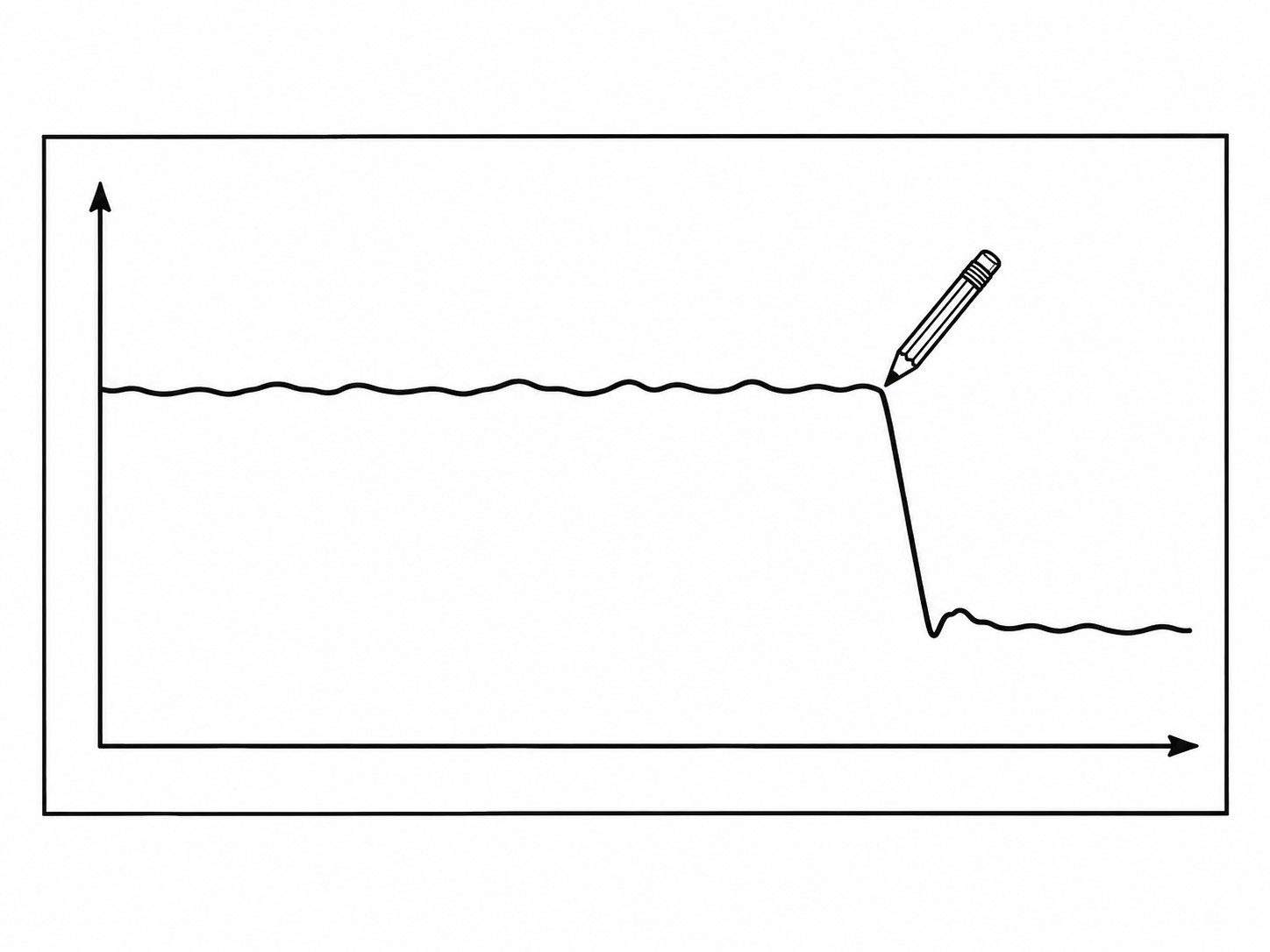
Google's own guidance lists the triggers. Bursts of mail, a sudden doubling of volume, or sending from new infrastructure can lead to rate limits or a drop in reputation. Old addresses that bounce, people who opted out still receiving mail, and segments of a list who never agreed to hear from you all push complaints up. Postmaster Tools will show your spam rate, compliance status and delivery errors for Gmail if you send enough mail to register. At low volume it may show nothing, which is normal.
One caution about that dashboard. The spam rate it shows is measured on mail that reached engaged recipients' inboxes and was then marked as spam. If Gmail is already filing much of your mail in junk, the displayed rate can look low while your placement is poor. A low number is not a clean bill of health on its own.
Spam trigger words are the last thing to check
Lists of words that supposedly send mail to spam are everywhere, and the top search result for this question still leads with them. Gmail's sender guidance points at authentication, recipient feedback, DNS, formatting, encryption, volume and reputation instead. Content and links are among many signals, so they are worth a look only after the headers, the errors, the recent changes and the complaint data have been checked.
The same goes for a few other popular fixes. A brand-new domain or a dedicated sending address does not carry a clean reputation. It starts with no history, which can be a problem of its own. Switching email platforms before you know the cause moves the problem rather than solving it. And an ordinary unsubscribe link in the footer does not meet Gmail's one-click rule for bulk marketing mail on its own; that rule refers to the headers defined in RFC 8058, which your platform either supports or does not.
The order to check things in
- 1
A test message and its headers
Look for spf=pass, dkim=pass and dmarc=pass, and compare the From domain with the domains that passed.
- 2
Your DNS records
One SPF record starting v=spf1, a DKIM record at the selector your platform uses, and a DMARC record at _dmarc on your domain.
- 3
Anything that changed
A new platform, host, DNS provider, booking system or domain in the last few months.
- 4
Bounces and error codes
A rejection with a code is a different problem from a message filed in junk.
- 5
Complaints, consent and volume
Who is being mailed, whether they asked, and whether sending jumped suddenly.
- 6
The message itself
Content, links and formatting come last, once everything above is clean.

Recovery starts with evidence and a smaller audience
Once you have found the cause, fix the specific thing: publish the missing record, turn on custom signing, correct the From domain, repair the unsubscribe path. Then suppress hard bounces, anyone who opted out, and clearly inactive or unconsented addresses.
Start sending again to your most recent, engaged recipients at a steady, modest volume, and watch for bounces, deferrals and complaints. If they rise, slow down. This gradual return is what people mean by warming. It helps after a new domain or a disruption. It cannot fix a broken record, a consent problem, or recipients who keep reporting the mail.
How long it takes is the question everyone asks. Postmaster data usually updates within a day, but reputation changes over a longer window, so expect improvement to show gradually rather than overnight. While you wait, do not blast the whole list to test the fix, do not keep switching providers, and do not keep mailing the people who are not responding.
A last note on the law, because it is often confused with deliverability. In the United States, the FTC's CAN-SPAM guide requires a working opt-out on commercial email and that you honor requests within 10 business days. That is a legal minimum. It is not the same thing as the mailbox providers' rules, and meeting one does not mean you meet the other.
Can you spot where to start?
Pick an answer to begin.
1. Your test message shows spf=pass and dkim=pass but dmarc=fail. What is the most likely cause?
2. Mail started landing in junk the week after you moved your newsletter to a new platform. What do you check first?
3. Google's guidance says bulk senders should keep their Postmaster Tools spam rate below what?
Frequently Asked Questions About why are my emails going to spam
Why are my emails suddenly going to spam?
Check the headers of a recent message, anything that changed in how or where you send, any bounce error codes, and complaint data. A record that broke after a platform, host or DNS change is the most common sudden cause and the quickest to confirm.
Do SPF, DKIM and DMARC guarantee my emails reach the inbox?
No. They prove who sent the message and are required by the major providers, but the providers also weigh how recipients respond. Nobody can guarantee inbox placement.
What does Gmail require if I send a lot of email?
Senders of more than 5,000 messages a day to Gmail must use SPF and DKIM, publish DMARC at p=none or stronger, align the From domain, and offer one-click unsubscribe on marketing mail. The rule took effect on February 1, 2024.
Is an unsubscribe link in the footer enough for Gmail?
Not on its own for bulk marketing mail. Gmail's one-click rule refers to the headers defined in RFC 8058, alongside a visible link in the message. Transactional mail such as receipts is treated differently.
How long does it take to fix a damaged sender reputation?
There is no set date to count down to. Fix the cause, send only wanted mail at a steady pace, watch the data, and expect improvement to arrive gradually.
Should I switch to a new domain to get out of spam?
Usually not as a first step. A new domain has no sending history, and moving before you know the cause tends to move the problem with you.
Moving Forward
When your emails are going to spam, the answer usually starts with one test message and its headers. Check that SPF, DKIM and DMARC pass and that the passing domain matches your From line, then look at what changed, what bounced and who is complaining. Content and trigger words come last. If the setup is clean, the fix is about who you mail and how steadily, and that takes time rather than a trick.
Getting this right once pays off quietly. Quotes and invoices land where customers expect them, you have a short routine for checking after any change to your website or email platform, and a future problem shows up in a dashboard instead of in a customer's complaint.
If the checks turn up a failed or misaligned record you cannot trace, or a change nobody documented, that is the point where a second pair of eyes saves trial and error. At Web Leveling, our email marketing work starts with exactly this audit, correcting what the evidence shows and setting up monitoring, and it cannot and does not promise inbox placement. Where the problem sits in DNS after a move, our web hosting team handles the records alongside the site. We work with small and medium businesses across the country and overseas, wherever they are. Send us a recent message's headers and tell us what changed through our contact form, and we will tell you where we would look first.
Terms
The email words in this post
Tap a term to see what it means.
SPF. A DNS record listing which servers may send mail for your domain.
DKIM. A signature added to each message, checked against a key in your DNS, showing the message came from your domain and was not altered.
DMARC. A DNS record that checks whether SPF or DKIM passed for the same domain shown in your From line, and tells receivers what to do if not.
Alignment. When the domain that passed SPF or DKIM matches the domain in the visible From address.
Spam rate. In Postmaster Tools, the share of your inboxed mail that recipients marked as spam.
Bulk sender. At Gmail, a domain that has sent more than 5,000 messages a day to Gmail accounts. The label sticks once applied.
Warming. Gradually building a steady sending pattern to engaged recipients after a new domain or a disruption.