


Online reputation management costs about $500 to $2,500 a month for a small business, according to NetReputation's published ranges (read October 2026), and $8,500 to $25,000 or more for crisis work. Review software that handles only the reviews side is far cheaper, with plans on Reputation.com's pricing page from $80 per location per month (read October 2026).
A couple of bad reviews landed, or an old thread nobody has thought about in years has climbed to the first page when somebody searches your business name. The quotes you find range from a few hundred dollars a month to five figures, and that spread is not helpful when you are the one refreshing the search results at eleven at night.
Most of what frightens owners in the first week is routine, fixable, and sits at the cheap end. Below, you can see the price by business size, what software costs against an agency, which problem you actually have, and which parts of the pitch nobody is allowed to sell you.
Key Takeaways
Published prices run from about $500 to $25,000, and that forty-fold spread is not a market rate, it is three different jobs being sold under one name, and most small businesses need the cheapest of the three.
A handful of bad reviews sitting near the top usually means too few recent good ones, not a reputation crisis, and that is the least expensive thing on this page to fix.
The FTC's 2024 rule bans buying reviews of any sentiment, insider reviews, and suppressing negative ones through groundless legal threats. Anyone offering removal of a genuine review is describing something they cannot do.
Most reputation work is billed monthly regardless of outcome, so ask what would have to be true for the engagement to end before you sign one.
What Do Reputation Management Firms Actually Charge?
The numbers are public, and putting them next to each other is more useful than any one of them alone. These are the prices the firms ranking for this question were publishing on the day this was written.
| Provider | What they publish |
|---|---|
| Reputation House | From $1,500 a month; $8,500 to $25,000 for crisis work "depending on severity and required speed" |
| Reputation Resolutions | $500 to $15,000+ per month, "most often billed as an ongoing retainer" |
| That! Company | $500 to $20,000 per month |
| SurveySparrow | $500 to $2,500 a month for small businesses; more for mid-sized |
| Erase.com | $2,500 to $5,000 a month for business reputation work |
| SEO Image | Campaigns start at $2,500 a month; many engagements $3,000 to $7,500 |
| Reputation Prime | $5,000 to $20,000 total, typically over four to twelve months |
| Community answers | $500 to $5,000 for straightforward cases; $500 to $2,000 monthly retainers |
Two things jump out. First, the bottom of the range and the top differ by a factor of forty, which means the label "reputation management" is doing a lot of hiding. Second, almost every one of them is quoted as a monthly retainer, which is a pricing model that continues whether or not the problem is resolved.
For the average cost of reputation management, That! Company's cost guide puts the median at about $3,000 a month, and its overall range at $500 to $20,000 a month (read October 2026). Every figure on this page, including the community estimates, is published by someone selling the work, so treat them as a sense of scale and ask for a written scope before you compare totals.
How Much Does Reputation Management Cost for a Small Business?
Online reputation management price depends first on the size of the business and the number of locations. These are the published ranges NetReputation lists by business size, read October 2026.
| Business size | Typical range |
|---|---|
| Small business | $500 to $2,500 a month |
| Mid-sized business | $2,500 to $10,000 a month |
| Enterprise | $10,000 to $50,000+ a month |
| Active crisis (project-based) | $8,500 to $25,000+ |
What moves a quote inside those ranges: the number of locations, how competitive your industry is, how many results or platforms need work, how authoritative the unwanted content is, and how fast you need it done. Campaigns usually run six to twelve months, and packages often carry a minimum term of three to twelve months, according to the same NetReputation guide.
What Does Online Review Management Pricing Look Like with Software?
If your problem is review volume, software is the cheaper route, and it is priced per location rather than as an agency retainer. The comparison below labels each figure as the vendor's own, read October 2026.
| Option | Published price |
|---|---|
| Reputation.com, Rep Core | $80 per location per month |
| Reputation.com, Rep Core + Pulse | $115 per location per month |
| Reputation.com, Rep Core + Surveys | $150 per location per month |
| BrightLocal (per SurveySparrow's guide) | $8 per location per month |
| Review management by an agency (per That! Company) | $200 to $800 a month |
| Content creation and SEO by an agency (per That! Company) | $1,500 to $5,000 a month |
Software sends the requests and organizes the replies; it does not write a good reply or fix a profile for you. That is why many small businesses pair a low-cost tool with a one-time setup.
What Are the Pricing Models and Fees Beyond the Monthly Price?
Reputation management fees come in three shapes, per NetReputation: a monthly retainer, a fixed-scope project, or a hybrid with an intensive project phase followed by a lighter retainer. Ask which one is on the quote, and ask what else gets billed.
- Setup and audit fees, which may be billed separately from the monthly plan.
- Content volume caps, with extra pieces billed beyond the package limit.
- Third-party costs, such as press release distribution or monitoring software licenses.
- Legal coordination, if a legal matter is involved.
- Rate increases at renewal.
A written scope, with deliverables, timelines and reporting, makes two quotes comparable.
Which Problem Do You Actually Have?
This is the question that decides your price, and almost nobody asks it before quoting. There are three distinct jobs sold under one name, and mixing them up is how a small problem gets crisis pricing.
The three problems, and which one is yours
Two or three bad reviews are visible because there are not many recent good ones to balance them. Your star rating moves when real customers start leaving reviews again. This is by far the most common, and the cheapest to fix.
Something you do not control ranks on page one for your business name. An old forum thread, a complaint site, a news item, a former employee's post. The work is publishing and strengthening pages you do own so they occupy the results instead.
Active press coverage, a legal matter, a coordinated attack, or something that is both true and serious. This is the tier the $8,500 to $25,000 numbers are describing, it usually needs communications and legal advice as well as search work, and it is rare.
Most people reading this page are in the first category and are being quoted for the third. If your search results are fine and your problem is a two-star average built from nine reviews, you do not have a crisis. You have a gap, and the fix is a process rather than a campaign.

Why Is the Cheapest Version Usually the Right One?
Because the cheapest version is the one that treats the cause rather than the symptom.
A business with a steady flow of recent, genuine reviews absorbs a bad one almost invisibly. A business with eleven reviews, four of them from 2022, does not: one angry customer moves the average and sits at the top of the page for months. The difference between those two businesses is not a reputation strategy. It is whether anybody is asking happy customers to say so, consistently, as part of finishing a job.
That is routine work and it is why it is cheap. It is also the reason a retainer can outlive its usefulness: once the process of getting more reviews is running and somebody is responding properly to the negative ones, a large monthly fee is buying you very little. Ask any provider what would have to be true for them to recommend ending the engagement. The answer tells you a great deal.

BrightLocal's local consumer review survey is the standard reference for how buyers actually use reviews, and it is worth reading before you spend, because it will tell you which of your worries is well founded and which is not.

What Can Nobody Legally Sell You?
This is the part worth reading twice, because it is where money gets wasted and where a business can get itself into genuine trouble.
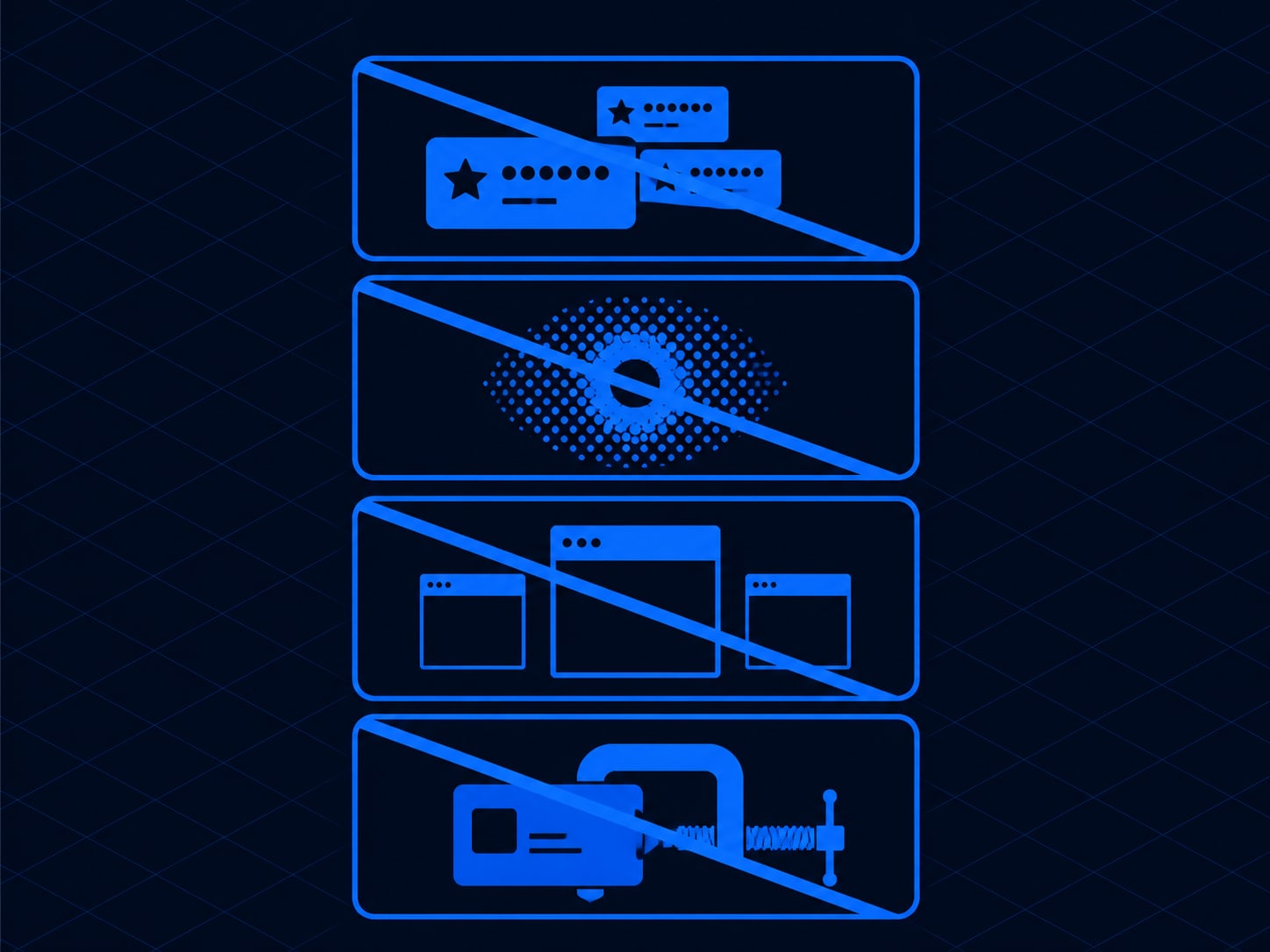
In August 2024 the FTC announced a final rule banning fake reviews and testimonials, and it carries civil penalties for knowing violations. Among the practices it prohibits:
- Buying reviews of any sentiment. The rule prohibits "providing compensation or other incentives conditioned on the writing of consumer reviews expressing a particular sentiment, either positive or negative." Buying good ones and buying bad ones about a competitor are both covered.
- Fake or AI-generated reviews, including reviews from people who do not exist or who never used the business.
- Insider reviews from officers, managers or employees that do not clearly disclose the connection, including certain reviews solicited from their immediate relatives.
- Company-controlled review websites presented as independent.
- Review suppression using "unfounded or groundless legal threats, physical threats, intimidation, or certain false public accusations to prevent or remove a negative consumer review."
Read that last one again if you have been offered review removal as a service. A genuine review left by a real customer describing their real experience is not something a vendor can have deleted, and pressuring the customer into taking it down is the specific behaviour the rule names.
What can legitimately be removed is a review that violates the platform's own policies: spam, a competitor posting as a customer, off-topic content, harassment. Google publishes what it prohibits and how to report a review, and that reporting process is free. Any provider charging you a premium for it is charging you to fill in a form.
The other thing nobody can sell you is a ranking. Google states plainly that there is no way to request or pay for a better local ranking. A reputation service can improve what Google has to work with. It cannot buy the position.
What Does the Money Buy at Each Level?
Broken into the actual work, so you can read a proposal line by line rather than comparing totals.
The Routine Tier
Getting a review request into the end of your normal job or sale, so recent genuine reviews arrive steadily. Replying to every review, including the bad ones, in a way that reads well to the next reader rather than to the person who complained. Keeping your Google Business Profile accurate and complete. Most of this is process rather than labour, which is why it belongs at the bottom of the price range and why some businesses run it themselves after being set up. This is the substance of ongoing reputation work and it overlaps heavily with profile management.
The Search-Results Tier
When something you do not control ranks for your name, the standard method is displacement, not deletion. That means publishing and strengthening pages you do own so they take the positions: your site, your profiles, your author pages, your case studies. It is slower than people want, it is genuinely local SEO work wearing a different hat, and it takes months rather than weeks. A page-one clearance by a specific date cannot be forecast.
The Crisis Tier
Active press, legal exposure, a coordinated attack. This is where the five-figure numbers live, and where they can be justified, because it usually needs communications advice and legal counsel alongside the search work, at speed. It is also genuinely rare. If a provider puts you here in the first conversation, ask them what specifically makes yours a crisis rather than a bad month.
What actually happens, and how long it takes
- 1
Week one, find out what is really there
Search your business name in a private window, from a phone, and write down everything on page one. Half of what owners fear turns out not to be visible to anybody else.
- 2
Week one, reply to what is there
Every unanswered review, especially the bad ones. The reply is written for the next reader, not for the complainer.
- 3
Weeks two to four, restart the review flow
A request built into the end of the job, going to every customer, with no filtering by expected sentiment. Filtering is where businesses get into legal trouble.
- 4
Months one to three, strengthen what you own
Your site, your profiles, your content. This is what displaces an unwanted result, and it is the slow part.
- 5
Month three onward, review the retainer
If the flow is running and the results have moved, ask what the fee is still buying. This is the conversation the retainer model is designed to avoid.
Are you being quoted for the right problem?
Pick an answer to begin.
1. When you search your business name, what is on page one?
2. How many reviews have you had in the last three months?
3. Has anyone offered to have a genuine review deleted?
4. What did the provider ask before quoting?
If you answered mostly with the third options, you are probably being quoted for a crisis you do not have, by someone describing work they cannot legally do.
Frequently Asked Questions About Reputation Management Costs
How much does online reputation management cost per month?
Published prices run from about $500 to $20,000 a month, with crisis engagements quoted higher. A small business typically sees $500 to $2,500 a month in published ranges, and a review-volume problem sits at the bottom of that range, and a good provider will tell you when a retainer is not worth it yet.
What is the average cost of reputation management?
That! Company's guide puts the median at about $3,000 a month (read October 2026). Small businesses are usually quoted $500 to $2,500, and the average rises with locations, competition and urgency.
Is there a setup fee for reputation management?
Some providers bill a setup or audit fee separately from the monthly plan, so ask whether the initial audit is included in the quote.
Can I get reputation management for less than $500 a month?
Yes, for the review side. Review software is priced per location, such as the $80 to $150 per location per month plans on Reputation.com's pricing page, and a replies-and-requests process can run in-house.
Can a service get a bad review removed?
Only if it breaks the platform's own rules, such as spam or a review from someone who was never a customer, and reporting that is free. A genuine review describing a real experience cannot be removed, and the FTC's 2024 rule specifically prohibits using groundless legal threats or intimidation to suppress negative reviews.
Is reputation management just SEO?
The search-results part largely is. Displacing an unwanted result means strengthening the pages you own until they occupy the positions, which is ordinary search work applied to your own brand name. The review side is a separate discipline, and the crisis side involves communications and often legal advice.
How long before I see a difference?
Reviews move fastest, often within weeks once requests are going out consistently. Search results are slower and usually take months. Anyone who commits to a date for a specific page-one change is telling you something they cannot know.
Should I pay a retainer or a one-off fee?
A one-off makes sense for a setup: fixing the profile, writing the reply templates, building the request process. A retainer makes sense if somebody genuinely needs to be doing the work every week. What you should not accept is an open-ended retainer with no stated finish condition.
What if the bad review is unfair or untrue?
Report it if it breaks the platform's policies, and reply publicly in a calm, factual way regardless, because the reply is read by everyone who comes next. What you should not do is threaten the reviewer, which is both counterproductive and now specifically named in the FTC rule.
Wrapping Up
The forty-fold spread in published prices is not a mystery once you see that three different jobs are being sold under one name. A review-volume problem, a search-result problem, and a genuine crisis cost very different amounts because they are very different work. Work out which one you have before you read another quote, and most of the fear that brought you to this page will turn out to have a cheap answer.
What you get from doing this properly is not just a better star rating. It is a business that absorbs a bad week without it showing, because there is a steady flow of real customers saying real things, and because the pages you own are the ones people find first. That is durable, and it costs less to maintain than to rescue.
If you are sitting on a quote and cannot tell whether it matches your actual problem, we are glad to look at it with you. At Web Leveling we start by finding out what is genuinely visible when somebody searches your name, and we will tell you plainly if the answer is that you need a review process rather than a retainer. When we do the work, it runs on accounts registered to you, so your profiles, your content and your data stay yours. Tell us what happened and we will reply within one business day with a read. If you want the wider picture first, we have written about why online reputation matters and how to repair it.
Terms
The words that show up in reputation proposals
Tap a term to see what it means.
Retainer. A recurring monthly fee, usually billed regardless of outcome. Reasonable when somebody genuinely works on this weekly, expensive when the work is already running itself.
Suppression. Pushing an unwanted result down the page by strengthening pages you own. It is displacement, not deletion, and it is slow.
Review gating. Filtering who gets asked for a review based on how happy they seem. Platforms prohibit it and it is the practice most likely to get a business into trouble.
Removal. Only possible when a review breaks the platform's own policies. Reporting one is free, and a genuine review from a real customer is not removable.
Crisis work. Fast, high-touch response to active press, legal exposure or a coordinated attack. It is where the five-figure quotes belong and it is genuinely rare.