


You hovered over a Google result for your own business, or copied the link, and instead of your web address you saw something like google.com/goto followed by a long string of characters. Or you opened your feed and found a pile of posts saying Google just changed how search works. Either way, the question underneath is the same: has something been done to your site, and do you have to fix it? Google goto redirect links are a change to how Google's own results page hands off a click, not a change to your website. People who click still land on the same page they always did. For an ordinary business site, the right response is no response at all, and the rest of this page explains why you can be confident about that.
Key Takeaways
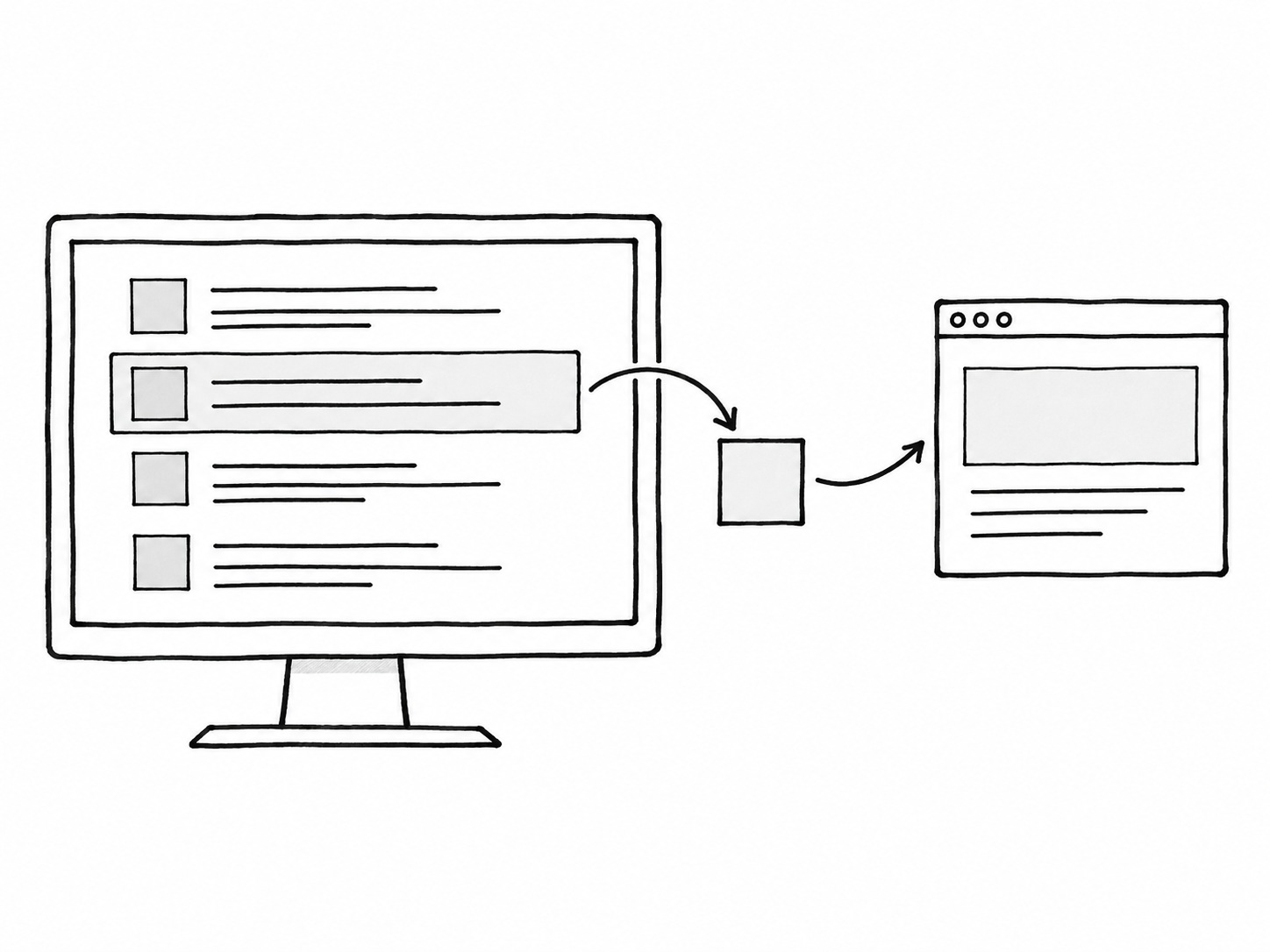
A /goto link lives on Google's results page. Your address, your canonical tags, your redirects and your hosting are exactly as they were, and visitors still arrive on the same page.
Google changed the link a click travels through, not how pages are ranked.
If you already see a sustained drop, compare Search Console before and after August 26, 2026, and look at GA4's source and medium. If those look normal, you are done.
Update, September 26, 2026
Google's only public comment on /goto links is still the general statement about protecting its services and users that Search Engine Roundtable reported on August 26. Any reason beyond that statement, including stopping scrapers, is still an inference. Watch Google's Search Central documentation updates for any later change.
The one new point for you and your staff is about checking a link before you click it. On September 14, Malwarebytes wrote that Google's redirects make links harder to check, because hovering over a result now shows an encoded google.com/goto address instead of the destination. Google still prints the destination above each result, but the hover no longer confirms it on its own. Malwarebytes did not report any phishing campaign using these links. A simple habit covers it: read the domain Google shows, and check the address bar after the page loads, before you type in any information.
The other September evidence concerns tools, not rankings. SerpApi said on September 6 that it had resolved /goto links appearing in its scraped results, and OpenWeb Ninja's September 8 test found /goto on every organic title link in a signed-out, US English desktop search, while a signed-in session still showed a direct link. If your rank tracker started listing google.com addresses instead of your pages, ask the vendor whether it follows the redirect. That is a fix on their side, not on your site.
We re-checked for anything published since August 28 that shows /goto changing a site's rankings, Search Console clicks or GA4 organic traffic, and found none, so the checks further down this page still apply as written.
Know Exactly What Changed, So You Can Stop Guessing
Before this change, when you pointed at a result on Google, the link underneath showed the destination site. Now, on some results, the link points at a Google address instead: google.com/goto, with the real destination tucked into a coded string. When someone clicks, Google reads that string and sends them on to the page. The trip adds one quick step through Google, and the visitor ends up in the same place.
Search Engine Roundtable reported the rollout on August 26, 2026, after spotting tests as far back as July. In the same report, Derek Perkins, the CEO of the rank-tracking company Nozzle, said his company had measured "nearly a 100% rollout across several residential IP providers." A day later, the data provider DataForSEO said that Google "now uses goto for nearly all organic listings."
Those are observations by named companies, not a Google figure, and not every country, device, account or type of result may get the new links yet. So, if you search for yourself and still see your own address, that is not a sign something is wrong either. You may simply be seeing an older version of the link.
Read What Google Actually Said, and What It Did Not
Google's confirmation came in a single sentence from a spokesperson to Search Engine Roundtable, and it is worth reading in full:
> "We have a long history of deploying technical measures against evolving forms of abuse, and we regularly take steps to protect our services and users."
That statement confirms the rollout and says Google regularly takes steps against abuse. It does not mention your website, your rankings, your traffic or your analytics. The way it is worded, the change is about protecting Google's own service, not about grading the sites that appear in it.
A short note on the coverage you may have seen. Much of it describes the change as a block on AI companies and scraping tools. Search Engine Roundtable said it "seems like" a way to make scraping harder, Search Engine Land said the extra hop "should make it harder" for third-party tools and AI engines, and Autom.dev called it an anti-scraping update. That reading makes technical sense, because software can no longer read the destination straight off the page. It is still an inference. Google's statement names no AI company, no scraper and no tool. For you, the purpose matters less than the effect, and the effect on an ordinary business site is close to nothing.
See What It Means for Your Rankings, Traffic and Reports
The practical questions come down to four things an owner can actually feel: where you rank, how many people visit, what your analytics say, and what any paid SEO reports show. Each one lands differently, and it helps to take them one at a time rather than lumping them together as "SEO."
Your rankings
Google changed the link that a click travels through, not your page's address, its content, its canonical tag or any published ranking system. No announcement and no evidence so far shows /goto changing where a page ranks. If your position moves around the same time, that movement needs its own explanation, the same way it would in any other month.
Your traffic
A normal click still arrives at your page after one extra step through Google. Check your own visit numbers before assuming the change cost you traffic. Search Console counts a click as a click that leads a user outside of Google Search, which fits a redirected click still being counted.
Your analytics
Google Analytics decides whether a visit came from organic search by looking at the referring site and matching it against known search engines. With /goto, Google is still the site the visitor came from. If someone claims your Google visits are suddenly being filed as direct traffic, check your own reports before acting on it.
Your rank-tracking tool
This is the one area where something did move. Tools that collect Google results automatically suddenly had to follow each /goto link to learn where it pointed, and some had to rework how they gather data. DataForSEO said it was already resolving 99.99% of returned results to their direct destinations. If you pay for a rank tracker and a report looks strange this week, the tool is a likely suspect. That is about how the tool collects data, not about your site's actual position.

| Area | What changes | How well established |
|---|---|---|
| Your website | Nothing. Your address, redirects and settings are untouched | Documented |
| Rankings | No direct change reported | No evidence of any effect |
| Traffic | Clicks still arrive after one Google step | Check your own visit numbers |
| GA4 attribution | Google stays the referrer | Watch your own data |
| Rank-tracking tools | Tools must follow each link to find the destination | Reported by the tool makers |
Save Yourself the Unnecessary Fixes
There is nothing to fix on your site because of this, and it is worth being specific, because the instinct after a scary headline is to change something. Do not edit your canonical tags, your site's redirects, your robots.txt file, your sitemap, your analytics settings or your page addresses because a Google result link now starts with google.com/goto. None of those control Google's link, and changing working settings can create a real problem where there was none.
A few other worries you can set down:
- It is not malware: A /goto link on Google's own results page is Google's link. It is not a virus, a hijacked site or a redirect someone added to your domain.
- It is not a penalty or a deindex: Your page is still in Google's index. A /goto link in front of it says nothing about its standing.
- It is not a ranking update: It is not a Core Web Vitals change, a helpful content change or a spam update, and it is not a new ranking factor to optimize for.
- There is no fix to buy: No setting, plugin or service changes how Google serves its own links to other searchers.
Google's standing advice has not changed either. Its guide to optimizing for AI features in Search still says to "focus on what your visitors would enjoy, find helpful, and feel satisfied with after visiting your website." That is the same work that mattered last month.

Run Two Quick Checks If You Already See a Problem
If your numbers look normal, you can stop here. If you have already noticed a sustained drop and want to rule this change in or out, two checks will tell you more than any headline, and both use tools you likely already have.
Compare Search Console before and after August 26
In Google Search Console, open the Performance report for your whole site and compare a period before August 26, 2026 with the days since. Look at total clicks and impressions, then at your top queries and top pages. A steady pattern is good evidence that nothing affected your site.
Look at GA4's source and medium
In Google Analytics, open the Traffic acquisition report and compare the same two periods by session source and medium. Watch google / organic and direct / (none). One odd day means little. A sustained shift is worth a closer look.
If either check does show a lasting change, it is more likely to come from something else: a consent banner update, a site release, a tracking tag that stopped firing, or ordinary seasonality. Those are real problems with real fixes, and they deserve investigation on their own terms rather than being blamed on Google's link change. And if you pay for a rank tracker, it is fair to ask the provider directly whether it has adjusted to /goto links and whether your reports were affected.

Do you need to act on Google's /goto links?
Pick an answer to begin.
1. You copy your own Google result and see a google.com/goto address. What does that mean?
2. Which of these should you change because of /goto links?
3. Your Search Console clicks look the same before and after August 26. What should you do?
Frequently Asked Questions About google goto redirect links
What is a google.com/goto link?
A Google search result link that sends a click through a Google address first, then on to the real page. It lives on Google's results page, not on your website.
Did Google change my website's link?
No. Your page's address, canonical tag and redirects are unchanged. Only the link on Google's results page is different.
Does google goto affect SEO rankings?
No evidence published so far shows that it changes where a page ranks.
Will google goto break my Google Analytics?
Google has not documented a GA4 problem caused by /goto. Check your own google / organic and direct / (none) numbers before assuming anything is wrong.
Did Google confirm it is blocking AI scrapers?
No. Google's statement only mentions technical measures against evolving abuse. The anti-scraping reading comes from industry coverage, and it is an inference.
Do I need to do anything?
Usually not. Only if you already see a sustained change in Search Console or GA4 is it worth a closer look, and the cause is often something else.
The Bottom Line
Google goto redirect links change how Google's own results page hands off a click. Your website, its addresses and its settings are untouched, your visitors still arrive on the same page, and no evidence so far shows an effect on rankings or traffic. Google confirmed the rollout without saying anything about sites like yours, and the anti-scraping explanation in the coverage is a reasonable guess rather than something Google said.
That means you can spend this week on the business instead of on Google's plumbing. If your own numbers are steady, you have nothing to do. If they are not, you now know to look for the real cause rather than a fix that does not exist.
If you have already seen a sustained drop in clicks or visits and cannot find the reason, Web Leveling can look at your Search Console, analytics and site together and tell you what is actually going on. Our search engine optimization work starts from your own data, and if the numbers say nothing is wrong, we will tell you that. We work with small and medium businesses across the country and overseas. Send us a note about what you are seeing, and we will help you sort signal from noise.
Terms
Words from this post
Tap a term to see what it means.
Redirect. A link that sends a visitor to a different address before they reach the final page.
google.com/goto. The Google address that some search result links now pass through on the way to the real page.
Canonical tag. A line in a page's code that tells search engines which address is the main version of that page.
Referrer. The site a visitor came from, which analytics tools use to label traffic sources.
Source and medium. GA4's labels for where a visit came from, such as google / organic.
Rank tracker. A paid tool that checks where a site appears in search results for chosen searches.