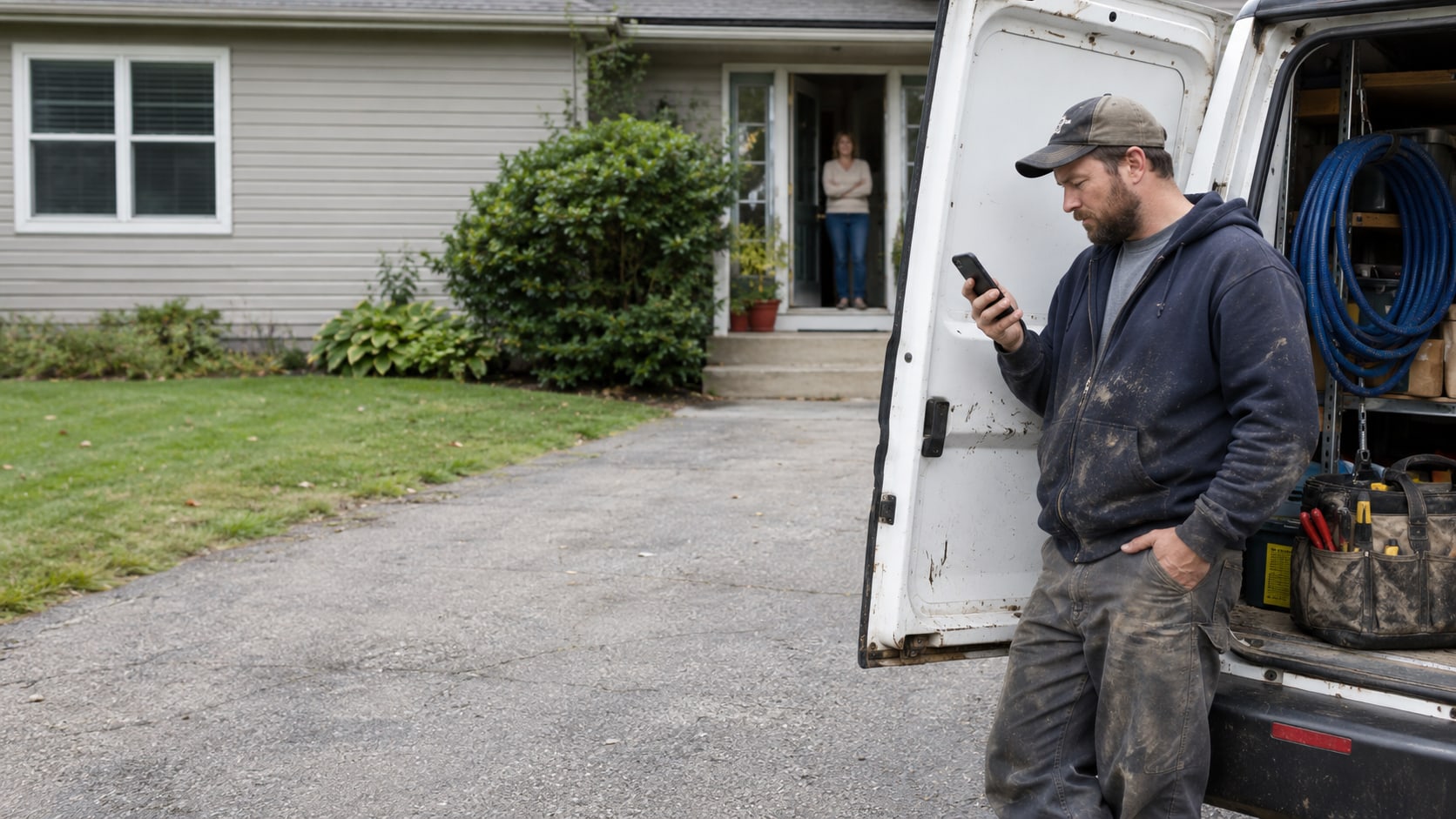


Your calls look thinner than they did last spring, and now a headline says small businesses are losing ground to AI. The BrightLocal small business marketing report on AI visibility is where that talk comes from, and it is dated October 21, 2026. It records what owners believe and what they are doing, which makes your own numbers the thing that answers your question.
BrightLocal surveyed 1,002 owners of US local businesses with 1 to 50 employees. 65% said they are working on AI visibility, while 61% of consumers, by BrightLocal's count, still begin a local search on Google. Both figures sit side by side in the report, and neither one is a count of your calls.
You can check your own business in about ten minutes with tools you already have: your Business Profile numbers, Search Console, and your call and lead records. Start there tonight, and the rest of the report will read very differently tomorrow.
Key Takeaways
Compare Business Profile calls, direction requests and website clicks for the last three months with the same three months last year before changing any plan.
The Small Business Marketing Report 2026 (October 21, 2026) asked 1,002 US owners of local businesses with 1 to 50 employees what they believe and what they do.
BrightLocal reports that 61% of consumers begin a local search on Google (52% on Search, 9% on Maps) and 71% use it at some point.
Run your service and town through Google Search, Maps and a few AI prompts, record what appears, and hire help only for work that needs steady tracking or repair.
What should you check first if your calls look lower?
Open your Business Profile and look at the Performance report. Write down calls, direction requests and website clicks for each of the last three months, then write down the same three months from last year. Note whether all three fell or only one. Google explains these Performance numbers, and a drop in website clicks with steady calls points somewhere different than a drop in calls and directions.
Next, open Search Console and compare clicks and impressions for the same periods, then pull your own records: form leads, the call log and booked jobs. Confirm that your phone number, hours, website address and service area are still correct, because a wrong detail can cost calls with no AI involved. Search Console's Performance report shows the searches and pages behind your clicks.
| What to compare | Where to find it | What a drop can point to |
|---|---|---|
| Calls and direction requests | Business Profile Performance report | Profile details, reviews, ranking in Maps, missed calls |
| Website clicks from your Profile | Business Profile Performance report | The link on your profile, page problems, fewer people choosing you |
| Clicks and impressions | Search Console Performance report | Pages not indexed, lost rankings, less demand for a search |
| Form leads and booked jobs | Your own lead and job records | Broken forms, slow replies, unclear next step |
| Calls actually answered | Your phone log | Hours, routing, staffing at busy times |
If visibility looks steady but leads are down, check phone handling, forms, hours and how fast you reply. If the visibility numbers themselves fell, check the profile, reviews, whether your pages are indexed, and listing accuracy.

What did BrightLocal's 2026 report survey?
BrightLocal's Small Business Marketing Report 2026 is dated October 21, 2026. Its chapter, "65% of small businesses are working on AI visibility", draws on a survey of 1,002 US owners of locally operated businesses with 1 to 50 employees. BrightLocal asked where owners believe customers find them online and what marketing work they are doing, then set those answers beside its own consumer studies.
That makes it a record of what owners believe, how confident they feel and what they report doing. Rankings, calls and revenue live in your own accounts, which is why the check above comes first.
| Figure | What it covers | Whose answer |
|---|---|---|
| 1,002 | US owners of locally operated businesses with 1 to 50 employees | Survey sample |
| 65% | Small businesses working on AI visibility | Owners |
| 58% very confident, 26% fairly confident | Customers can find them online | Owners |
| 54% | Confident they appear in AI search after checking | Owners |
| 22% | Believe most of their customers come from Google, which they rank as their fifth most important channel | Owners |
| 61% (52% Search, 9% Maps) | Begin a local-business search with Google | Consumers |
| 71% | Use Google at some point in a local-business search | Consumers |
| 47% | Businesses with fewer than 20 reviews | Owners |
Read the figures as a pair. Owners feel confident they can be found, and a fifth of them see Google as where most of their customers come from, while the consumer figures put Google at the start of most local searches. That gap between what owners rank and what consumers do is the part of the report worth acting on.
Do customers still use Google for local businesses?
BrightLocal reports that 61% of consumers begin a local-business search with Google, 52% on Google Search and 9% on Google Maps. It also reports that 71% use Google at some point in that search. Those are consumer figures from BrightLocal's own studies, and they are the reason the report's authors pair AI work with the channels that feed local discovery.
AI tools matter too. BrightLocal's local SEO statistics page reports that 45% of consumers used an AI tool for a local-business recommendation in the past year, up from 6% in its 2025 survey. So, plan for customers who start in either place, and check yourself in both.
Google's own guidance explains how the pieces connect. AI Overviews give a snapshot with links to supporting pages, and AI Mode lets people ask follow-up questions. Google says its AI features use the same basic Search requirements as ordinary Search, including pages that can be crawled and indexed. For local results, Google says complete and accurate business information is more likely to show up, and that relevance, distance and popularity decide the ranking.
How many reviews does a business need?
BrightLocal reports that 47% of businesses have fewer than 20 reviews, and that 47% of consumers will not use a business with fewer than 20 reviews. Twenty is BrightLocal's threshold in that consumer figure, so it makes a fair first target if your count is below it.
Look at your count on Google, then at how recent the newest review is. If you are under 20, build a simple habit of asking each happy customer right after the job. Reply to the reviews you already have, since Google lists responding to reviews, adding photos and keeping hours and categories current as steps that help a profile.
How do you test your business in Google and AI answers?
Search for your main service and your town in Google Search, then in Google Maps, and note where your business appears and what the listing shows. Then ask an AI tool a few of the questions a customer would type, and write down whether you are named, what facts appear and which websites are cited.
- "Best [service] near me"
- "Who provides [service] in [town]?"
- "[Your business name] reviews"
- "Is [your business name] reputable?"
- "Who can handle [your problem] this week?"
Results change with the question, the location, the device, the time of day and the tool, so run each question twice on different days and keep a short log. If you want a closer look at what to record, our posts on how your business shows up in Google AI Mode and whether AI search is bringing you customers walk through it.

What should you stop worrying about?
One missing AI mention does not mean Google has stopped sending you customers. Stop chasing a single AI score, one perfect prompt or a guaranteed citation, and stop expecting a pile of generic AI-written pages to repair a local visibility problem. Some searchers turn off Google's AI Overviews altogether, which is one more reason a single AI answer is not your whole audience.
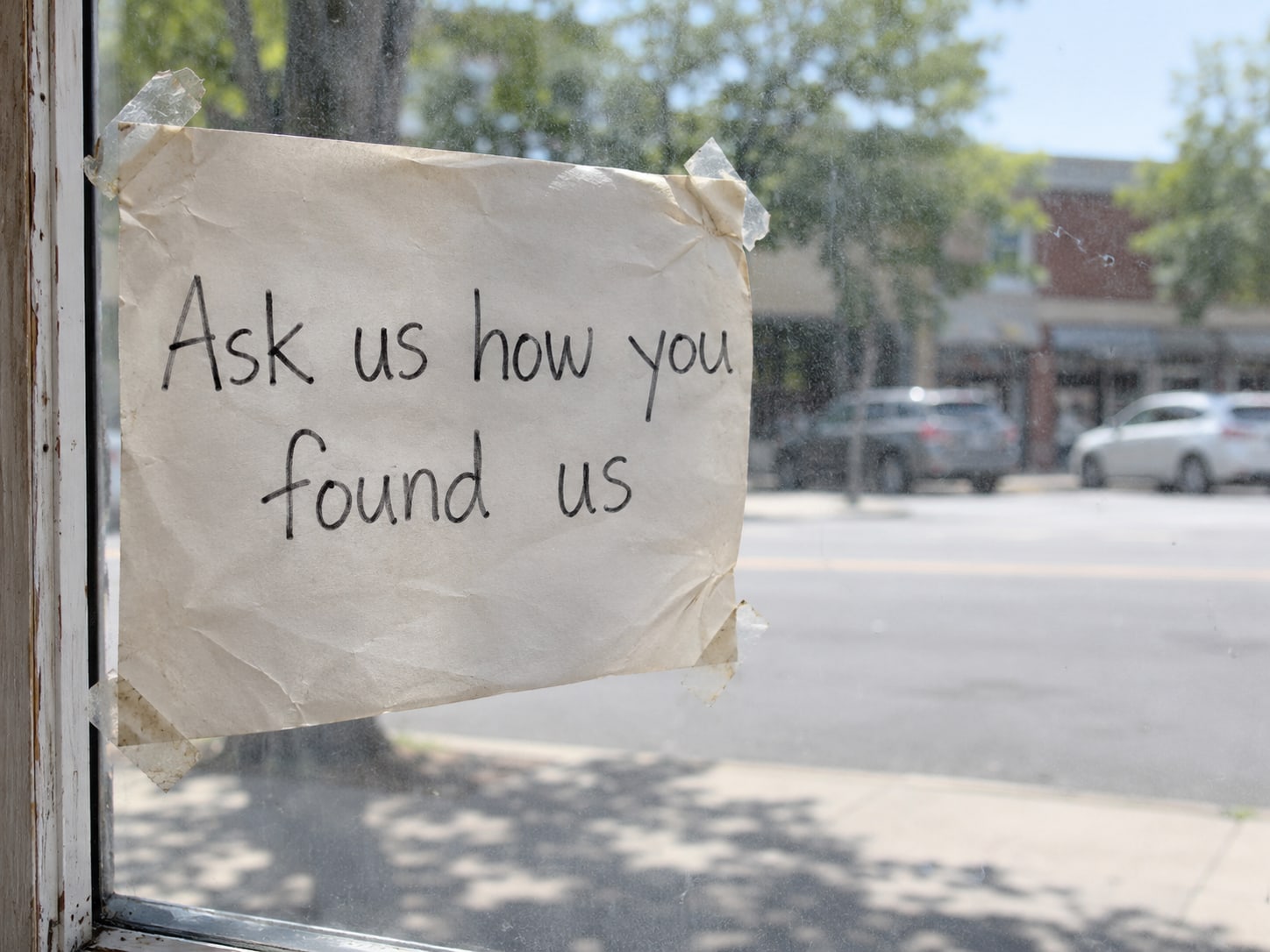
Count what a customer does instead. Calls answered, forms completed, quotes sent and jobs booked are the numbers that move the business. Ask every new caller how they found you and write the answer down, so your records show which channel brought the job.
When does paid help make sense?
Paid help makes sense after your own check, when the work needs steady attention. That includes recurring tracking across several locations and prompts, technical repairs, listing cleanup, content work and someone to carry it out week after week. BrightLocal's own Local AI Visibility tool is one way to track this, and its help center says it covers Google AI Overviews, AI Mode and ChatGPT and reports the businesses mentioned and the websites cited.
No tool or agency can promise a mention in an AI answer. Pay for work you can see and measure: accurate profile details, a steady review habit, pages that can be found and read, and reports that tie visibility to calls, leads and jobs.
Check what BrightLocal's report covers
Pick an answer to begin.
1. What did BrightLocal's Small Business Marketing Report 2026 survey?
2. What is the clearest first comparison for your own business?
3. According to BrightLocal, what share of consumers use Google at some point in a local-business search?
Frequently Asked Questions About BrightLocal's AI Visibility Report
Did BrightLocal measure small businesses losing Google visibility to AI?
BrightLocal surveyed owners about what they believe, how confident they feel and what marketing work they report doing, then compared those answers with its consumer studies. Your own calls, clicks and leads show what is happening to your business.
Who did BrightLocal survey?
BrightLocal surveyed 1,002 US owners of locally operated businesses with 1 to 50 employees. The report is dated October 21, 2026.
What share of small businesses are working on AI visibility?
BrightLocal reports 65%.
Do customers still use Google for local businesses?
BrightLocal reports that 61% of consumers begin a local-business search with Google (52% on Search, 9% on Maps) and that 71% use Google at some point.
How many reviews does a business need?
BrightLocal reports that 47% of consumers will not use a business with fewer than 20 reviews, so 20 is a fair first target. Keep adding recent reviews and reply to them.
Can anyone guarantee an AI recommendation?
No. Google says there is no way to request or pay for a better local ranking, and no tool or agency can promise that an AI assistant will name your business.
What This Means for You
BrightLocal's report records what 1,002 US owners believe and do, and it sits next to consumer figures that keep Google at the front of local search. Start with your own Business Profile calls, direction requests and website clicks, then Search Console and your lead records. Then test your business in Google Search, Maps and a few AI prompts, and keep what you see.
That order turns a worrying headline into a short list you can finish in a day. You will know where calls come from, which profile details need fixing, how your reviews compare with BrightLocal's 20-review line, and whether an AI answer ever names you.

If you would like help with the work that needs steady attention, Web Leveling can set up the tracking, clean up your profile and listings, and build the pages that answer customer questions. Our local SEO work ties visibility to calls and booked jobs, and we say where a paid tool is not needed. We work with small and medium businesses across the country and overseas. Contact us about your Google and AI visibility check, and we will go through your numbers with you.
Terms
Words used in this post
Tap a term to see what it means.
AI visibility. Whether an AI tool such as Google's AI Overviews, AI Mode or ChatGPT names your business or links to your website when someone asks about your service.
Business Profile. A business's free listing on Google Search and Maps, where calls, direction requests and website clicks are counted.
Search Console. Google's free tool that shows the clicks, impressions and pages behind your website's search traffic.
AI Overview. A short AI-generated snapshot at the top of some Google results, with links to supporting pages.
AI Mode. A Google Search experience where people ask follow-up questions and work through a topic in a conversation.
Citation. A link an AI answer shows as a source for what it says.