

AI that finally remembers your business.
Every time your team opens ChatGPT, it starts from nothing. It doesn't know your services, your prices, your policies, or a single customer. So someone pastes the same background in again, and again. A knowledge base is the fix: one owned memory your AI can actually draw on.

An AI answering the same question twice, once from an empty page and once from a shelf of the company's own knowledge behind it.
Your AI forgets your business. Every single time.
Open a fresh AI chat and watch what happens. It's brilliant, and it knows nothing about you. Not your service list, not this month's pricing, not the policy you settled last quarter, not the customer who called twice last week. So, your team does the only thing it can: it pastes the background in. The services, the rules, the history, the context, typed again into every new conversation. Ten minutes of setup for two minutes of answer, and the next person does it all over with a slightly different version of the truth.
That is the blank slate problem, and it is the quiet ceiling on how useful AI can be for your business. The model has all the intelligence and none of the memory. It cannot get better at your work because it never remembers your work. Every conversation is day one.
An AI knowledge base removes that ceiling. It is a single, owned store of your approved business information, structured so any AI tool can pull the right piece at the right moment. Your team stops re-explaining the business, the answers stop drifting, and the AI finally works from what is actually true about your company instead of a fresh guess every time.
The layer behind the answer. Not the chatbot on top of it.
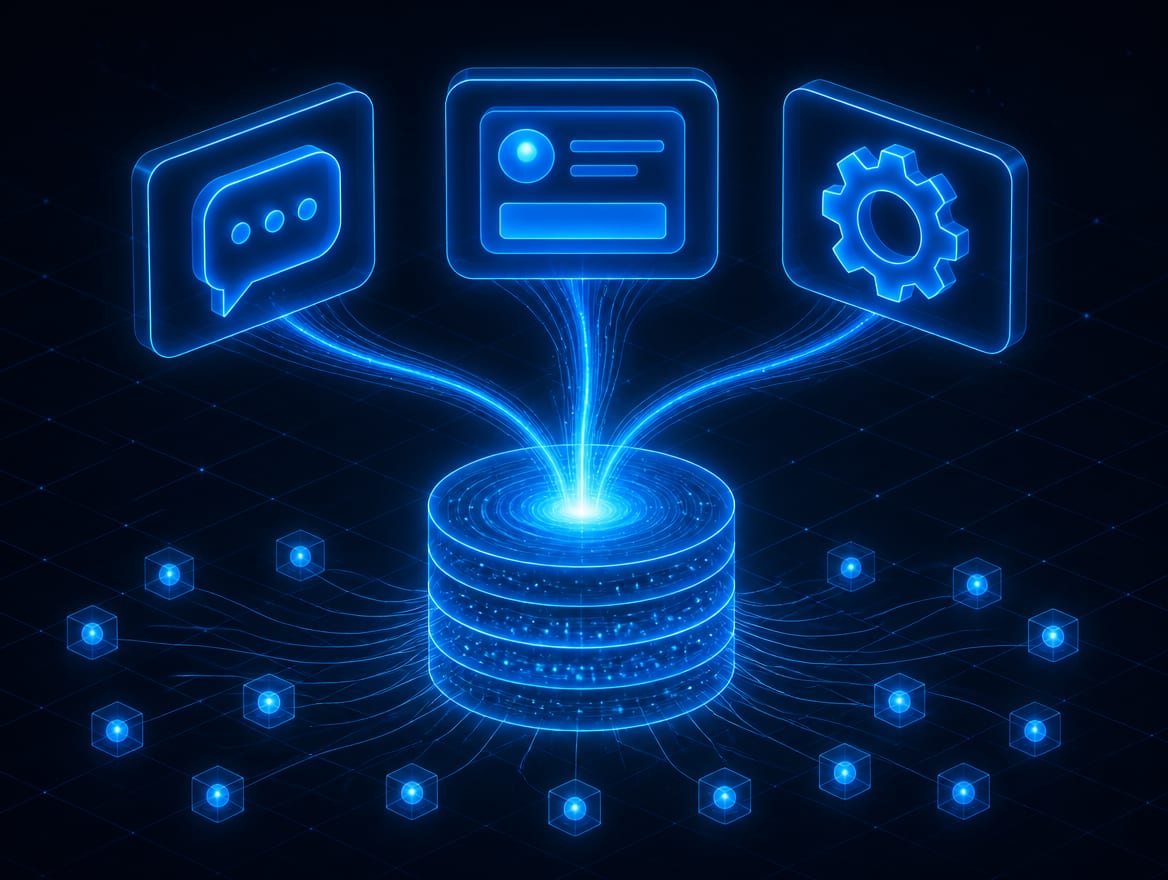
It is easy to confuse this with a chatbot, so let's be exact. A chatbot is an interface, the box people type into. A knowledge base is the context layer underneath it: the approved company information the AI reaches for before it answers. One knowledge base can feed many interfaces. The same memory can power the chatbot on your website, an internal assistant your staff ask, and the automations that run in the background. You build the brain once; the faces on top all share it.
The common way to build that memory is a method called retrieval. In plain terms: instead of stuffing your entire company history into every prompt, the system stores your information in a searchable form, finds only the passages that actually relate to the question, and hands those to the AI right before it answers. The answer comes back grounded in your real documents, with a link back to the source, so anyone can check where it came from.
You will hear the jargon: RAG, embeddings, a vector database. Here is all it means. RAG is that retrieve-then-answer method. Embeddings are a way of turning your text into something a computer can search by meaning, not just by matching words. A vector database is where that searchable form lives. None of those words are proof the system is any good. What makes it good is whether it pulls the right passage, cites it, and respects who is allowed to see it. That is what we build for.
“A chatbot is a face. The knowledge base is the memory behind the face. Confuse the two and you buy a mouth with nothing behind it.”
Everything the model can't guess. Written down, once.
The knowledge base holds the things AI could never know about your business on its own: your current service list and pricing, your standard procedures, your FAQs, your policies, and, when you connect it, your customer and communication history. The stuff that today lives across scattered documents, a few folders, and the memory of the one person who "just knows." In one place, retrievable in seconds.
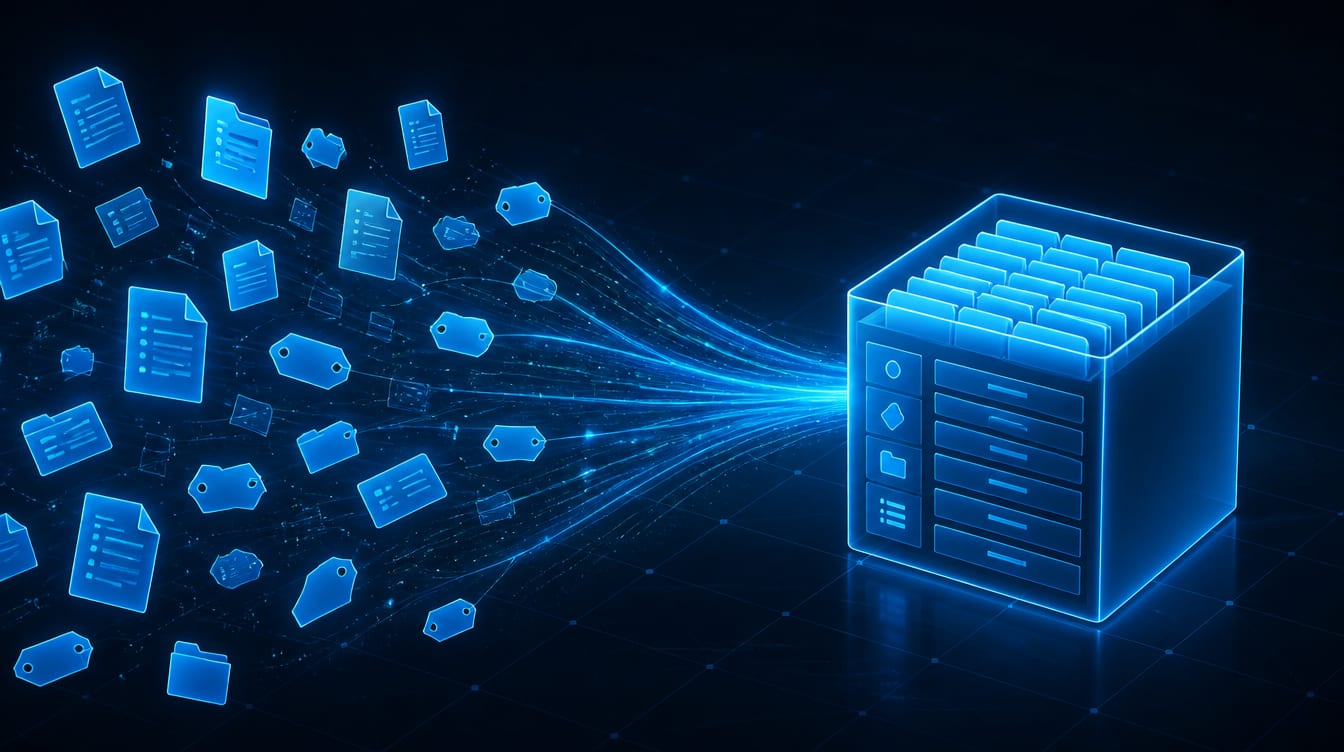
But a pile of files is not a memory, and this is where most attempts fall apart. Dumping every document into a tool and hoping the AI sorts it out gives you confident, wrong answers. A knowledge base earns its keep on the housekeeping underneath:
- A named source of truth. When two documents disagree, the system needs to know which one wins, so the AI never quotes last year's price as if it were current.
- Structure and labels. Clear titles, dates, owners, and document types, so retrieval finds the right passage instead of a near-miss.
- A path back to the original. Every answer links to the document it came from, so a person can verify it in one click.
- An update routine. Prices change, policies change, procedures change. A memory is only as trustworthy as its last update, so keeping it current is part of the design, not an afterthought.
Do this work and the AI stops guessing. Skip it and you have an expensive way to be wrong faster.
One memory. Not one open door.
Here is the part a serious build takes seriously and a careless one ignores. The moment customer history, pricing, contracts, or private messages go into a knowledge base, "who can retrieve this" becomes the whole game. The knowledge base is not one open pool where anyone with access can pull anything. Retrieval should respect the person asking, so a front-desk assistant and an owner do not get the same answers to the same question.
That means real governance, decided before anything is loaded: which data is allowed in, who may retrieve each kind of it, where it is stored, how long it is kept, and who can delete or export it. Customer records and financials sit behind tighter access than a public FAQ. Every retrieval is logged. Sensitive material is encrypted. This is ordinary discipline for anyone handling business data, and it is exactly the discipline a file-upload-and-pray setup skips.

Structure first. Not upload-and-hope.
The failed version of this project always looks the same: someone dumps every file into a tool, gets an impressive demo, and then watches it quote stale prices and invent policy in real use. We build the other way, from the sources out, so it holds up on a messy Tuesday and not just in the demo.
Decide the sources of truth
We start by naming which documents are authoritative, which are outdated, and which win when two disagree. This is the least glamorous step and the one that decides whether every answer after it is trustworthy. Most of the value is set here, before anything is loaded.
Clean and structure
We prepare the content the way retrieval actually needs it: clear titles, sections, dates, owners, and labels, with consistent terms for your services and products. Good structure in is accurate retrieval out. A clean source beats a clever model every time.
Build the retrieval layer
We store your information in a searchable form, wire the retrieve-then-answer flow, and set it up to return a source link with every answer. We add role-based permissions here, so retrieval respects who is asking from day one, not as a bolt-on later.
Test on your real questions
A retrieval system that works on the easy question is worthless on the hard one. We test against your actual questions, including the awkward ones and the ones with conflicting sources, and we tune it until it pulls the right passage and admits when it isn't sure. "I don't have that, ask a person" is a feature we build in on purpose.
Hand it over with the keys
You get the documents, the database, the labels and settings, and the accounts, all in your name, plus documentation a normal person can read: what is in it, how to update it, and where the limits are. You own the memory, not a subscription to it.
1
The honest footnote: a knowledge base needs upkeep. Your prices, policies, and procedures move, and a memory that never updates slowly becomes a liability. We say that going in, because a memory left alone drifts out of date within months.

The memory is the asset. And the asset is yours.
There is a familiar trap in AI work: a vendor builds you something clever and keeps the keys. The documents, the database, the settings, the accounts, all sit on their side. It works beautifully right up until you want to leave, and then you learn you were renting a brain that was never yours. With a knowledge base, that trap is especially costly, because the memory is the value. Lose access to it and you lose the years of context you paid to assemble.
So, we build for the exit door on purpose. You own the documents, the database, the labels, and the accounts. The knowledge you loaded is yours, exportable, and portable to another provider or another AI model if you ever choose to move. Nothing about the memory depends on staying with us, or on staying with one model vendor. That is the point of owning it.
“If you can't take the memory and walk, you don't own it. You're renting your own company's knowledge back from someone else.”
None of that means no commitment. Real work runs on real terms: a setup fee, a clear scope, and a plan for the upkeep a living memory genuinely needs. What you will never sign is a lock-in. Clear terms up front, and everything, most of all the memory itself, yours at the end.

Ready when you are. Your work, actually yours.
Tell us about your business and what this needs to cause. You'll have a plan back within one business day, including when the answer is that you do not need this.
Tell us your caseThe documents, the database, and the accounts passing into the owner's hands, nothing held back on the vendor's side.
Asked and answered, before the call.
Is this just a chatbot?
No. A chatbot is one interface people type into. A knowledge base is the owned memory behind it, and one knowledge base can feed a chatbot, an internal assistant, and your automations at the same time. If you want a website assistant specifically, that is our chatbot service, and it works best sitting on top of a knowledge base like this one.
Ask us about AI Knowledge BaseCan it remember our customer history?
Yes, when your customer data is connected with the right permissions and controls. That is exactly why access rules and governance are built in from the start, not added later. Customer records sit behind tighter access than a public FAQ.
Talk AI Knowledge Base through with usIsn't one long prompt enough?
For a small, fixed set of facts, sometimes. But prompts don't scale, they get expensive, they get out of date, and every person writes a slightly different one. A retrieval layer keeps one current source everyone draws from, and cites where each answer came from.
Tell us what you need from AI Knowledge BaseWho owns the data and the database?
You do, and it is written into the agreement. The documents, the database, the settings, and the accounts are registered in your name and exportable. A client-owned system is the whole point.
Ask who owns what on AI Knowledge BaseWill the answers cite their source?
Yes. Every answer should link back to the document it came from, so a person can verify it in one click. An AI knowledge base that can't show its source is one you can't trust with real decisions.
Get a straight answer on AI Knowledge BaseHow accurate is it?
Accuracy depends on the quality of your sources, how well the content is structured, and ongoing testing, not on any one piece of technology. We test retrieval against your real questions and tune it, and we build it to say "I'm not sure" rather than guess. Perfect answers are not on offer from any system that reads your documents.
Have us look at your AI Knowledge BaseDoes it need maintenance?
Yes. Prices, policies, procedures, and permissions all change, and the memory has to change with them. We set up the update routine and are honest about the upkeep going in.
Start a conversation about AI Knowledge BaseDo we have to pick one AI model forever?
No. The knowledge base is separate from the model that reads it, so you can change AI tools without rebuilding your memory. That separation is deliberate, and it is part of not being locked in.
Ask how we actually run AI Knowledge BaseTell us the background your team keeps pasting into every AI chat, or the question different people answer three different ways. We'll map where your knowledge actually lives, say what it takes to turn it into a memory your AI can use, and reply within one business day. Build the memory once; everything you plug into it gets smarter.