
You paid for the banner on the Little League fence. You pay chamber dues every year and show up when they ask. And when you search for your own business, nothing on either site sends a visitor to yours. That is the usual starting point for local link building: the relationships already exist, but the links do not.
The fix is rarely a tool or a paid package. It is a short list of organizations that already know you and one polite message to the right person at each. Below is which of those relationships can earn a link, how to ask, what Google says about sponsored links, and how to find the places that already mention you without linking.
Key Takeaways
Chambers, associations, suppliers, schools, leagues, charities and event organizers already document who supports them. A real relationship is what makes a link natural.
Send the business name, the exact web address and a thank-you. Ask whether a sponsor, member or partner page exists and whether your name can link to your homepage.
Google says paid or sponsored links should use rel="sponsored", and rel="nofollow" remains acceptable. A marked link can still bring visitors and recognition.
A sponsor page is one benefit among several. The reasons to pay are visibility, referrals and goodwill, and anything a link adds on top is a bonus.
Search your business name with sponsor, partner and chamber, then use the Links report in Search Console to see which sites Google has found linking to you.
Which local relationships can actually earn you a link?
Think of every organization that publishes a list of the people and businesses that support it. A link is most natural when the page documents a real relationship, such as a sponsor, a member or a supplier. Go through these and write down which ones you already deal with.
- Chamber of commerce: Chambers often keep a member directory or give each member a profile page.
- Trade and professional associations: Member lists often include a website address.
- Suppliers and manufacturers: Dealer, installer or partner directories list the businesses that carry their products.
- Youth sports leagues: Sponsor pages and sponsor packages often show a business name or logo.
- Schools and booster groups: Programs, athletics pages and fundraising pages thank local supporters.
- Charities and nonprofits: Supporter and donor pages recognize the businesses behind an event.
- Event organizers: Festivals, conferences and fundraisers publish sponsor and vendor pages.
- Neighborhood groups and business improvement districts: Newsletters and member lists mention local businesses.
- Local news: Coverage of something you did, hosted or sponsored may mention you and sometimes link.
You do not need all of them. A short list of organizations your customers would recognize is worth more than a long list of sites picked because they look strong on a metric. If you want a wider view of earning links beyond your own town, how to get backlinks for a small business covers the wider approach. This post stays with the local relationships you already have.
What does a sponsor page look like, and does it include a link?
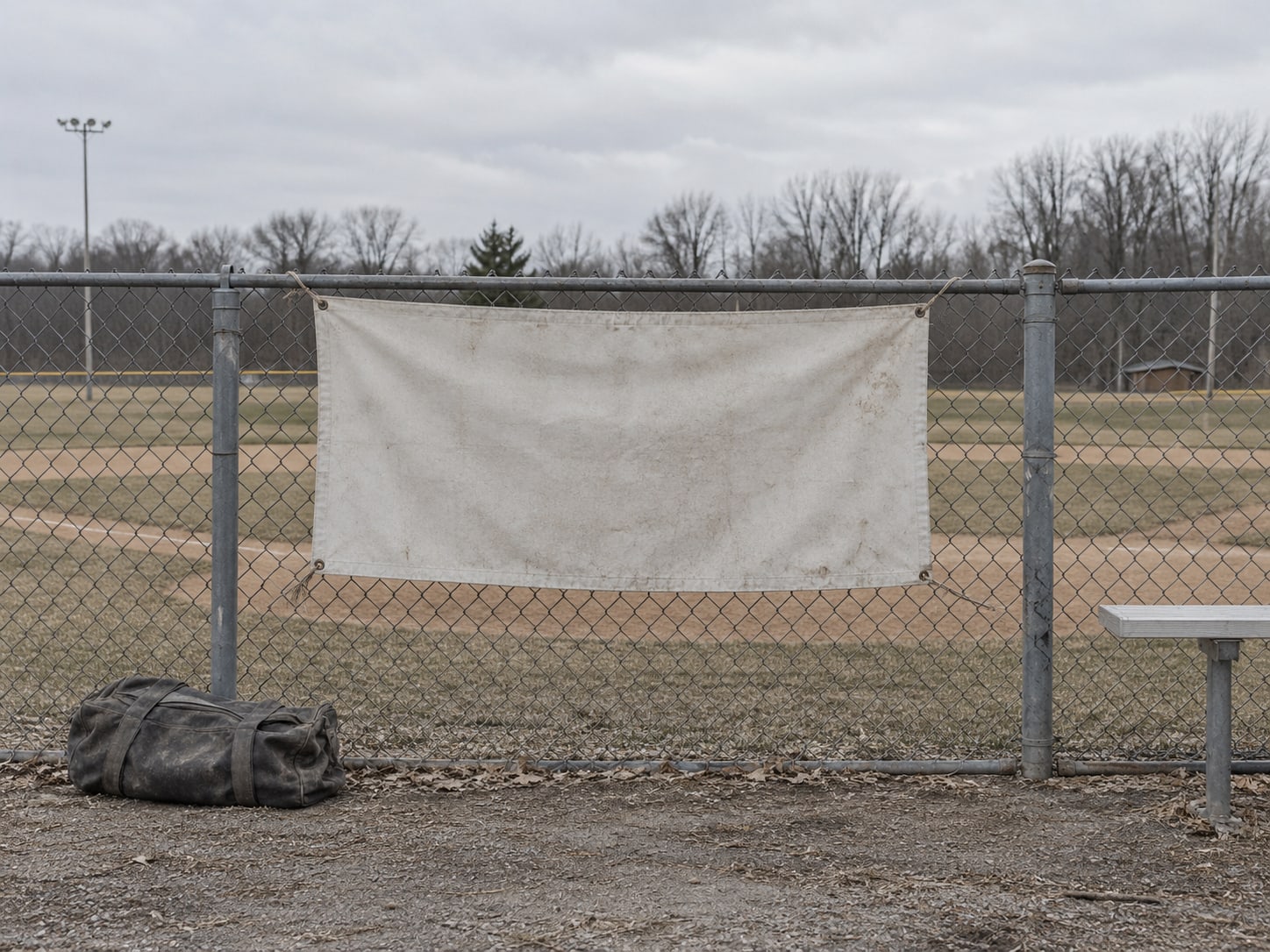
Look at how youth leagues handle it. The Larchmont Mamaroneck Little League sponsor page lists sponsor names, and a website link is optional for each one. Other leagues, such as the BLS Little League sponsorship opportunities page, put logos and direct website links in their sponsor packages. Little League International publishes a league resource guide on sponsorship that leagues can use.
The pattern is the same everywhere. Your name or logo on a sponsor page is one benefit. A clickable link is sometimes part of the package and sometimes not, and a league may list a sponsor with no link until someone asks. That is why the agreement matters before you renew. If online recognition is not written in, ask whether a sponsor page exists.
| Source | What it may publish | What to ask |
|---|---|---|
| Chamber of commerce | Member directory or profile | Whether your profile has a website field, and whether it is filled in |
| Trade or professional association | Member list | Whether members can add a website address |
| Supplier or manufacturer | Dealer or partner directory | Whether your business is listed and the link goes to your site |
| Youth league | Sponsor page with names or logos | Whether your name or logo can link to your homepage |
| School or booster group | Athletics or supporter page | Whether a supporter page exists for the current year |
| Charity or event | Event sponsor page | Whether sponsors appear online and with a link |
| Local news | Story that mentions you | Whether the mention can include your web address |
How do I ask for a link without sounding pushy?
Ask the person who looks after the organization's website, directory, sponsorships or communications. A general inbox is where requests go to sit. Say what the relationship is, give the exact business name and the web address you prefer, and ask whether a sponsor, member, partner, vendor or supporter page exists.
A message like this works because it is specific and polite:
Thank you for including us as a sponsor. If your website has a sponsor or community partners page, could you add our business name and a link to our homepage? Please use your normal sponsor labeling and any sponsored-link attribute your policy requires.
That last sentence matters. It tells the organization you are not asking for a trick, and it lets them follow their own rules.
The page itself should make sense to a visitor. It should say who you are, why you appear there, and how you are connected to the organization, and it should link to a relevant page. The link needs to be a normal clickable link. Google's link best practices describe links Google can follow. Keep the label plain, such as your business name. Do not ask the organization to stuff the label with keywords.

What does Google say about sponsorship links?
Google's rule is plain. Google says to mark links that are advertisements or paid placements with rel="sponsored". The qualify outbound links page says rel="nofollow" remains acceptable, and Google prefers sponsored for paid placements. Google's 2019 announcement on nofollow adds that these attributes work as hints, not commands, and can be combined, for example rel="sponsored nofollow".
Google's definition of a paid link is broad. It includes money, goods, services or other compensation exchanged for a link. Its spam policies list buying or selling links for ranking, exchanging goods or services for links, and requiring a link in a contract without allowing it to be properly qualified as link spam.
That makes the job simple for you. If you sponsor a team, the league can list you and link to you, and it should mark the link the way Google asks. You do not need to demand an unmarked link because you donated. You are paying for visibility, referrals and recognition in your town. Those are real reasons to sponsor. A marked link can still be found, can still send visitors, and still shows people the business behind the team.
Charities and other tax-exempt groups have a related rule of their own. The IRS page on qualified sponsorship payments separates acknowledgment from advertising. An acknowledgment can include a sponsor's name, logo, location, telephone number, website address or a value-neutral description. Advertising includes comparative claims, prices, endorsements or inducements to buy. So, if a nonprofit asks you to keep a request modest, that is why. A plain name and link fits the acknowledgment side.
| Attribute | Meant for | Notes |
|---|---|---|
| rel="sponsored" | Paid placements and advertisements | Google's preferred mark for sponsorships and compensated links |
| rel="nofollow" | Links you do not want to vouch for | Still acceptable for paid links, and can be combined with sponsored |
| No attribute | Ordinary editorial links | Fits a link given freely, not one traded for money, goods or services |
How do I find places that already mention my business?
Before you ask anyone for anything, check what already exists. Some organizations list you and never linked. Others linked to an old web address. A free search finds most of them.
Try these in Google, replacing the name and town with yours:
- `"Business Name" "Town"`
- `"Business Name" sponsor`
- `"Business Name" partner`
- `"Business Name" chamber`
- `"Business Name" filetype:pdf`
- `site:organization.org "Business Name"`
- `site:localnews.com "Business Name"`
Search Google News for your business name too, and look through image results for your logo. Then open each organization's own site by hand and check the sponsor, members, partners, supporters, vendors, news and event pages. Programs, newsletters and event flyers often live as PDFs, which is why the filetype search is worth running.
Next, open the Links report in Google Search Console. The Links report shows the sites and pages Google knows link to yours. It is not a complete backlink list, and it cannot tell you whether a page mentions your business without linking. Use it to confirm the links you have, and use searches and manual checks to find the mentions you do not. If you have not set up Search Console yet, Google Search Console setup for a small business walks through it.

When you find a mention with no link, or a link to a dead page, the fix is a short message to the site owner. Send the current web address and ask whether it can be updated.
Why do local link requests fail, and what fixes each one?
The failures are practical, not technical, and each one is a small job to fix.
- The organization never had your correct web address: Send the preferred address.
- Your business is listed under an old name or domain: Ask for a factual correction.
- The sponsor page shows a logo but no link: Ask whether the logo can link to your site.
- The link goes to a social profile, an outdated page or a broken address: Send the current web address and test it yourself.
- You wrote to a general inbox: Find the sponsorship, directory or website contact, and forward the request.
- You never completed the member profile: Fill out the organization's normal form.
- The agreement promised recognition but not online recognition: Ask whether a sponsor page exists before you renew.
- The page is archived or tied to last season: Ask whether this year's page exists.
- You asked for keyword-heavy label text: Accept the organization's normal business-name label.
- There is no real relationship: Build one first. Do not invent a link request.
The last item is the one to remember. A link is the sign of a relationship, and manufacturing the sign without the relationship tends to look like exactly what it is.

What should I stop worrying about?
Do not chase a domain-rating score, exact label text or a target number of local links. Google says sponsored and nofollow links can still be discovered and can still help people find you, and the business still receives visibility, referral visits and recognition. A relevant organization your customers know is worth more than an unrelated site picked because it advertises a strong metric. Ask a simple question about every opportunity: does this link make sense to a visitor, even if it passes no ranking credit at all?
A few other points are worth keeping straight:
- A citation is not the same as a link: A citation lists your business name, address and phone number. A link sends a visitor to your site. Local SEO citations covers the first.
- A logo without a clickable link is not a referral: It still helps people recognize you, but it will not send them to your site.
- Reciprocal links are not automatically safe: A link traded for a link is an exchange, so check Google's spam policy before you agree.
- The homepage is not always the best destination: A sponsor of a youth league may be better served by a page that fits the relationship.
- A backlink warning email is not a to-do list: If someone claims your links are toxic, read do you need a backlink audit before paying anyone.
Should I hire someone for local link building?
You can do all of this yourself in an afternoon. List the organizations you work with, search for mentions, write the short messages, and note the replies. It costs nothing but time. Do that first.
Help makes sense when the history is scattered: sponsorships from several years, old business names, PDFs and event pages, and no clear record of who to contact. A good service should turn that into a clean list of opportunities, contact the right people, check the live pages, correct broken destinations, record how each link is marked, and track referral visits. It should not promise a number of links or a ranking, and it should not offer to buy unmarked links. Google's site position FAQ is a useful reminder of what nobody outside Google can guarantee. For a sense of what search work costs, see how much local SEO costs.
Can you get a local link from your partners?
Pick an answer to begin.
1. You sponsor a Little League team and want a link on its sponsor page. How does Google want that link marked?
2. Who is the best person to ask for the link?
3. How do you find a page that mentions your business but does not link?
Frequently Asked Questions About local link building
Can a chamber of commerce link to my business?
Often. Chambers commonly keep member directories or profile pages. Check your membership benefits and ask whoever manages the directory whether your profile includes a website link.
Should a sponsorship link use rel="sponsored"?
Yes. Google prefers rel="sponsored" for paid placements or compensation arrangements, and rel="nofollow" is still acceptable. Ask the organization to use whatever its policy requires.
Is a nofollow link still useful?
It can be. Google says sponsored and nofollow links can still be discovered and may still help people find you. They can also bring visitors and recognition.
Can sponsoring Little League help my local SEO?
It can raise your visibility in your town and may earn a mention or a link on the sponsor page. A sponsor page is one benefit among several, and nobody can promise a ranking from it, so sponsor for the visibility and goodwill.
What should I say when I ask for a link?
Thank them for the relationship, give your business name and web address, and ask whether they have a sponsor, member or partner page where you can appear. Offer to follow their normal labeling.
How do I find sites that mention my business but do not link?
Search Google for your business name with words such as sponsor, partner and chamber, use site: searches on the organizations you work with, and look through their sponsor, member and event pages by hand. Search Console's Links report shows the links Google has found.
Final Thoughts
Local link building starts with the relationships you already have. List the chamber, associations, suppliers, leagues, schools, charities and events you support, check what each one's website says about you, and send a short, friendly request to the person who runs the page. Google asks that paid or sponsored links be marked with rel="sponsored", so treat the value as visibility, referrals and recognition, with any ranking benefit as a bonus.
Done a few organizations at a time, this leaves you with a clean list of who mentions you, a message you can reuse, and links that make sense to the people who click them. It is also steady, low-cost work you can repeat each time you renew a sponsorship or join a group.
If you would rather hand off the outreach, Web Leveling can organize that list, contact the right people and check the live pages as part of our local SEO work, or you can contact Web Leveling about local link building help to talk it through. We work with small and medium businesses across the country and overseas.
Terms
Local link building words in this post
Tap a term to see what it means.
Backlink. A link from another website to yours.
Local link. A link from a site tied to your town or region, such as a chamber, league or local news outlet.
Sponsored link. A link that was paid for or traded for money, goods or services, which Google asks to be marked with rel="sponsored".
Nofollow. A link attribute that tells Google you do not vouch for the link. Google treats it as a hint.
Citation. A mention of your business name, address and phone number, with or without a link.
Unlinked mention. A page that names your business but does not link to your site.
Links report. The report in Google Search Console that shows sites and pages Google knows link to yours.