


You are about to ask a few companies to quote a custom AI project, or you already have a quote and cannot tell whether it is normal. Searching for a price has not helped. One page says a few thousand dollars, the next says half a million, and somebody in a forum says it just costs a subscription. So, how much does a custom AI solution cost? It depends on what you are building, so there is no single "market rate" to compare against. What you can use are a handful of real figures, each from a named publisher describing its own slice of the market, and a clear list of what drives a quote up or down. With those, you can read any quote in front of you, spot what a cheaper one left out, and know what you will still be paying once the system is running.
Key Takeaways
Every figure below describes one publisher's own marketplace, rate data or platform.
Its AI pricing guide says projects reviewed on its site typically cost $10,000 to $49,999, and that most AI firms listed there charge $24 to $49 an hour.
Connecting an existing model to one bounded task costs far less than cleaning data, training a model and running it at scale.
Model usage, retrieval and data services, hosting, monitoring, change work and your own staff time.
Scope, exclusions, data work, integrations, testing, usage prices, support, ownership and exit terms, each listed separately.
Why do custom AI price ranges disagree so much?
Because "custom AI solution" is not one product. It can mean a staff assistant that answers from your manuals, a workflow that drafts summaries into your CRM, a model that predicts something from your sales history, or a feature built into your own app. Those are different jobs with different amounts of work, and the published ranges you find online mix them together.
The other reason is that each published number measures something different. Some are marketplace figures drawn from one site's listings and reviews. Some are wages. Some are government contract ceilings. Some are the price of the AI model itself, per unit of use. None of them is a national average, and treating any one as "the going rate" is how quotes end up compared on the wrong terms. If you are still deciding whether you need a build at all, our look at custom AI versus off-the-shelf tools is the better first step.

What real price figures are published, and what do they measure?
It helps to keep these in separate piles, because they answer different questions.
Marketplace guides
Clutch's AI pricing guide says projects reviewed on its marketplace typically cost $10,000 to $49,999. From its verified client reviews, it also reports an average project cost of $120,594.55 and a typical timeline of 10 months, and it says most AI development companies listed on Clutch charge between $24 and $49 an hour. Those numbers describe Clutch's own reviews and listings, not all custom AI work.
Upwork's guide to hiring machine learning engineers, another marketplace, lists $50 to $200 an hour, with example freelancer project bands from $1,500 to $4,000 for a proof of concept, $4,000 to $12,000 for custom model development, and $8,000 to $20,000 for production deployment. Those describe freelancers on Upwork, and they should not be stretched to cover agencies or large implementations.
Wages and rate cards
The U.S. Bureau of Labor Statistics reports a median software developer wage of $133,080 in May 2024. That is an employee's pay, not what a firm bills per hour. The GSA's CALC+ tool lists ceiling labor rates on government contracts, meant for procurement research. Neither is a price for a custom AI project.
Platform prices
These are the cost of using an AI model, one input to your monthly bill, not the price of building anything. Anthropic lists Claude Sonnet 5 at $2 per million input tokens and $10 per million output tokens. Google lists its models and extras, such as grounding charges, on its Cloud pricing page, and AWS's Bedrock pricing varies by model, tier, region and hosting.
| Source | Figure | What it describes |
|---|---|---|
| Clutch | $10,000 to $49,999 typical; $24 to $49 an hour for most listed firms | Projects and firms on Clutch's marketplace |
| Upwork | $50 to $200 an hour; $1,500 to $20,000 example project bands | Freelancers hired through Upwork |
| BLS | $133,080 median software developer wage, May 2024 | Employee pay, not billable rates |
| GSA CALC+ | Government contract ceiling rates | Federal procurement research |
| Anthropic | $2 and $10 per million input and output tokens, Claude Sonnet 5 | Model usage only |
What makes a custom AI quote go up or down?
The biggest driver is the kind of work you are buying. Connecting an existing model to one bounded task, such as answering staff questions from approved documents, is a very different job from collecting and labeling data, training a model of your own, and running it for many users.
From there, the scope grows with each of these:
- Data work: Cleaning up, organizing and setting permissions on the documents or records the tool will use.
- Integrations: How many systems it connects to, and how hard each one is to reach.
- Users and roles: Who can see and do what.
- Accuracy and review: How right it has to be, and how much a person checks.
- Channels and languages: Web, email, phone, internal tools, more than one language.
- Interface: Whether it needs its own screens or lives inside something you already use.
- Security and compliance: Reviews, audit logs and protections against misuse.
- Testing and support: How thoroughly it is tested and what uptime and response times you need.
A tool that can take actions, not just answer, adds more: careful limits on what it may touch, error handling, audit logs and protection against the risks OWASP lists in its Top 10 for LLM applications, such as prompt injection and giving a tool too much freedom. Feature choices change the running bill too. Google, for example, charges separately for grounding answers in search or in your own data. None of these published examples should be turned into a project range for your case.

What does a custom AI solution cost after launch?
This is the part that is easiest to underestimate, because a build is not finished when it goes live. Ongoing costs usually fall into six buckets:
- Model usage: Charged by the amount of text or other content the model reads and writes.
- Retrieval and data services: Search indexes, storage for your documents and re-processing them when they change.
- Hosting and infrastructure: The app, its database, file storage, sign-in, backups and logging.
- Monitoring and safety: Checking answers, catching failures, limiting usage and responding to incidents.
- Change work: Updates when models, connected apps, your documents, your process or security requirements change.
- Your own people's time: Approvals, keeping source material current, handling exceptions and training staff.
How those compare with the build cost depends entirely on the system. A high-volume, always-on tool with many connections can end up costing more to run over a few years than it cost to build. A small internal assistant may not, so ask for a forecast. AWS's worked example of chatbot costs shows the pieces such a forecast should include, and NIST's AI risk management guidance treats monitoring a live system as ongoing work, not a launch task.
A useful quote shows a fixed monthly cost, a unit price for usage, what the bill looks like at low, expected and high usage, and how many support hours are included.

How do you compare two custom AI quotes fairly?
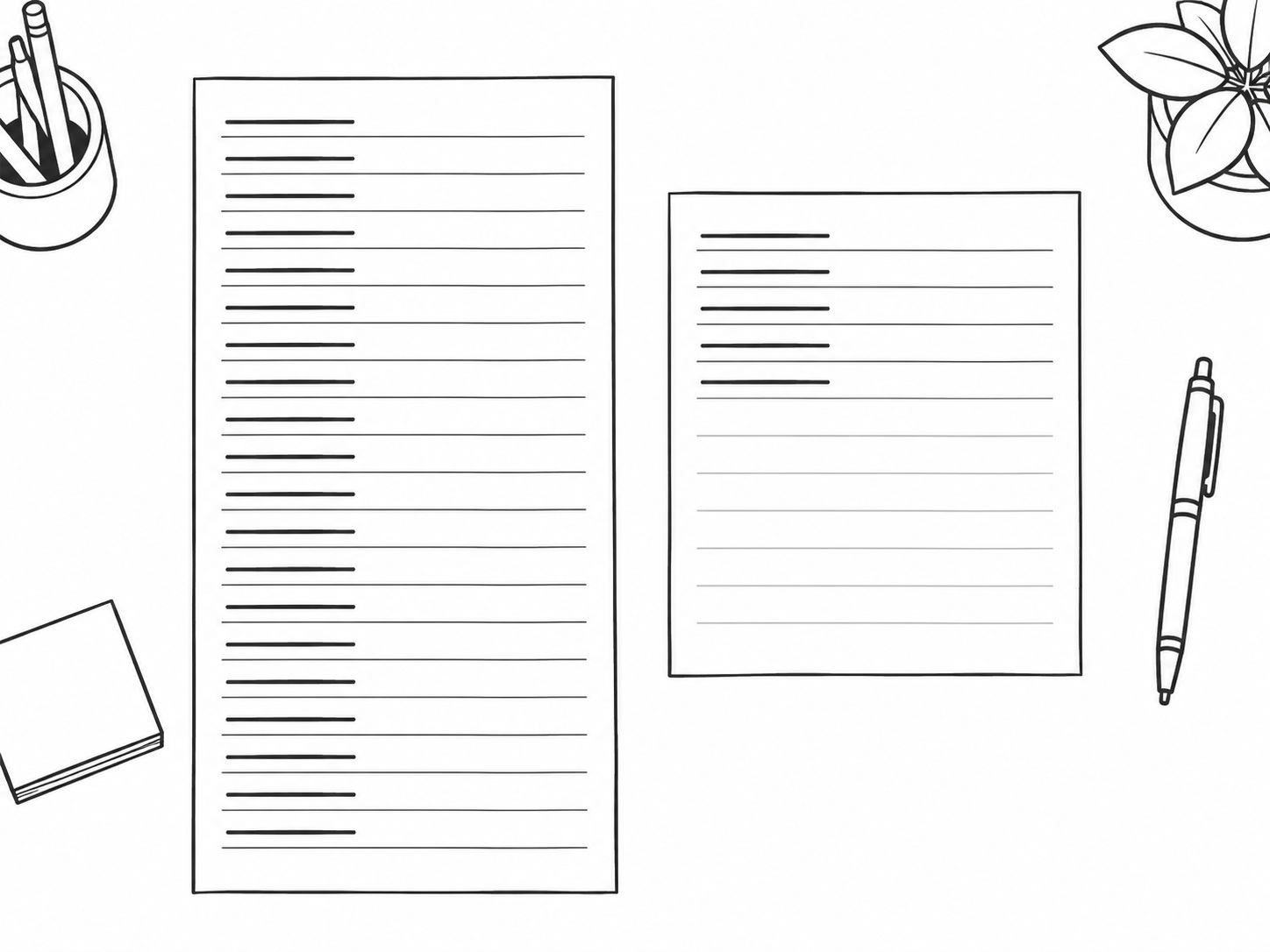
Give every provider the same scope sheet, and ask them to fill in every line. Two totals mean nothing until the scope underneath them matches.
| Line item | What to check |
|---|---|
| Discovery and success measure | What problem it solves and how success is judged |
| Exclusions | What is explicitly not included |
| Data work | Inventory, cleanup, rights and retention |
| Model and fallback | Which provider, and what happens if it changes |
| Integrations | Each system, how it connects and with what permissions |
| Testing and acceptance | The test plan and what counts as done |
| Security and escalation | Protections, guardrails and hand-off to a person |
| Hosting and usage | Fixed fees, unit prices, caps and overage behavior |
| Support and changes | Hours, response times and the change-request rate |
| Ownership and exit | Who owns the code, data, prompts and accounts, and how you leave |
A missing line is not free. Data cleanup that is not priced turns into change requests later. Usage that is not priced turns into an open-ended monthly bill. Testing and monitoring that are not priced shift quality problems onto you. When the cheaper quote is cheaper because lines are missing, you are not comparing like with like.
What should you prepare before asking for a price?
A one-page brief gets you better quotes, faster. Write down:
- The task and the user: Who uses it and what it does for them.
- What it may do on its own: And what always needs a person.
- Systems and data: Everything it must connect to, who owns each source, and any sensitive information.
- Volume: Expected users or requests per month.
- Success measure: The one result you will judge it on.
- Timing and budget form: Your deadline, and whether you want a fixed price or a monthly model.
Then ask every bidder to return the same things: build cost, fixed monthly cost, a usage formula, their assumptions and exclusions, milestones, an acceptance test and the ownership and exit terms. Clutch's own AI budget template makes the same point about defining scope before asking for estimates.
If the task is still fuzzy, a short paid discovery phase can be worth it, but only if it leaves you with something reusable: a clear scope, a data inventory, a prototype result, an estimate, a list of risks and a go or no-go decision. It is not a guarantee of a fixed final price.
Can you read a custom AI quote?
Pick an answer to begin.
1. A marketplace guide says projects on its site typically cost a certain range. What is that?
2. A quote lists the build price but nothing for usage. What could happen?
3. Which of these is a running cost after launch?
Frequently Asked Questions About how much does a custom ai solution cost
Is there an average cost for a custom AI solution?
Not a representative one. Figures from marketplaces such as Clutch and Upwork describe their own listings. Use comparable, itemized quotes for your defined scope.
How much does AI cost per month to run?
It depends on usage and design. Monthly costs come from model usage, retrieval and data services, hosting, monitoring, change work and staff time. Ask for a forecast at low, expected and high usage.
Is an AI subscription the same as a custom AI solution?
No. A subscription or model API is one input. A custom solution may also need workflow design, integrations, security, testing and ongoing operation.
Can I cap what I spend on AI usage?
Ask for usage reporting, rate limits, alerts, monthly caps, and what the system does when a cap is reached.
Do I need a new AI model trained for my business?
Not necessarily. Many bounded tasks can use an existing model with your documents or integrations. Decide after the task and your data are clear.
What should a custom AI development quote include?
Scope and exclusions, data work, integrations, testing and acceptance, security, fixed and usage costs, support terms, and who owns the code, data and accounts when the project ends.
Final Thoughts
There is no standard price for a custom AI solution, and that is the direct answer to the question you searched. What you can find are labeled figures, marketplaces like Clutch and Upwork, wage and rate-card data, and model usage prices, each describing its own slice of the market. The price of your project comes from the kind of work, the data, the connections, the review it needs and the running costs after launch.
With a one-page brief and a scope sheet that every bidder fills in the same way, you can compare quotes line for line, see what a cheaper one left out and know what the system will cost you each month. That turns a guessing game into a decision.
If you have a quote you are not sure about, or a task you want priced properly, Web Leveling can help. Our custom AI solutions work starts with a written scope, itemized build and running costs, and ownership terms that leave the code and accounts in your name. If the task turns out to need a subscription rather than a build, we will tell you. We work with small and medium businesses across the country and overseas. Send us your task or your quote, and we will help you read it.
Terms
Pricing words in this post
Tap a term to see what it means.
Token. A small unit of text that AI providers use to measure, and charge for, what a model reads and writes.
Retrieval. Finding the right pieces of your documents or data for the model to use in an answer.
Proof of concept. A small early version that tests whether an idea works before a full build.
Usage cap. A limit that stops or alerts when spending or requests reach a set level.
Scope sheet. A shared list of requirements every provider prices against, so quotes can be compared.
Change request. Work added or altered after a project starts, usually billed separately.