

You claimed your Google Business Profile, filled in the hours and photos, and you show up on the map when someone searches nearby. So, a fair question follows: do you still need SEO, or does the profile cover it? The short answer is yes, you still need SEO, because the two do genuinely different jobs.
Your profile is a Google-owned listing that helps you appear in Maps and the local pack. Your website and its SEO cover everything else: the detailed searches, the questions, the comparisons, the organic results below the map, and the material AI answers pull from. Here is exactly where each one works, why most local businesses need both, and how to decide what to fix first.
Key Takeaways
A Business Profile handles Maps and local-pack visibility; website SEO covers organic search, service pages, content, and conversion.
Your listing lives on Google's platform and can change or be suspended. Your website is the asset you control.
Service queries, city pages, informational questions, long-tail searches, and AI answers all live beyond the local pack.
A strong website supports your local relevance and prominence, and the profile sends visitors to the site.
SEO improves relevance and prominence, but it cannot make you physically closer to every searcher.
Keep primary ownership of the profile, the website, the domain, and the analytics, with providers getting management access only.
The Short Answer: Yes, and Here's Why
A Google Business Profile and website SEO are not competing options; they are two halves of the same local strategy. Google confirms that local results are based mainly on relevance, distance, and prominence. A complete profile supports relevance. Your website and broader web presence support relevance and prominence. And nothing you do to either one changes distance.
The profile has one big limitation: space and control. It lists your services; it can't explain them. It shows your hours and reviews; it can't answer "how much does this cost," "how does the process work," or "how are you different from the other three companies I'm comparing." Those answers live on your website, and getting them found is SEO. Google itself recommends both: claim your profile and maintain a useful website. They are complementary actions, not substitutes.
Profile vs Website SEO: Who Does What
The clearest way to settle the "do I need both" question is to see what each channel is actually good at. They barely overlap.
| Job | Which channel handles it |
|---|---|
| Map pack and Google Maps visibility | Google Business Profile |
| Hours, directions, calls, reviews, photos | Google Business Profile |
| Organic results below the map | Website SEO |
| Detailed service and product pages | Website SEO |
| City and service-area pages | Website SEO |
| Informational and long-tail questions | Website SEO |
| Source material for AI Overviews and AI Mode | Website SEO |
| Turning a click into a qualified lead | Website SEO |
Read down that list and the answer is obvious. The profile owns a narrow, valuable slice: nearby, map-based, ready-to-act searches. Website SEO owns almost everything else, including the searches where customers are still comparing and deciding, which is where a lot of the money is.

What the Profile Simply Cannot Do Alone
A Google Business Profile, no matter how well optimized, cannot replace a few things your business needs.
- Explain your services. It can list them; it can't cover scope, process, pricing factors, objections, and proof. That takes real service pages.
- Control the technical foundation. Crawling, indexing, canonical URLs, page speed, structured data, internal links, all of that lives on your site, not your listing.
- Cover organic search. The local pack appears for some queries. It does not cover the informational, commercial, and long-tail searches where customers research before they buy.
- Convert the visitor. The profile may earn a click. Your website has to turn that click into a call, a booking, or a form. A weak site wastes every visit the profile sends it.
- Be owned. The profile lives on Google's platform and can change, receive public edits, or face suspension. Your website is the asset you actually control.
That last point matters more than most owners realize. If your entire local presence is a Google listing, you are one suspension or algorithm change away from disappearing. A strong website is the base that keeps you visible across Search, Maps, ads, email, social, and AI search.

How the Website Actually Helps Your Map Rankings
Here is the part that surprises people: your website helps your profile rank, not just your organic results. Since local ranking runs on relevance, distance, and prominence, your site can strengthen two of those three. It supports relevance by clearly explaining your services, locations, and business details in a way that matches your profile. It supports prominence through useful content, legitimate links, real reviews, and consistent business information across the web.
Two honest caveats. First, distance is a hard limit. You can have a perfect profile and a strong site and still rank differently across neighborhoods, because proximity is a real factor SEO can't erase. That is why rank should be read by location, not as one citywide number. Second, service-area settings don't create rankings everywhere. Listing twenty cities doesn't make you relevant in twenty cities; that takes real local pages, proof, and service history, never fake offices or copied city pages. This broader work, the pages, citations, links, and reputation around the profile, is what local SEO actually is.

What to Fix First
You don't have to do everything at once. Sequence it by what's broken.
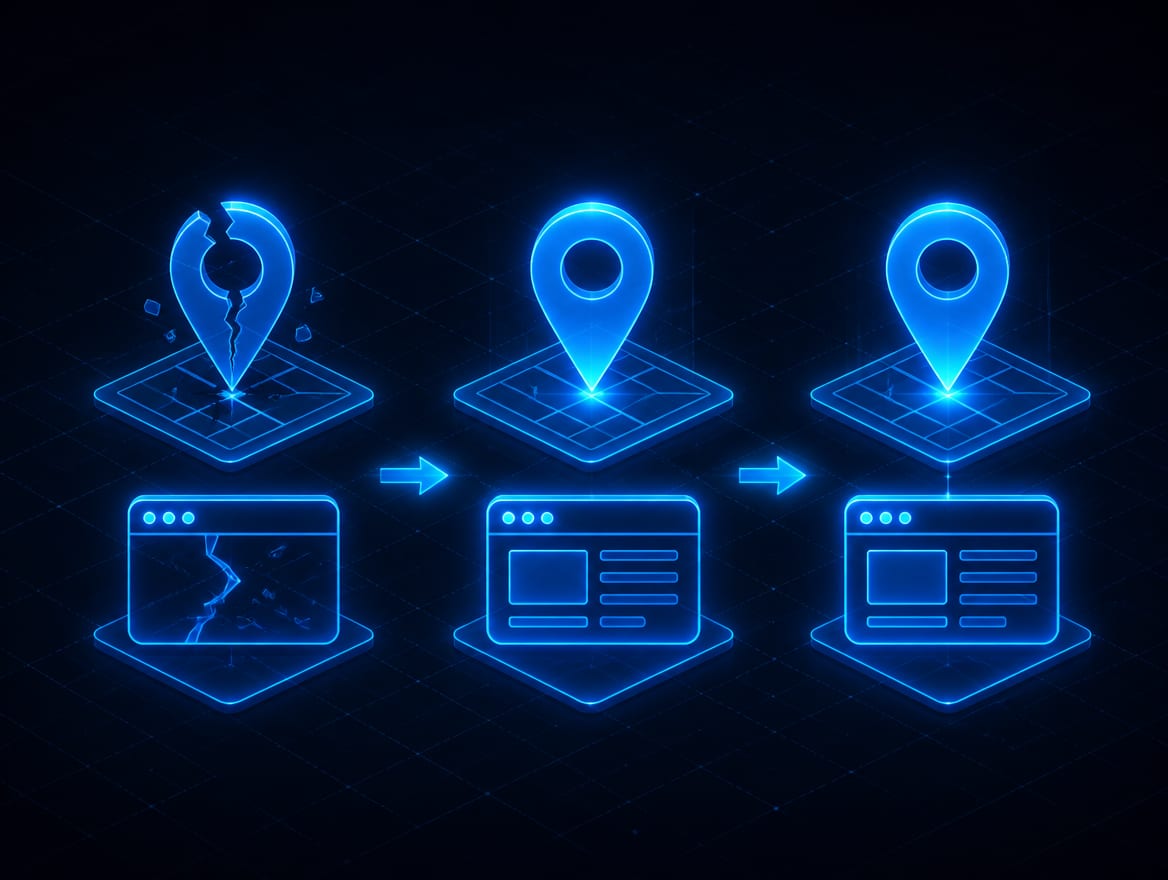
Fix the profile first when it is unclaimed, suspended, showing wrong information, has the wrong primary category, has duplicates, or doesn't appear for your own business name. Those block immediate discovery, so they come first.
Fix the website first when it isn't indexed, has no dedicated service pages, is slow or hard to use on mobile, has thin or duplicate pages, or lost rankings after a redesign. If the profile sends clicks to a broken site, you're paying to lose visitors.
Work on both together when you're in a competitive local market and want durable growth, which is most businesses. The profile and the site reinforce each other, so coordinated work beats treating either as a one-time task.
Quick Check: SEO and Your Business Profile
Pick an answer to begin.
1. Do you still need SEO if you have a Google Business Profile?
2. Which of these can SEO NOT overcome?
3. Why is it risky to rely only on your Google Business Profile?
Frequently Asked Questions About SEO and Google Business Profile
Do I need SEO with a Google Business Profile?
Usually yes. The profile supports Search and Maps visibility, while website SEO covers your service pages, city pages, organic results, content, and conversion, plus the material AI answers cite. Most businesses need both.
Is a Google Business Profile enough for a small business?
It may be enough for basic local discovery for a brand-new or very simple business. It usually isn't enough once customers compare providers, you offer several services or serve several areas, or you want organic and AI-search visibility.
Does website SEO help Google Maps rankings?
It can, by supporting relevance and prominence through clear service information, local content, legitimate links, citations, and consistent business details. Distance still applies regardless.
Can I rank in the map pack without a website?
Some businesses do, but a useful website gives Google and customers more to work with and adds another source of leads. It also protects you if the profile ever has issues.
What's the difference between local SEO and Google Business Profile management?
Profile management focuses on the listing itself. Local SEO is broader: the website, local pages, citations, links, structured data, and reputation that support the whole local presence.
Can I pay Google for an organic 3-pack ranking?
No. Ads are separate from the organic local pack, which Google says is based mainly on relevance, distance, and prominence. You can't buy your way into the organic map results.
Final Thoughts
A Google Business Profile helps customers find you when they search nearby. SEO gives you more pages, more queries, more control, and more ways to earn trust, including the searches where people are still deciding. The strongest local presence connects the profile, the website, reviews, citations, content, and a consistent business identity, with each channel reinforcing the other.
So, the profile is not the finish line; it's the front door. Treat it as your whole strategy and you cap your growth at the handful of nearby searches the map covers. Build the SEO around it and you show up everywhere your customers are actually looking.
At Web Leveling, we manage the profile and build the local SEO and website around it, so both channels pull in the same direction. If your business isn't showing up where it should, contact us and we will send back a clear, workable plan within one business day, starting with whatever is costing you visibility right now.